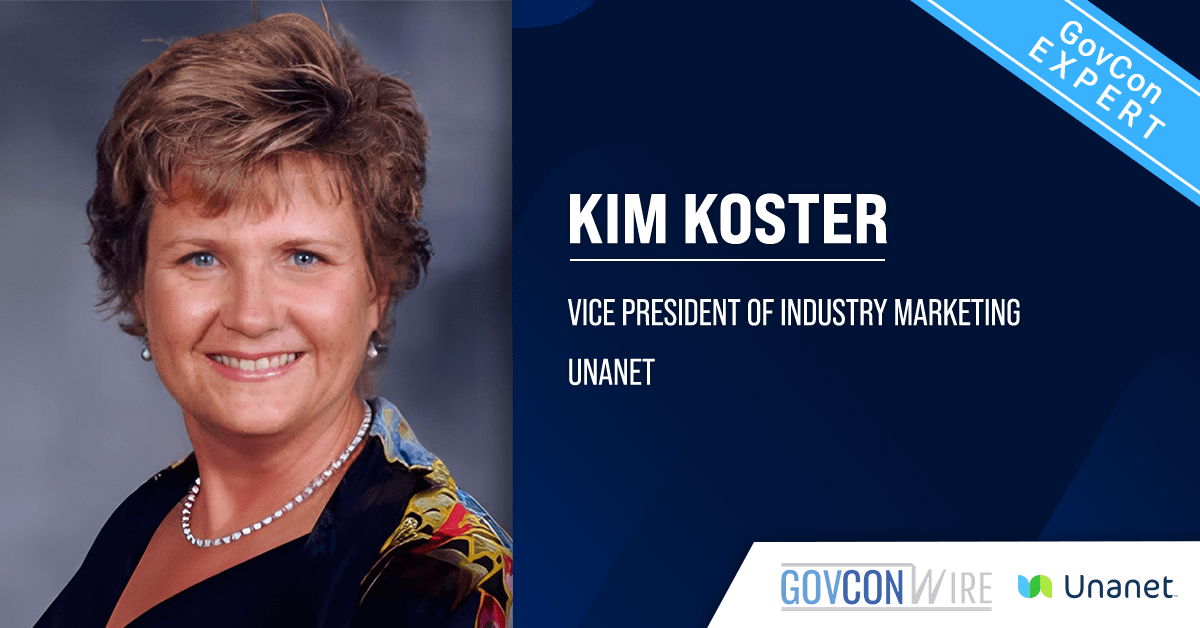

By Kim Koster, Vice President of Industry Marketing at Unanet
Many government contractors still rely on fragmented systems and static spreadsheets to project what’s ahead. That approach may work for tracking awarded contracts, but it fails to support confident decision-making across the business. Without a holistic view of upcoming work, resource needs and revenue potential, leaders are left reacting to change instead of planning for it.
Portfolio forecasting provides the clarity and coordination that high-performing firms need. It moves beyond isolated project tracking and builds a unified forecast across awarded contracts, active proposals, and early-stage opportunities. By incorporating probability, timing, and resource data into one model, organizations can align capture, delivery, and finance around a single, forward-looking strategy.
What Portfolio Forecasting Unlocks
If done well, portfolio forecasting offers far more than numbers. It delivers visibility into the future shape of your business. You can evaluate total revenue potential, assess workforce readiness and identify whether your pipeline supports long-term growth goals. You can also spot gaps before they become problems, reallocating resources or reshaping your pursuit strategy accordingly.
GovCon firms that adopt portfolio forecasting often see measurable improvements in:
- Win-rate forecasting accuracy
- Labor utilization and capacity planning
- Profitability analysis by project
- Headcount alignment with expected demand
- Contract compliance across delivery and finance
More importantly, they operate with greater confidence. Instead of chasing projections or overcommitting teams, they plan with precision and act with purpose.
What Goes Into a True Portfolio Forecast
Portfolio forecasting is built on three inputs, each with a distinct role in the overall model:
1. Awarded contracts
These represent work with known scope, budget, and timeline. They are the foundation for near-term revenue and margin planning. Tracking at the task order or contract line item level provides insight into burn rates and backlog health.
2. Active proposals
These are bids in progress with defined requirements and schedules. Applying a probability of win, or Pwin, to each proposal helps model potential revenue while supporting resource staging and delivery readiness.
3. Early-stage opportunities
Often managed by business development or capture teams, these represent the long-term future of the firm. Applying Pwin, estimated start dates and labor assumptions allows you to model pipeline value over a multi-year horizon.
The Importance of Risk-Adjusting Your Forecast
Factoring for risk and reasonableness is the core technique behind strategic forecasting. It brings probability into the conversation and replaces guesswork with structured assumptions.
Formula:
Forecasted value = Estimated contract value × Pwin × Timing factor
This allows firms to model revenue based on what is likely, not just what is possible. You can account for phased starts, option years, or ramp-up delays. The goal is to build a forecast that reflects how your pipeline will actually perform, not how you hope it will.
Integrating Portfolio Forecasting With Resource Planning
The true power of portfolio forecasting emerges when you combine it with capacity planning. A firm may have strong revenue potential on paper, but if staffing is misaligned, delivery will suffer.
Linking opportunity data from CRM and proposal tools with workforce and financial data from your ERP creates a unified picture. You can see where you have the people and funding to execute—and where you don’t. This supports proactive hiring, subcontracting decisions, and investment planning.
Guidance From PMI on Strategic Forecasting
The Project Management Institute—a.k.a. PMI—reinforces the strategic value of forecasting. According to its Standard for Portfolio Management, effective forecasting helps organizations align investment decisions with strategic priorities, using assumptions, performance trends and external signals to guide action.
PMI emphasizes four key principles:
- Align projects with long-term objectives
- Refresh forecasts as conditions evolve
- Use scenario planning to prepare for multiple outcomes
- Allocate resources based on both value and risk
For GovCons, this means treating forecasting as more than a finance function. It becomes a strategic discipline that connects business development, delivery and executive planning.
Making It Sustainable With Technology & Governance
Portfolio forecasting is only as strong as the systems that support it. A modern approach requires integrated tools that can track opportunity stages, assign Pwin values and forecast revenue over time.
Key features to look for include:
- Centralized opportunity tracking across CRM, proposal and ERP systems
- Probability modeling that is consistent and stage-based
- Time-phased projections aligned to staffing and indirect rate planning
- Visual dashboards to highlight gaps, overlaps and risks
Equally important is governance. Every stakeholder has a role:
- Capture managers define delivery assumptions for active bids
- Business development leads qualify early-stage pursuits
- The PMO ensures forecasts align with delivery readiness
- Finance models scenarios and ties them to budget planning
- Executives use these insights to shape investment strategy
Looking Ahead
Portfolio forecasting helps government contractors replace reactive planning with strategic foresight. It unites teams under a common understanding of what’s next and what it will take to get there. More than a tool, it becomes a mindset; one focused on preparation, agility and growth.
The best-run firms don’t just report on the future. They prepare for it with clarity.
Ready to build a smarter forecast? Unanet brings your CRM, pipeline and ERP data together in one platform. Let’s help you create a single source of truth that supports every decision.