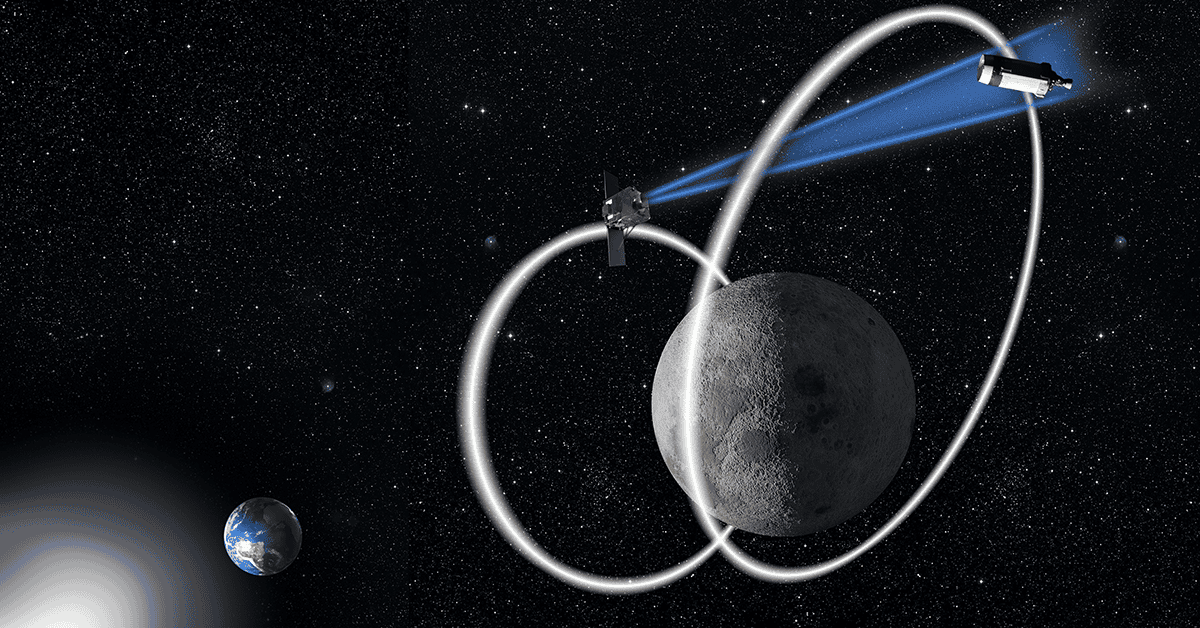
Work under the contract includes demonstrating space situational awareness and detecting and tracking objects in lunar region, AFRL said Thursday.
Formerly called Cislunar Highway Patrol System, the Oracle program seeks to launch a spacecraft designed to track objects operating at lunar distances and beyond at a range of about 320,000 kilometers. The experiment is set to start in 2025 and last for two years.
“Our primary goals for the program are to advance techniques to detect previously unknown objects through search and discovery, to detect small or distant objects, and to study spacecraft positioning and navigation in the XGEO realm,” said James Frith, Oracle principal investigator.
Jeremy Raley, director of AFRL’s Space Vehicle Directorate, said the lab looks forward to working with Advanced Space to deliver capabilities focused on a “safe and sustainable cislunar environment.”