
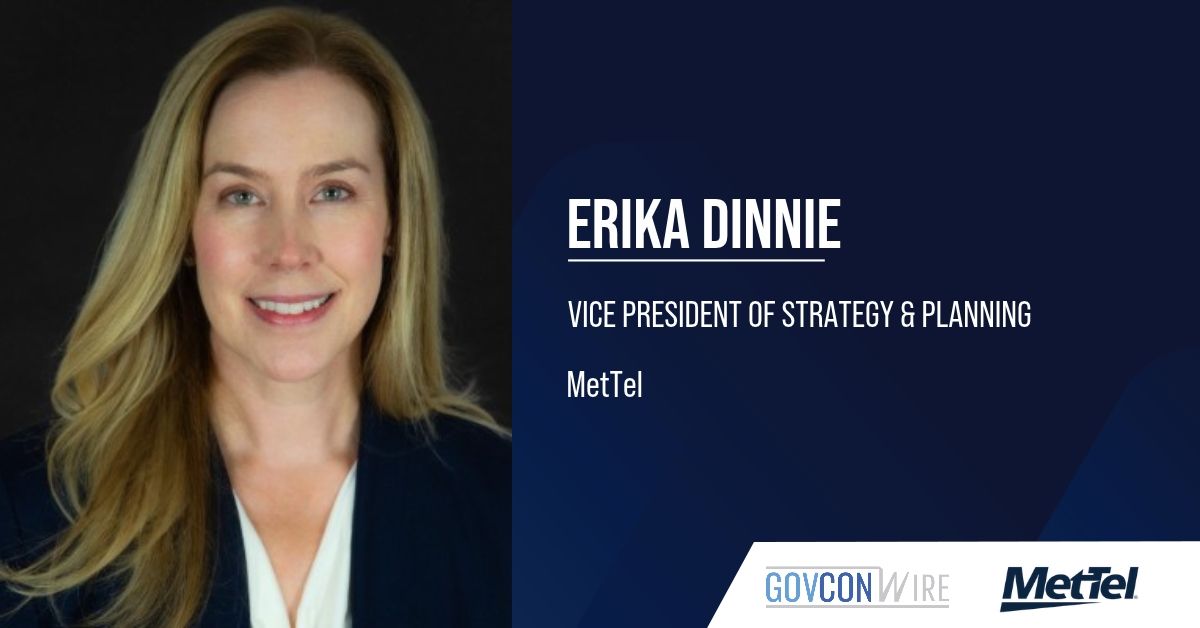

By Erika Dinnie, VP of Strategy & Planning, MetTel
As a retired federal civil servant who now works for a government contractor, I have participated in both sides of the request for proposal, or RFP, process. From that dual perspective, I have seen that the quality of an RFP often depends less on how it is written than on the conversations that occur before drafting begins.
What Is Really Driving the Requirements in Federal RFPs?
For decades, federal agencies have followed a familiar acquisition lifecycle: identify a requirement, conduct market research, issue a request for information, or RFI, in some instances, develop requirements, release an RFP and ultimately award a contract. On paper, the process appears straightforward. In practice, however, one critical question often goes unanswered: What is really driving the requirements in federal RFPs?

This question has become increasingly important as agencies face growing mission demands, rapidly evolving technology and government workforce shortages. While federal agencies routinely issue RFIs and conduct industry days, many contractors question whether these activities meaningfully shape final requirements or simply validate decisions that have already been made.
As agencies look to industry for earlier, more structured input before an RFP is written, the Potomac Officers Club’s 2027 GovCon Executive Leadership Summit on Feb. 25 will bring industry leaders together to discuss capture strategy and navigating evolving acquisition processes. Save your seat now!
Do RFIs & Industry Days Actually Shape Final Requirements?
Federal acquisition regulations, or FAR, encourage agencies to engage industry early and often. The intent is clear: improve understanding of government needs and market capabilities before a solicitation is released. FAR Part 10 requires agencies to conduct market research before developing new requirements in specific circumstances, while FAR 15.201 encourages early exchanges with industry through mechanisms such as industry conferences, one-on-one meetings, draft RFPs, RFIs and presolicitation conferences. Current FAR overhaul guidance reinforces this direction by encouraging responsible and constructive exchanges with industry while protecting procurement integrity and competitive fairness.
Yet many in industry have experienced situations where a detailed RFI response appears to have little influence on the final solicitation. Agencies may receive extensive industry input, only to release an RFP that appears largely unchanged from the original acquisition concept. Experiences like these have contributed to skepticism among some industry participants about the value of participating in market research.
In my experience, federal acquisition professionals genuinely want useful industry input. Contracting officers and program managers understand that unclear or overly restrictive requirements can reduce competition, create performance challenges and increase acquisition risk. However, many agencies are operating with limited acquisition resources and shrinking pools of experienced personnel. Internal subject matter expertise is often concentrated among a small number of individuals who are responsible for managing increasingly complex programs.
Under these constraints, acquisition teams may rely on existing requirements, incumbent contract language and historical statements of work for new procurements. The tendency to recycle requirements is understandable. It reduces risk, saves time and provides a familiar starting point. Unfortunately, it can also perpetuate outdated assumptions about technology, pricing models and service delivery approaches.
Rethinking the RFI
The purpose of an RFI should not simply be to determine whether vendors are interested in competing. Rather, it should serve as a mechanism to challenge assumptions, validate requirements and expose agencies to innovative approaches available in the marketplace. Acquisition professionals I have spoken with noted that market research should help agencies understand commercial practices and assess whether requirements align with available solutions.
Written RFI responses provide procurement teams with valuable information, but rarely the full picture. Vendors may provide detailed technical recommendations, identify requirement conflicts, propose alternative architectures, or highlight opportunities for cost savings. Yet without dialogue, agencies can struggle to interpret and apply the information they receive. Written responses frequently lack the context necessary to fully understand how a proposed solution would operate within a mission environment.
A more effective approach is to view the RFI as the beginning of the requirements development process rather than the end of market research. Following the RFI, agencies should conduct structured technical exchanges with a broad cross-section of industry. Structured technical exchanges help agencies distinguish between mission requirements and implementation preferences. These sessions can take the form of industry workshops, technical exchanges, capability demonstrations, or facilitated discussions involving program managers, contracting professionals, end users and industry experts. FAR guidance explicitly encourages these types of exchanges because they improve understanding of both agency requirements and industry capabilities.
Why Structured Industry Engagements Work
Structured industry engagements do not shift decision-making authority to contractors. It gives resource-constrained acquisition teams more direct access to current technical and commercial insight.
Structured technical exchanges help agencies distinguish between requirements and preferences. Many specifications included in solicitations are not true mission requirements but rather reflections of how work has historically been performed. Engaging industry allows agencies to separate desired outcomes from specific implementation methods.
These sessions provide an opportunity to identify emerging technologies and commercial best practices before requirements become locked into an RFP. This is particularly important in areas such as artificial intelligence, cybersecurity, cloud services, telecommunications and managed services, where technology evolves faster than traditional acquisition timelines.
Collaborative requirements development reduces the likelihood of unnecessarily restrictive specifications. When agencies engage a broad cross-section of industry, they gain visibility into multiple approaches for achieving mission outcomes. This can support broader competition and help agencies evaluate which approaches offer the strongest value.
Finally, structured engagement helps compensate for acquisition workforce skill gaps. Industry should not write government requirements, but it can provide valuable insight into what is technically feasible, commercially available and operationally practical. When acquisition officials and industry experts work together within the bounds of procurement integrity rules, requirements become more informed and more realistic.
The federal government is entering a period in which acquisition success will increasingly depend on effective collaboration before solicitations are released. As agencies place great emphasis on centralized acquisition and commercial solutions, meaningful market engagement will become more important than ever. To improve mission outcomes, strengthen competition and take advantage of commercial innovation, an RFI should begin the conversation rather than conclude it. The strongest RFPs emerge when agencies engage early, test their assumptions and define the mission outcome before prescribing the solution.