

- Revenue rose 4 percent to $4.63 billion
- Backlog reached $49.6 billion, with funded backlog up 22 percent
- The Q3 results are tied to the NorthStar 2030 strategy
Leidos raised its 2026 earnings guidance for the third consecutive quarter after third-quarter revenue grew 4 percent to $4.63 billion and non-GAAP diluted earnings per share climbed 19 percent to $3.62.
The Reston, Virginia, company said Tuesday it now expects full-year non-GAAP diluted EPS of $12.5 to $12.7, up from $12.2 to $12.5, and operating cash flow of approximately $1.90 billion, up from $1.85 billion. Revenue is expected to fall between $18.2 billion and $18.4 billion, up from the previous $18 billion to $18.2 billion range, reflecting the October divestiture of its security enterprise solutions business. Adjusted EBITDA margin guidance holds in the mid-13 percent range. The outlook assumes the government operates under a continuing resolution through year-end.
Net income in Q3 reached $413 million, or $3.28 per diluted share, against $369 million a year earlier, with a net income margin of 8.9 percent. Adjusted EBITDA was $644 million for a 13.9 percent margin. Free cash flow of $476 million brought the year-to-date total to $1.5 billion, surpassing the company’s original full-year target with a quarter remaining.
What Does Tom Bell Say About the Q3 2026 Results?
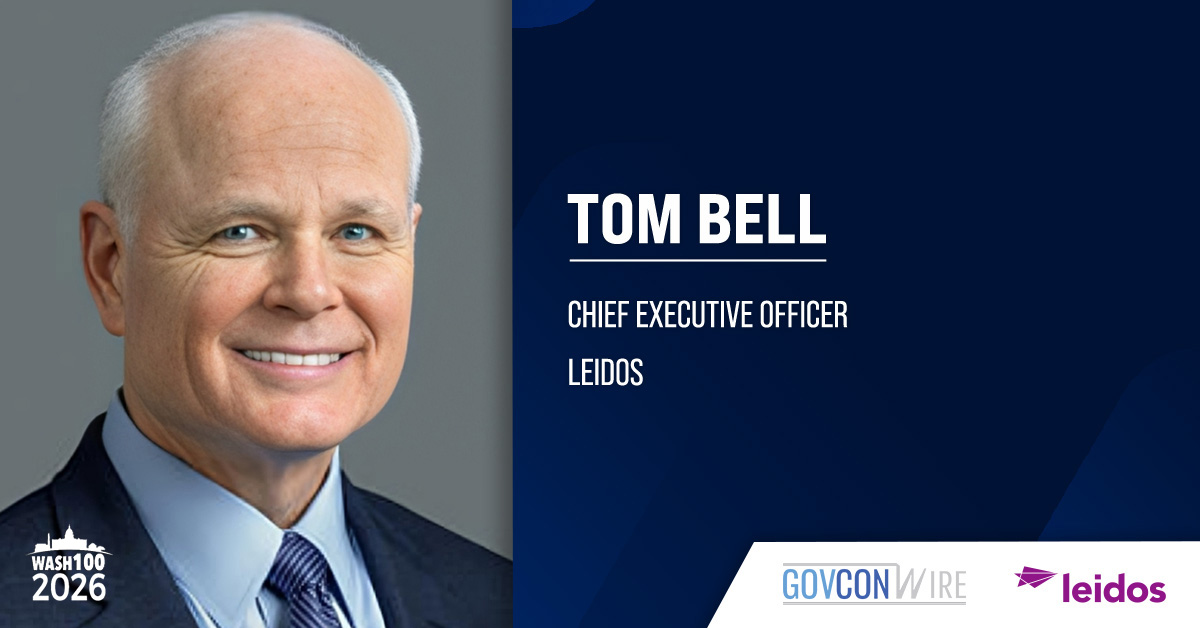
Leidos CEO Tom Bell, a three-time Wash100 Award winner, attributed the results to the company’s NorthStar 2030 strategy and said the company is making deliberate portfolio choices. “Defense Tech is a shining star for us,” he said on the earnings call for the quarter. “It is a business that is now winning consistently because the customer is increasingly seeing us as the mature disruptor,” Bell continued.
Which Leidos Segments Grew in the Third Quarter?
Homeland led with 32 percent growth to $1.02 billion, 15 percent of which was organic, driven by demand in domestic and international air traffic management and the ENTRUST Solutions acquisition. Bell said the energy pipeline has grown 230 percent since that deal closed, with more than $10 billion in targeted orders, and that integration is essentially complete.
Defense revenue rose 3 percent to $992 million and 4 percent sequentially as integrated air defense and counter-drone production ramped. Intelligence and digital grew 1 percent to $1.55 billion, with intelligence community demand offsetting federal civilian IT reductions.
Health contracted 12 percent to $1.07 billion on reduced volumes tied to the Veterans Benefits Administration disability exam contract. Excluding health, revenue grew 9 percent and non-GAAP operating income grew 48 percent.
What Contracts Did Leidos Win in Q3 2026?
Net bookings totaled $5.5 billion for a book-to-bill ratio of 1.2, with defense at 1.9 for the quarter and 2.0 year to date. Backlog closed at $49.6 billion, of which $11.1 billion was funded, up 22 percent year over year.
The largest award was a $717 million contract to continue threat mitigation and intelligence, surveillance and reconnaissance support for Air Combat Command’s intelligence directorate across 35 global locations. The Transportation Security Administration awarded $672 million to continue deploying and managing screening equipment at federalized airports, and the Defense Health Agency issued a 12-month, $318 million sole-source bridge to sustain MHS GENESIS.
The Army awarded a $301 million follow-on for round-the-clock defensive cyber operations on the Department of War Information Network, under which Leidos is deploying its UpHold Effect agentic security operations platform. Sierra Space awarded Leidos $272 million for infrared sensing payloads and onboard signal processing on 18 missile-tracking satellites under the Space Development Agency’s Accelerated Missile Defense Tranche 3 program.
Other awards included a $170 million contract to upgrade flight data processing software for the United Kingdom’s National Air Traffic Services, a five-year, $160 million contract supporting U.S. Cyber Command; $155 million for continued work on the Navy’s nuclear-armed sea-launched cruise missile; and a five-year, $129 million blanket purchase agreement for a shared electronic health record platform serving Customs and Border Protection and Immigration and Customs Enforcement.
Bell said the defense tech business has booked more than $10 billion in awards over 18 months, with more than a dozen programs moving from development into rate production, and that the company sees a path to $1 billion in annual munitions revenue by 2030. He also pointed to 212 active other transaction authority contracts with a $6.6 billion ceiling, 33 of which were awarded this year.
What Does Leidos Expect in 2027?
In the earnings call, Chief Financial Officer Chris Cage said 2027 will not be a bottom-line growth year, citing the VBA transition and the timing of portfolio investments. He said some booking decisions did not go the company’s way in the third quarter, which will temper momentum into the fourth quarter and next year.
The VBA medical disability examination recompete is the central variable. Bell said the final request for proposals is expected this month and that existing contracts will likely be extended through the first half of 2027, aligning with a planned start date for the new contract on July 1. The draft contemplates two to four vendors across six service groups, with work share weighted toward demonstrated performance, which, Cage said, leaves open the possibility that Leidos emerges with more work than it holds today.
Leidos closed its joint venture with Altaris on Oct. 5, contributing its security enterprise solutions and industrial automation businesses and retaining a 41.5 percent equity interest. Bell said the venture is positioned in a $5 billion global security products market.
The company repurchased $504 million in shares during the quarter and returned $52 million in dividends. Its board declared a quarterly dividend of $0.45 per share on Oct. 30, a 4.7 percent increase, payable Dec. 31 to holders of record Dec. 15.