

SES reported $2.94 billion in revenue for fiscal year 2025, reflecting the first year of financial consolidation following its acquisition of satellite operator Intelsat in July.
Adjusted EBITDA reached $1.34 billion while adjusted free cash flow totaled $256.5 million for the year, SES said Monday.
The acquisition of Intelsat expanded SES’s satellite fleet and strengthened its ability to deliver connectivity services across government, aviation, maritime and media markets.
How Did the Intelsat Acquisition Expand SES Capabilities?
Integrating Intelsat increased the SES fleet to about 120 satellites across geostationary and medium Earth orbits, enabling the company to combine spectrum bands for enhanced connectivity.
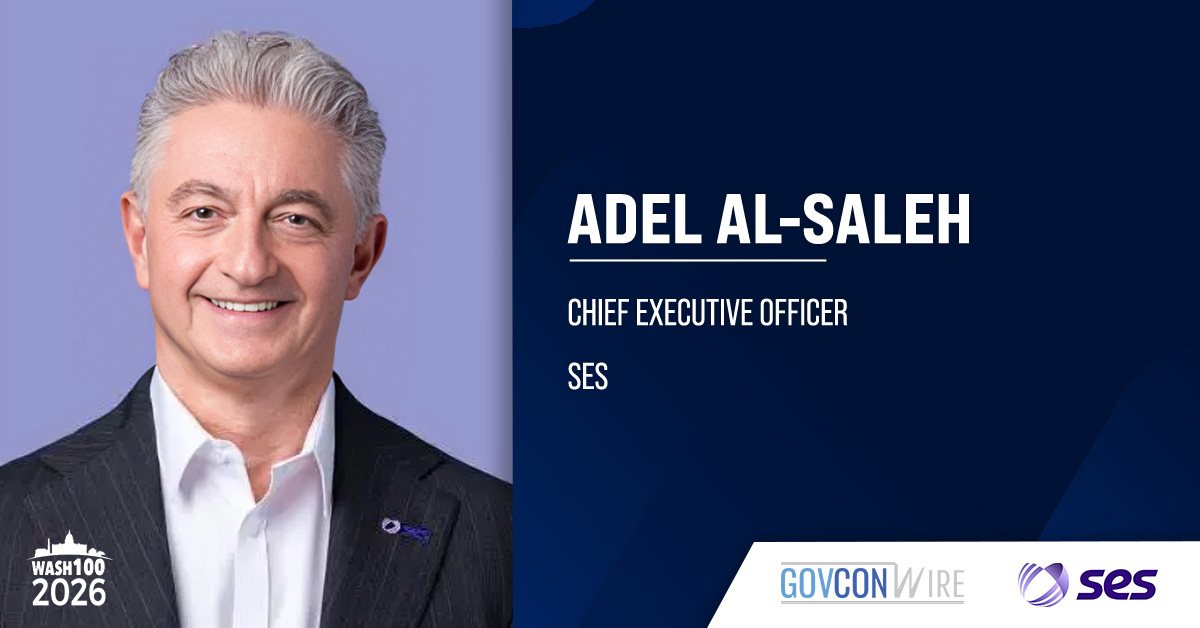
“2025 was a milestone year for SES, a year of major progress, step-change in company’s scale, and decisive actions while integrating Intelsat and delivering on our synergy plan from Day 1,” said Adel Al-Saleh, CEO of SES and a 2026 Wash100 Award recipient.
Where Is SES Seeing Market Growth?
Growth during the year was largely driven by the company’s networks business, whose revenue reached $1.83 billion, accounting for roughly 62 percent of total company revenue.
Within the segment, aviation revenue increased 145.5 percent year over year, while government revenue grew 47 percent compared with the prior year.
SES also secured approximately $2.02 billion in new contracts and renewals in 2025, bringing the total backlog to over $7.92 billion.
“Across our Networks and Media businesses, we executed with focus and supported customers at scale. We believe our continued momentum in Government and Aviation reflects the market’s confidence in SES and the unique value of our scalable, multi‑orbit architecture,” said Saleh.
He noted that the aviation business continued to gain traction as airlines adopted its multi-orbit connectivity system. The company’s electronically steered antenna platform is now operational on more than 500 aircraft and has been selected by 16 airlines for more than 1,000 aircraft worldwide.
How Is SES Expanding Its Role in Defense Communications?
The momentum in its government segment stemmed from growing demand for secure, resilient satellite communications. “We won significant new contracts, including selection as one of five companies on the U.S. Space Force’s Protected Tactical SATCOM‑Global (PTS‑G) IDIQ contract, and a strategic award from the Defense Innovation Unit for Secure Integrated Multi‑Orbit Networking (SIMON),” the SES CEO said.
Intelsat General Communications was named an awardee under the PTS-G contract.
In addition to U.S. programs, SES advanced several sovereign connectivity initiatives, including the IRIS² program in Europe and the GovSat-2 satellite project with the Luxembourg government. The company also extended its defense partnership with Australia.
What Is SES’s Outlook for 2026?
Looking ahead, SES expects revenue and adjusted EBITDA to remain broadly stable on a like-for-like basis in 2026.
The company plans approximately $840 million in capital expenditures, which includes support for its work on IRIS2 and the first phase of meoSphere, its next‑generation multi‑mission MEO network.
SES continues to advance its O3b mPOWER satellite constellation. According to Saleh, the launch of O3b mPOWER satellites 11 to 13 is planned for the second half of 2026.
“O3b mPOWER satellites 9 & 10 successfully launched on 22 July, with satellites 7, 8, 9 & 10 now in service,” the SES CEO stated.