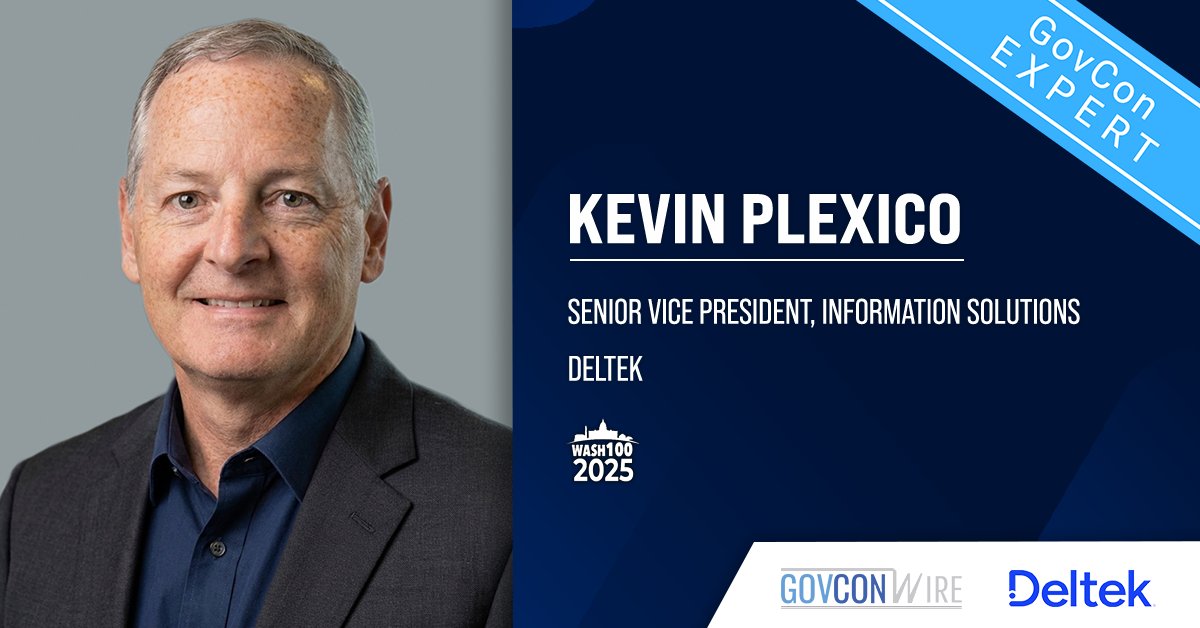

By Kevin Plexico, Deltek senior vice president of information solutions, a six-time Wash100 awardee and a GovCon Expert
Defense contractors have always focused on delivering for the warfighter. Many of the companies that do so are publicly traded. As a result, they must balance performance with solid financial results. It’s a tightrope and those walking it just came under White House scrutiny. A new executive order issued on Jan. 7, Prioritizing the Warfighter in Defense Contracting, demands that performance comes first — and contractors identified as underperforming may face new financial penalties and restrictions
The new direction represents a strategic reset, challenging how success has been measured for years. Underperforming programs have long frustrated Congress and the Pentagon, even when they have contributed to them. Remember the F-35? It was years behind schedule and billions over budget. That’s just one example.
Now, underperformance could hit a company’s bottom line and affect how it treats its stockholders.

Kevin Plexico will be a speaker at the Potomac Officers Club’s 2026 GovCon Executive Leadership Summit on Feb. 26. Book your tickets now to hear more about his thoughts on the federal contracting landscape.
How the Executive Order Changes the Game
Prioritizing the Warfighter in Defense Contracting marks a fundamental shift in defense contracting. It gives the Department of War power to call out contractors who miss deadlines or neglect critical investments in production capacity.
Here’s a quick summary of what the EO requires:
- Financial Penalties: If identified as underperforming, a contractor is prohibited from conducting stock buybacks or issuing dividends until performance improves. Contractors that do not offer stock or dividends will not be affected.
- Remediation Window: Underperforming contractors have just 15 days from the date of notification to submit a board-approved remediation. Emergency board meetings could become the new norm.
- Executive Compensation: Future contracts will tie executive pay to delivery performance and salary caps may be imposed during periods of underperformance.
- International Sales Advocacy: Underperforming firms may face limits on government support for international sales.
- Legal Review: Many of these provisions are expected to face challenges in court. However, contract amendments and enforcement mechanisms will likely move forward quickly. Even court challenges can be expensive, unpredictable and drawn out.
It’s important to note that these penalties are not automatic. Someone at the DOW will need to decide to use them. They are a stick that could be used if the department deems a company’s performance substandard.
Every delay or missed project milestone could also have implications for capital allocation, governance and incentives. For example, delayed delivery could trigger restrictions on issuing dividends and buybacks, while missed investments in production capacity might require rapid remediation plans and board-level intervention. Even prioritizing commercial work over defense contracts could put winning future business at risk. Cash that once flowed to shareholder returns may now be needed to fund workforce expansion, tooling and supplier development.
Another important consideration is the types of contractors to which the EO applies. The EO is initially directed at contractors that provide critical weapons, equipment and supplies essential to national defense. While its primary focus is on these direct suppliers, subcontractors and service providers may also feel the effect if the DOW applies penalties throughout the supply chain. The EO’s criteria for “underperformance” remain subjective for now and will be further detailed in forthcoming guidance.
These questions notwithstanding, the bottom line is that you can and should take decisive action today to position your company to address potential challenges and seize the opportunities this market offers.
Here’s how.
What Leaders Must Do Now
Increasing visibility into your business processes is the first step to adapting to the new environment. Does your team have a real-time view of schedule adherence, production throughput and supplier performance? If those metrics aren’t visible, quick decisions become impossible — and in this new era, speed matters. Having an early warning system is critical to avoid surprises.
Once you have clarity, the next step is reinvestment. Where are the bottlenecks slowing delivery? That’s where your capital needs to go. For some, it will mean securing long-lead components before they become scarce. For others, it might require investing in specialized equipment or forging stronger supplier relationships through multi-year agreements and transparent demand forecasts. The Executive Order doesn’t say how to do this—but its message is unmistakable: expanding capacity is now a strategic priority.
Align incentives with production priorities. For years, executive compensation has been tied to EPS growth—a measure of profit per share. That model is shifting for defense contractors. Future plans will reward delivery milestones, production capacity and risk reduction. Document these changes and communicate them clearly. Transparency will help maintain trust as you navigate this transition.
Finally, prepare for recovery before you need it. The EO sets aggressive timelines for remediation and companies that respond quickly will fare better. Board-approved templates for corrective action plans should be ready, complete with cost and schedule fixes and root cause analysis. Make recovery planning a core capability and have it ready before you need it.
Turning Compliance Into Advantage
Compliance with the EO’s new provisions isn’t just a regulatory hurdle; it can be a strategic opportunity to demonstrate your company’s reliability and performance. Proactively aligning operations and documentation with the DOW’s performance requirements positions your firm as a preferred partner in this new environment.
Reliability, predictability and scalability signal to the Pentagon that your firm is the partner of choice. The sooner you adjust governance and incentives, the fewer surprises you (and the DOW) will face down the road. Beyond that, clear investor messaging will help maintain confidence as you navigate this transition.
Communication with the government is becoming more important than ever. Building solutions means working with government managers and technical personnel. Ensuring your company understands its requirements/expectations and documenting your efforts to meet them is key. It’s worth noting that the government often deserves as much blame as the contractor for delays and cost overruns. Contractors need to be sticklers for documentation.
Don’t underestimate the pace of change. Implementation will move quickly, including 30-day performance reviews, 15-day remediation windows and new contract language within 60 days. Guidance will soon define what underperformance looks like and how it will be enforced. Act now to position yourself as a leader—waiting is not an option.
Ultimately, this Executive Order represents a reset. Success will hinge on how fast you pivot from financial engineering to operational excellence. Deliver on time, invest in capacity, align incentives with mission outcomes and your company will thrive. Performance-first is not a strategy; it is the answer.