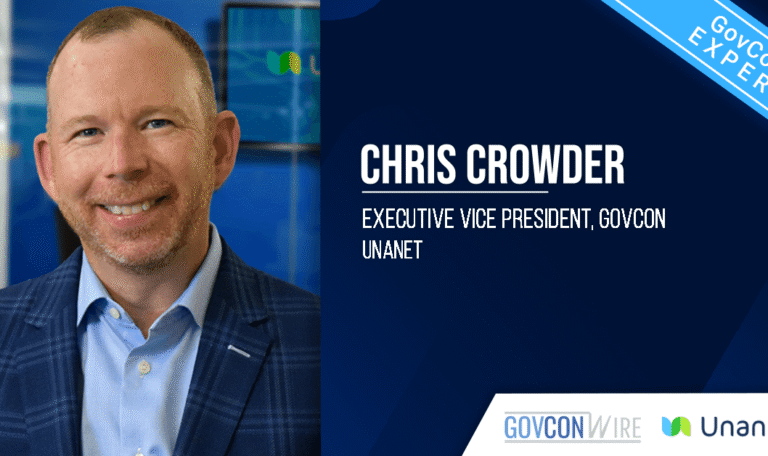

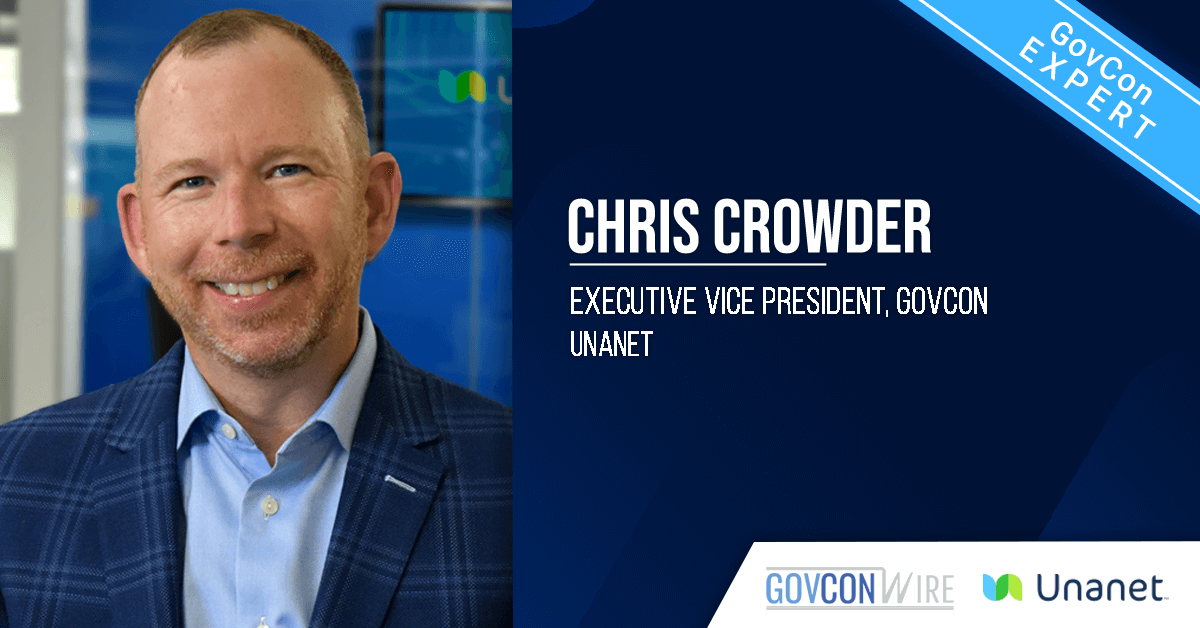

By Chris Crowder, executive vice president, GovCon, Unanet
In government contracting, relationship structure is not administrative. It is strategic.
The U.S. Small Business Administration Mentor-Protégé Program offers access to contracts, vehicles and competitive positioning that many firms could not otherwise achieve alone. But access is not the same as sustainability. Companies that generate durable growth through mentor protégé relationships do not treat joint ventures as temporary bid vehicles. They treat them as operating enterprises.
Too many mentor-protégé joint ventures, or JVs, are formed around a single pursuit. Ownership percentages are defined, an operating agreement is executed, and a bank account is opened. Governance, financial infrastructure and risk modeling are addressed only after contract award.
Sustainable growth begins long before revenue flows, with an intentional design. That design should start with the Mentor Protégé Agreement.
Mentor Protégé Agreements as the Structural Foundation
Every SBA mentor protégé relationship is formalized in a Mentor Protégé Agreement. This is more than a compliance document. It is the blueprint for how capability, control and accountability will develop over time.
Strong agreements include the following:
- Define specific developmental objectives in operational terms
- Map those objectives to specific commitments with named owners and timeframes
- Connect the relationship to anticipated contract structures, including joint ventures and subcontracts
If the joint venture is the primary operating vehicle, the Mentor Protégé Agreement and the JV operating agreement should read like companion documents. Together, they should describe who is accountable for development, who controls performance and how the protégé will grow into independent capability.
Not all Joint Ventures Are the Same
The term “joint venture” is often discussed as though it represents a single model. Mentor-protégé JVs sit on a spectrum of choices that affect control, visibility and scalability.
Some JVs are narrowly constructed to pursue and perform a single contract. These pop-up entities can be effective for targeted access, but they rarely institutionalize governance or financial maturity.
Others are designed as platforms to pursue multiple awards over time and must be supported with adequate funding, scalable accounting systems and defined governance structures, so they function as sustained enterprises, not short-term teaming vehicles. Within any model, one structural question is critical: how will performance and cost flow? In a centralized structure, all contract revenue flows through the JV, which subcontracts scopes of work to the member companies and remains the operational prime in substance and form. This structure reinforces authority lines and strengthens financial transparency.
There is no single “correct” structure or strategy. The right answer is the one that aligns the JV’s role, the Mentor Protégé Agreement and the parties’ long-term strategy.
Governance Before Revenue
Regulations define minimum ownership and control requirements. Sustainable joint ventures go further and define, in practical terms:
- Who controls cash disbursement
- Who approves hiring and labor mix
- Who owns pricing strategy and forward rates
- Who bears performance risk
- How disputes are resolved under schedule pressure
Those authority lines should echo the Mentor Protégé Agreement. If the agreement calls for the protégé to develop pricing and financial management capability, JV governance should give the protégé meaningful roles in those areas, with structured support from the mentor.
Protest delays, funding variability, utilization swings and regulatory changes are part of the landscape. Ambiguity in governance magnifies that volatility. Clarity dampens it.
Financial Architecture Drives Stability
The durability of a mentor protégé relationship is rarely tested during proposal development. It is tested during project performance when plans shift and during payroll cycles, billing delays, indirect rate true-ups and audit reviews.
Joint ventures that are built to last start by designing how the money will be managed, not treating it as an afterthought. That includes decisions around accounting system segregation, indirect pool structure, allocation methodologies, working capital thresholds and distribution policies. These decisions should align with the financial systems and rate maturity objectives in the Mentor Protégé Agreement, so each contract reinforces the protégé’s growth.
Forward pricing confidence rests on stable rates and stable rates require disciplined cost accumulation and structural clarity. A purpose-built platform like Unanet’s GovCon ERP supports accurate cost capture, consistent allocation and audit-ready reporting.
Subcontract Flow is Structural, Not Administrative
In many successful structures, the JV receives all revenue and then subcontracts work to the member firms. Revenue, cost accumulation and subcontract performance are centralized inside the JV, while day-to-day labor administration remains with the partners.
That approach matched the experience of Koster, VP of GovCon Strategy for Unanet.
“As the controller for a joint venture where labor was subcontracted from the partners, the JV did not process payroll directly. We focused on managing subcontract costs, cash and reporting, while the partners handled hiring and pay. Clear structural choices made it easier to maintain both compliance and control.”
Designing for Graduation
The purpose of a mentor protégé relationship is capability transfer, not dependency. The strongest structures define measurable milestones for:
- Systems maturity
- Compliance discipline
- Pricing independence
- Operational scalability
They anticipate what the protégé must look like at the end of the relationship and capture those milestones in the Mentor Protégé Agreement and in the JV’s operating documents.
A well-structured mentor protégé partnership concludes with a stronger enterprise.
Conclusion
The SBA Mentor-Protégé Program offers opportunity, but opportunity alone does not produce sustainable growth. Structure does.
A joint venture works best when the Mentor Protégé Agreement guides its design from the start. GovCons can position for success by defining governance before revenue arrives. Build the financial structure for transparency and audit readiness. Structure subcontract flow with intention. Do that, and the JV becomes more than a path to eligibility. It becomes an enterprise built to perform under scrutiny and across award cycles, not just during the life of the agreement. In government contracting, structure is strategy.