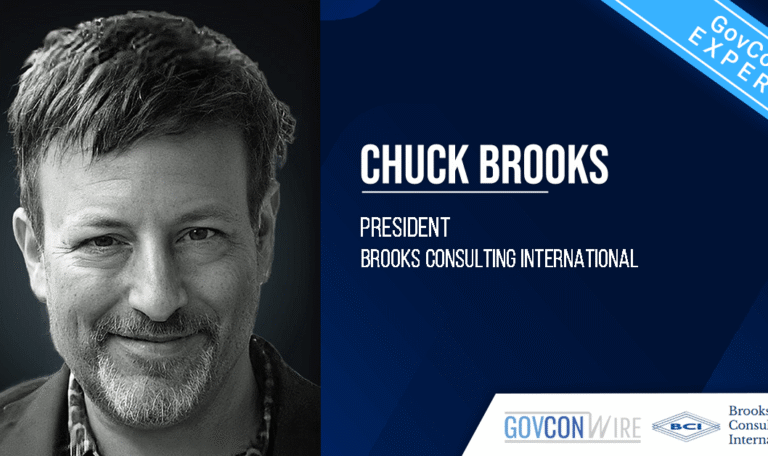

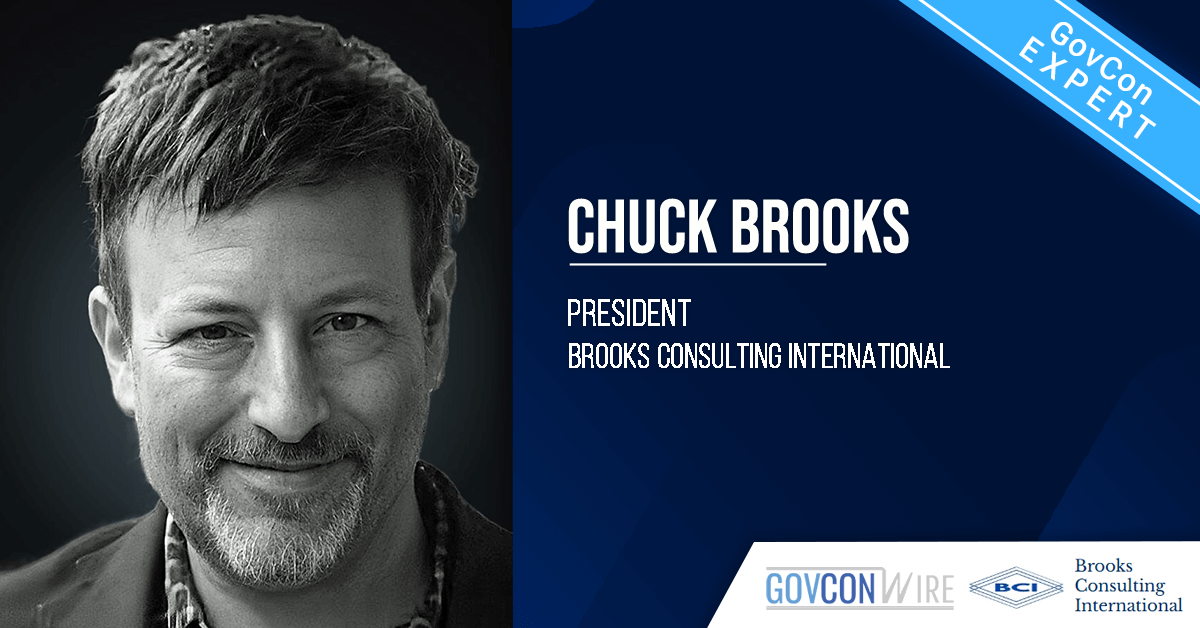

By Chuck Brooks, president of Brooks Consulting International and one of Executive Mosaic’s GovCon Experts
Artificial intelligence, or AI, is not merely a tool in our age of rapid technological advancement; rather, it is the fundamental force behind innovation in all spheres of society. Our world is changing due to AI’s capabilities, which range from real-time decision-making in national security to predictive analytics in healthcare.
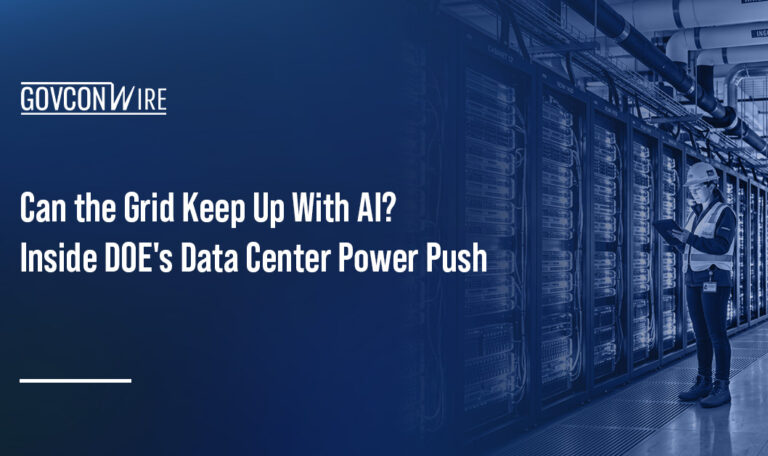
The contemporary data center, the digital stronghold that stores, processes and drives the enormous computing demands of AI models, is at the center of this change. However, as AI adoption picks up speed, these vital infrastructures are confronted with two existential challenges: an unparalleled increase in power usage and a changing environment of increasingly complex security risks. For operational continuity, economic stability and national resilience, addressing both is now essential and no longer discretionary.
As AI adoption accelerates across the government, challenges like higher power demand and cyber risks are expected to emerge. Get to know more about these challenges and the strategies being laid out to address them at the Potomac Officers Club’s 2026 Artificial Intelligence Summit on March 18. Reserve your seats here.
The Power Imperative: AI’s Insatiable Demand Straining the Grid
The scale of AI’s computational hunger cannot be overstated. Research from the Lawrence Berkeley National Laboratory, cited in my recent analyses, reveals that U.S. data centers’ power consumption has tripled over the past decade—and projections indicate it could double or triple again by 2028. Goldman Sachs and other forecasts point to a potential 165% rise in global data center power demand by 2030, largely driven by energy-intensive AI training and inference workloads on GPUs and specialized chips.
This growth is pushing the U.S. energy grid—already burdened by aging infrastructure—to its limits. The U.S. energy grid, which is already strained by aging infrastructure, is being pushed to its breaking point by this expansion. A large portion of the grid, which consists of more than 7,000 power plants, hundreds of thousands of miles of high-voltage transmission lines and 70,000 transformer substations spread over three major interconnections (Eastern, Western and Texas), depends on parts that are decades old. Sixty percent of circuit breakers exceed 30 years in age and 70 percent of transmission lines are at least that old. As North American Electric Reliability Corporation Director John Moura has noted, the grid is simply “not built to handle the loss of 1,500-megawatt data centers” as they scale.
Instead of being separate consumers, data centers are essential components of the larger ecosystem of critical infrastructure, which underpins everything from financial markets and telecommunications to healthcare and agriculture. The scenario necessitates immediate upgrading, including improved nuclear choices and renewable energy sources, smart sensors for real-time optimization and microgrids for localized resilience. Funding these upgrades and avoiding cascade failures that might destabilize entire societies, not just data centers—will require public-private collaborations.
AI Era Security: Integrated Defense to Bold Projects Power Is insufficient in the Absence of Robust security.
Data centers have turned into top targets for internal threats, cybercriminal groups and nation-state actors in my piece “Data Centers Facing Bold Security Challenges in 2025 and Beyond.” They serve as the foundation for cloud computing, IoT ecosystems and AI operations, making them valuable assets whose breach might have disastrous effects on the economy and national security.
The threat environment is changing quickly. Cloud misconfigurations, insecure APIs, hybrid/multi-cloud vulnerabilities and increased attack surfaces from edge computing and IoT devices are examples of cyber issues. The SolarWinds hack serves as an example of advanced persistent threats, or APTs, which allow for extended infiltration and data exfiltration. These days, adversaries use AI as a weapon to automate attacks, create deepfake-enabled phishing, create self-evolving malware that eludes conventional defenses and plan enormous DDoS campaigns. Double-extortion techniques have become more common in ransomware, and the imminence of quantum computing could make existing encryption outdated and call for quantum-resistant algorithms.
Equally important and becoming more and more entwined with the digital world is physical security. Zoned security protocols, biometric entry systems (facial recognition, fingerprint and retinal scanning), drones for wide-area monitoring and AI-powered analytics are all complementing traditional perimeter controls (fences, gates and surveillance). Whether intentional or inadvertent, insider threats necessitate constant observation and stringent access control.
A unified, multi-layered approach that combines cybersecurity and physical security via human-AI cooperation holds the key to the answer. Important pillars consist of:
• Zero Trust architectures and “security by design” principles.
• Comprehensive encryption, multi-factor authentication, or MFA, network segmentation and regular vulnerability assessments.
• AI-driven tools for real-time threat detection, anomaly identification and automated response—turning AI from a vulnerability into a powerful defender.
• Supply chain risk management, insider threat mitigation programs and rigorous compliance with standards such as ISO 27001, SOC 2 and GDPR.
• Robust incident response and business continuity plans, including geographically diversified backups and table-top exercises.
Resilience in critical infrastructure is attained through public-private partnerships, continuous employee training and proactive risk management frameworks that follow NIST criteria. Data centers are now considered key national assets whose security directly affects both public safety and economic growth.
The Convergence: Power, Security & AI Interdependence
These challenges are deeply interconnected. A cyberattack on the energy grid—such as the 2015 Russian assault on Ukraine’s power infrastructure that left hundreds of thousands without electricity—could instantly disable data centers. Physical sabotage at substations (which rose 77% in 2022) or existential threats like electromagnetic pulses from solar flares or high-altitude nuclear detonations could cause months- or years-long blackouts, with devastating ripple effects. AI exacerbates adversary capabilities as well as operators’ defensive options.
We need to think of cybersecurity and power resiliency as two sides of the same coin. Both the digital and physical realms must be covered by “security by design,” which includes EMP-hardening techniques like surge arresters, neutral ground blockers and shielded microgrids, as well as operational technology, or OT and industrial Internet of Things, or IoT, defenses.
Unmatched opportunities are presented by the AI era, but only if we protect its underpinnings. Investments in sustainable power sourcing, next-generation security systems and energy-efficient AI hardware must be given top priority by industry leaders. Through programs like the Department of Energy’s cybersecurity initiatives, governments and regulators can expedite financing, enforce more stringent regulations and encourage cross-sector collaboration.
The era of incrementalism is over. We must take decisive, well-coordinated action to modernize the grid, strengthen data centers with integrated defenses and use AI to stay ahead of threats. National security, economic competitiveness and creativity all depend on it.
The AI revolution depends heavily on data centers. We can make sure they continue to be strongholds in an increasingly complicated digital environment by taking on the interrelated problems of power and security head-on.