
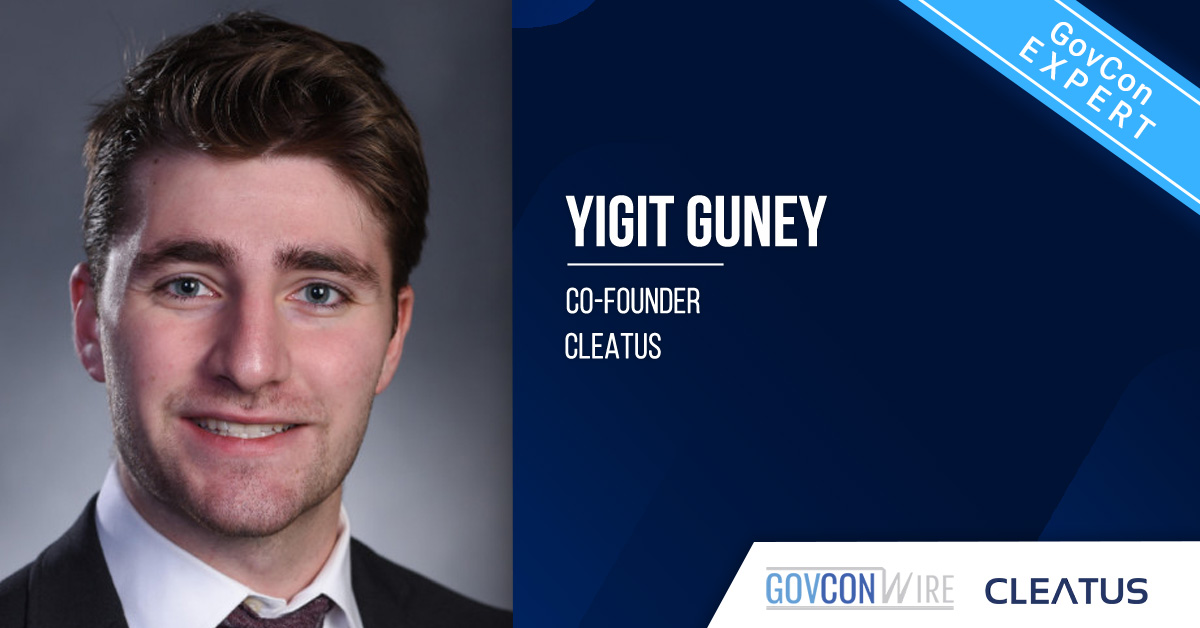

By Yigit Guney, co-founder, CLEATUS
Most capture teams still lean on saved searches and inbox alerts, but the real signals live inside the PWS, SOW, Section J attachments, Q&A and amendments. Fragmented portals and constant updates make surface-level monitoring too slow for today’s pace. To stay ahead, leaders need to shift from metadata to meaning and from notice-chasing to decisions grounded in what the documents actually say.
AI is now setting the competitive baseline. Systems that learn your company, read the full record, track changes with context, normalize sources into one view and rank by fit are moving from nice-to-have to necessary. Firms that adapt will decide faster and pursue smarter. Those that remain on keywords and email alerts will struggle to keep up.
Why Legacy Alerts and Surface-level Filters Now Fall Short
- Keyword blind spots. Synopses and titles rarely capture evaluation factors, deliverables, or constraints. Keyword searches miss requirements stated in different wording.
- Portal fragmentation. Federal, state, local and education sites publish on different cadences and use different taxonomies. Managing parallel alerts creates noise and duplicate effort.
- Amendments that change the plan. Q&A and updated attachments can alter scope, add certifications, or change submission instructions. An email notice says something changed, not how it affects your approach.
- Version sprawl and manual effort. Teams spend hours on Ctrl+F searches, copying text into trackers and reconciling versions across shared drives. Important judgments get delayed by administrative work.
What Context-Aware AI Makes Possible
Modern AI should combine three inputs: a company model, the full solicitation record and live market updates. The result is fit-first triage, not keyword matches. To make the ideas concrete, examples below reflect how we designed CLEATUS AI while avoiding repetitive name drops.
- Model the company. Encode capabilities, past performance, certifications, geographies, teaming preferences and risk tolerance. Use that model to score fit before the team spends time. In practice, CLEATUS turns this into a ranked shortlist with clear reasons.
- Understand the record. Read the PWS or SOW, Section J attachments, instructions and evaluation language. Extract obligations, deliverables and scoring factors as structured data the team can act on.
- Track amendments with context. Detect changes, summarize the “what changed” and the “so what,” then route the update to the right owner with suggested next steps.
- Unify fragmented sources. Pull federal and state portals into a normalized view so the pipeline reflects the entire market rather than the quirks of each site.
- Ask and verify. Chat the contract in plain language and return answers with citations to the exact clause or attachment. Include flags for hidden compliance cues such as CMMC tiers or surety clauses.
From Document Analyst to Deal Strategist
AI does not replace capture. It elevates it by changing how teams spend time. The competitive edge shifts from who can read the fastest to who can apply insight the best.
“I used to spend Mondays sorting through noise. Now I spend them talking to partners about a qualified opportunity flagged over the weekend.”
- 80 percent use information, not find it. With first-pass reading and extraction automated, teams invest time in stakeholder conversations, teaming and shaping requirements before the final RFP.
- Sharper bid or no-bid discipline. Early, objective briefs on compliance and evaluation factors reduce false starts and late pivots. Leadership gets a clearer picture of pipeline quality.
- Better pursuit strategy and collaboration. Writers, pricers and subject matter experts work from the same extracted requirements and deadlines, which reduces rework and keeps win themes consistent from capture through proposal.
A Practical Model for Context-Aware Capture, in Practice With CLEATUS
The principles above are not theoretical. In CLEATUS, they run together in one workflow so teams move from discovery to draft without losing context. Each principle is paired with how it operates in practice.
Company model at the core.
Maintain a living profile of what you do well. Map capabilities, certifications, geographies, teaming rules and risk tolerance to how evaluators score. CLEATUS uses this model to sort the firehose into a prioritized list that explains why each item ranks where it does.
Document-grounded intelligence.
Treat the solicitation package as the source of truth. Parse the PWS or SOW and every Section J attachment. CLEATUS extracts obligations, deliverables, milestones, submission instructions and evaluation factors into structured outlines and checklists your team can act on immediately.
Live change handling.
Monitor amendments and Q&A continuously. CLEATUS summarizes impacts on scope, compliance and schedule, then notifies the right owner with recommended actions such as updating a compliance matrix or revising a teaming assumption.
Unified intake and normalization.
Aggregate federal, state and local sources into a single pipeline. CLEATUS normalizes notices, attachments and updates so search, filters and analytics behave consistently, regardless of where the notice originated.
Fit modeling and prioritization.
Translate the company model and document insights into a ranked view of the pipeline. CLEATUS shows why an opportunity ranks where it does, including look-alike work from your past performance and gaps that need a partner or subcontractor.
Interactive Q&A with citations.
Let reviewers ask plain-language questions. CLEATUS returns cited answers that point to the exact clause, table, or attachment, which keeps speed high without sacrificing rigor.
Why Choose CLEATUS?
Saved searches and email alerts were the right tools for a prior era. Today’s volume, fragmentation and complexity demand context-aware systems that learn your company, read the full record and recommend by fit. Teams that make this shift will spend less time chasing notices and more time shaping deals. CLEATUS is built for that shift, and the approach is ready to use today.