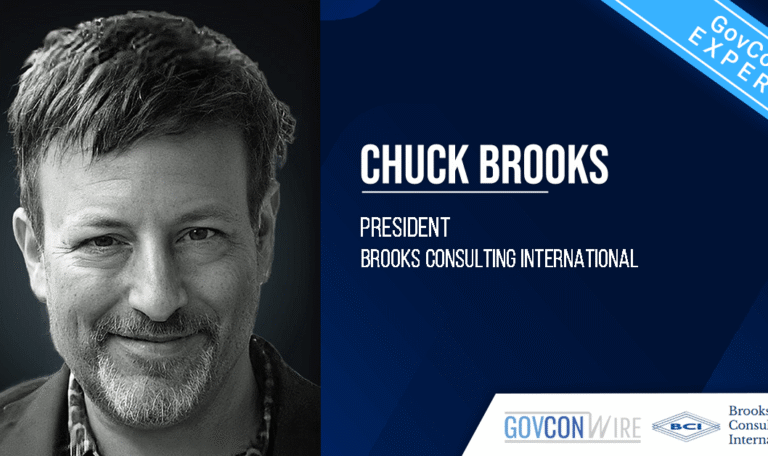

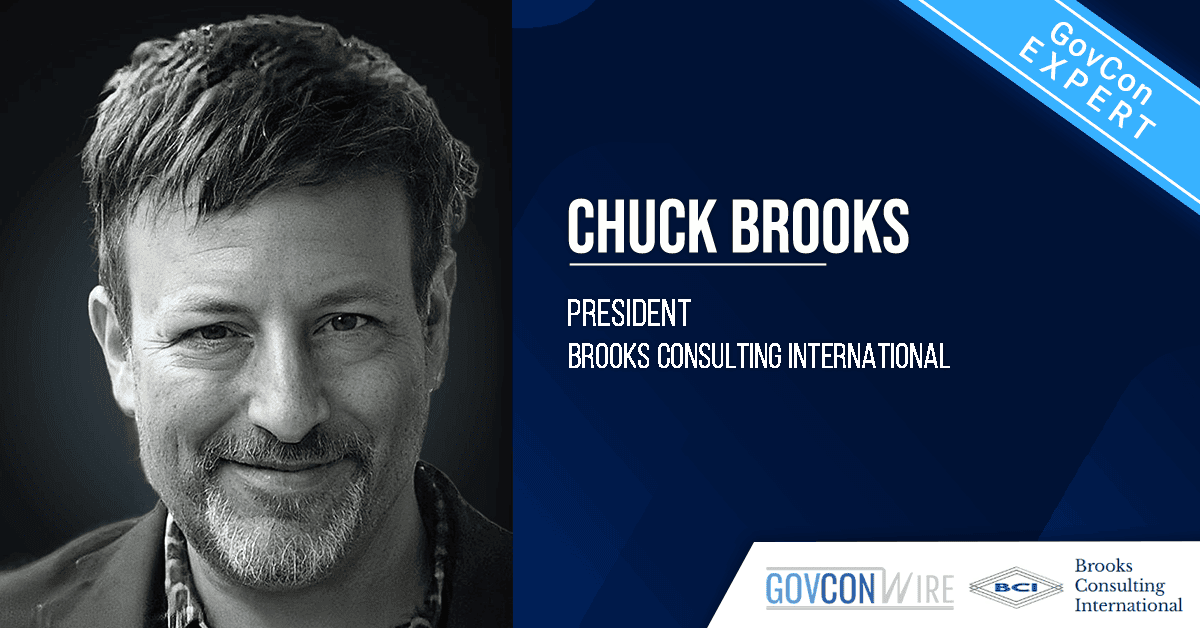

By Chuck Brooks, president of Brooks Consulting International
The White House’s recent announcement placing quantum science and artificial intelligence at the top of federal research and development priorities for fiscal year 2027 represents more than a policy shift. It signals a recognition that these two technologies will define the next era of U.S. national security, economic growth and global leadership.
As outlined in the memorandum from the Office of Management and Budget and the Office of Science and Technology Policy, the U.S. is directing agencies to emphasize both fundamental science and applied engineering across AI and quantum, while also strengthening enabling technologies like semiconductors, secure networks and advanced manufacturing. This dual-track approach reflects an urgent need: not only to lead in discovery, but to ensure that discoveries translate into practical, deployable systems for both civilian and defense applications.
Why AI and Quantum Matter Now
For years, I have emphasized in my published articles and most recently in my book on quantum technologies and AI that these innovations are not just incremental improvements—they are transformative.
- Artificial intelligence enables automation, accelerates scientific discovery, strengthens cybersecurity through smarter analytics and supports decision-making across health, energy, defense and space. Yet it is also a double-edged sword, with adversaries already exploiting AI for malicious purposes including malware generation, disinformation campaigns and automated hacking.
- Quantum technologies offer both promise and peril. On the promise side, they can revolutionize computing, sensing, and communications. They hold the key to breakthroughs in secure satellite communications, energy grid resilience, advanced medicine and materials science. On the peril side, quantum computing could eventually break today’s encryption systems, creating unprecedented risks to global data security if the U.S. and its allies are not ready with post-quantum cryptography.
The White House memorandum captures this duality, calling for investment not only in research but also in engineering testbeds, consortia, and infrastructure to accelerate commercial readiness.
A Global Framework Imperative
The emphasis on AI and quantum also brings into focus a long-standing gap: the absence of global cybersecurity and technology governance frameworks. While the memorandum is domestic in scope, adversaries such as China, Russia, Iran and North Korea are investing heavily in these technologies, often with fewer constraints on ethical and security considerations.
As I have argued in prior writings, democracies must develop multilateral cooperative frameworks for cybersecurity and emerging technologies. Without norms, rules of the road and joint safeguards, the risks of AI misuse and quantum-enabled cyberattacks increase exponentially. The White House call for protecting federally funded research from foreign exploitation underscores how vulnerable the U.S. innovation ecosystem remains without stronger collective guardrails.
AI as a Dual Enabler
The federal strategy correctly identifies AI not only as a field of discovery but also as a force multiplier for other sectors. AI can accelerate quantum research itself, improve nuclear energy modeling, optimize semiconductor manufacturing, and power autonomous systems in defense and space.
However, as I have often written, AI’s power demands responsible design. Research into explainability, transparency and resilience against adversarial manipulation is not optional—it is essential. Otherwise, trust in AI systems will falter just as they become most critical to national competitiveness.
Quantum Science at the Cusp
Quantum science is appropriately positioned as a pillar of U.S. leadership. The dual-track strategy—balancing basic science with applied engineering—shows Washington understands that quantum is moving rapidly from lab to marketplace.
Areas such as precision engineering, materials science and advanced manufacturing will be just as critical as quantum algorithms themselves. Building a resilient quantum ecosystem will require government, academia and industry to work together on pre-competitive research, standards and post-quantum security measures.
National Security and Strategic Implications
The White House memorandum ties AI and quantum directly to national security. This is not surprising. Future conflicts will be defined as much by code and computation as by conventional weapons.
Investments in AI-enabled surveillance, space architectures, hypersonics, and quantum cryptography are necessary to maintain deterrence in a contested geopolitical environment. The emphasis on preparing for post-quantum cryptography is particularly urgent—if adversaries gain quantum decryption capabilities before the U.S. transitions, the consequences for defense, finance and critical infrastructure could be catastrophic.
Building the Future Workforce
Another commendable feature of the memorandum is its call for expanding the STEM workforce. In my experience advising government and industry, one of the greatest bottlenecks in deploying advanced technologies is not funding—it’s talent. Training the next generation of AI and quantum engineers, data scientists and cybersecurity professionals must be a national priority. Without human capital, even the best policies and investments will fall short.
Closing Thoughts
The White House announcement is bold and timely. AI and quantum will define the trajectory of science, security and economic competitiveness for decades to come. By placing them at the top of federal R&D priorities, the administration is charting a course toward leadership in the technologies that will shape the 21st century.
But success will require more than funding. It will demand resilient global frameworks, ethical guardrails, post-quantum readiness and a skilled workforce. It will also require partnerships across government, industry and academia to ensure that innovation translates into secure, scalable and trusted systems.
The stakes are nothing less than the future of U.S. competitiveness and security. And in this race, there are no second-place finishers.