
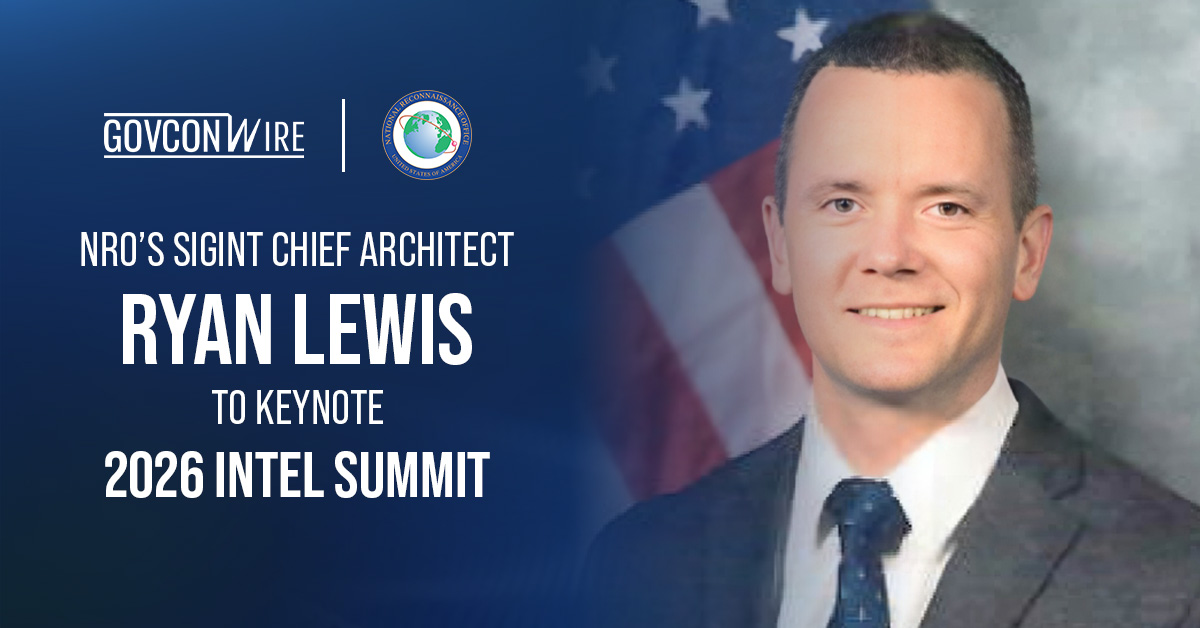

- Ryan Lewis leads NRO’s next-generation space-based SIGINT systems
- He is expected to discuss NRO’s industry partnerships and opportunities to support agency missions
- Join intelligence leaders at the 2026 Intel Summit on Sept. 24
The Potomac Officers Club, the nation’s leading GovCon events and networking organization, is excited to announce that Ryan Lewis, chief architect for the Systems Acquisition and Operations Directorate at the National Reconnaissance Office, will keynote the 2026 Intel Summit on Sept. 24 at Falls Church Marriott Fairview Park in Virginia.
The SIGINT and acquisition expert joins the roster of high-profile intelligence leaders who will share insights on changing intelligence paradigms and discuss how to navigate a rapidly evolving threat landscape driven by advances in technology and mounting international tensions.
The keynote lineup includes:
- Maj. Gen. Brian Sidari, deputy chief of space operations for intelligence at the Space Force
- Carrie Thompson, chief of intelligence at the Drug Enforcement Administration
- More to be announced in the coming weeks!

The 2026 Intel Summit serves as a vital forum for the intelligence community and industry to assess threats to national security and identify the modern capabilities needed to counter sophisticated, nation-state-backed, artificial intelligence-powered operations. Tickets are now available here!
Who Is Ryan Lewis?
Lewis was commissioned as a Navy officer in 2001 and spent more than eight years as a naval surface warfare officer and engineering duty officer.
He was deployed to Afghanistan in support of Operation Enduring Freedom Operation Enduring Freedom and to Iraq for Operation Iraqi Freedom.
For his final active duty tour, he was assigned as a project officer and systems engineer within the NRO’s Directorate of Advanced Systems and Technology.
After transitioning to civilian service, Lewis continued holding leadership roles at the NRO. He served as vehicle engineering manager and deputy program manager for the Communication Acquisition and Operations Directorate’s Space Systems Group and as an insider threat program manager at the Office of Security and Counter-Intelligence.
Within the SIGINT directorate, he held positions in the Low Earth Orbit Systems Program Office and the Office of the Chief Engineer.
He also built a career in the Navy Reserve, rising to the rank of commander and completing three tours supporting the NRO and one tour supporting the National Security Agency and the U.S. Tenth Fleet.
As a servicemember, Lewis received the Defense Meritorious Service Medal, Joint Service Commendation Medal, the Navy Commendation Medal, the Navy Achievement Medal and multiple unit citations.
Throughout his career at the NRO, he has received the NRO Director’s Circle Award, NRO Senior Civilian of the Year and COMM Directorate Senior Civilian of the Year.
Lewis holds a bachelor’s degree in aerospace engineering from Virginia Tech and a master’s degree in astronautical engineering from the Naval Postgraduate School.
What Are Ryan Lewis’ Responsibilities as Chief Architect at SIGINT?
As chief architect, Lewis leads the definition, evaluation and integration of next-generation space-based signals intelligence systems to meet national security and military requirements at NRO. He also collaborates with SIGINT users, operators and industry partners to define and deliver systems to address various challenges.
His directorate, SIGINT, is responsible for buying and managing the satellites that collect and process foreign communications and weapons testing telemetry. SIGINT supports other agencies by delivering raw data for further analysis and exploitation.
What Will Ryan Lewis Discuss During His Keynote?
Lewis’ keynote holds particular significance as space-based SIGINT becomes a defining capability for strengthening defense and national security.
As chief architect of the SIGINT Directorate, he has visibility into NRO investment priorities, what new systems the agency needs and where industry partners can contribute.
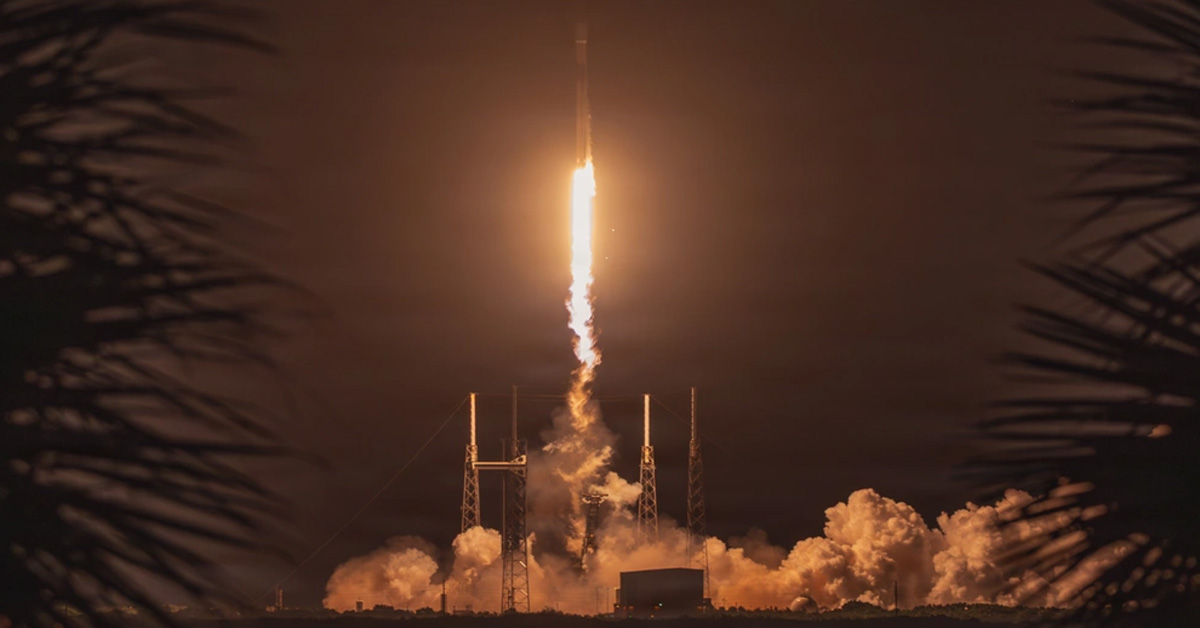
NRO is in the process of building the “largest government constellation in history” with hundreds of satellites capable of providing the military and intelligence communities with persistent, accurate and timely data from space. The agency plans to conduct about half a dozen launches for 2026, Spaceflight Now reported. Its most recent launch, designated NROL-95, lifted off aboard a SpaceX Falcon 9 rocket from Cape Canaveral Space Force Station in Florida on July 30.
He might also talk about:
- How NRO works with industry to deliver SIGINT systems across the full acquisition life cycle
- How SIGINT data supports both national-level decision-making and operational military needs
- Leveraging commercial space technologies to support agency missions
- Opportunities for industry partners in NRO’s SIGINT efforts
- Inter-agency collaboration to support federal missions
For GovCon firms tracking opportunities within NRO, insight from someone directly involved in developing the directorate’s capability and modernization roadmap could inform how they approach technology development, teaming and proposal strategy for future acquisitions.
What to Expect at the 2026 Intel Summit
The 2026 Intel Summit comes at a pivotal moment as the intelligence community grapples with the rising threats from adversaries like China and Russia and AI’s dual nature as both a tool for national defense and a weapon used to undermine U.S. interests.
Panels will dive deep into topics critical to the IC, including:
- Identifying supply chain exposure and risk and early indicators of compromise
- Overcoming data challenges of deploying agents across finance, contracts, capture and cyber
- Leveraging open source intelligence for counterespionage and to protect U.S. intellectual property and trade secrets
- Deploying trustworthy agentic AI to accelerate decision-making at the tactical edge
- Building modern cyber defense architectures to adapt to faster, autonomous threat actors
- Evaluating the impact of adopting AI for intelligence operations and the challenges of expanding AI use in the IC
Each discussion will feature prominent government leaders, including Erik Blasch, program officer at the Air Force Office of Scientific Research, and Dr. Adele Merritt, former chief information officer at the National Institutes of Health. Panelists from government and industry will be added closer to the event. Sign up today!