

- The Coast Guard has established and filled key leadership positions
- The service said that it has spent $12.1 billion in FY25
- Coast Guard and DHS leaders will take the stage at the 2026 Homeland Security Summit on Nov. 10
Over a year after the Department of Homeland Security launched Coast Guard Force Design 2028, or FD28, the service has made significant strides toward building a more agile, capable and responsive fighting force. Read below to see how far the service has come toward achieving its modernization goals.

The officials behind the modernization of the Coast Guard and the DHS will be present at the Potomac Officers Club’s 2026 Homeland Security Summit on Nov. 10. DHS Deputy Secretary Troy Edgar and Chief Procurement Officer Paul Courtney (pending approval) will deliver keynotes at the event. Register today to hear directly from Homeland Security’s top decision-makers!
How Is Coast Guard Leadership Evolving Under Force Design 2028?
Most leadership positions established under the U.S. Coast Guard’s Force Design 2028 Execution Plan, which was issued in 2025, are now filled.
In April, Vice Adm. Douglas Schofield assumed the position of Coast Guard chief of staff. In the role, he is responsible for enhancing readiness, executive decision-making and overseeing strategic planning.
Under FD28, the service also created deputy commandant roles dedicated to systems and personnel.
Rear Adm. Jon Hickey holds the dual roles of the deputy commandant for systems and chief acquisition executive. Hickey oversees the Coast Guard’s five program executive offices:
- Surface, led by Amber Stein
- Air, led by Capt. Scott Powers
- Command, control, communication, computer, cyber and intelligence, led by Scott St. Pierre
- Shore, led by Rear Adm. John Barresi
- Robotics and autonomous systems, led by Anthony J.L. Antognoli
Meanwhile, Rear Adm. Charles Fosse, deputy commandant for personnel, leads policy development, program execution and other functions related to human resources, force readiness, training, security and safety. He is also involved in Coast Guard Academy activities.
A June 2025 Coast Guard bulletin announced the creation of key leadership positions: director of integration and chief acquisitions officer, now held by Rear Adm. Mike Campbell, and director of contracting & procurement and head of contracting activity, held by Shreena Lyons Morris.
The Coast Guard secretary position mentioned in the execution plan still awaits congressional approval. Sens. Dan Sullivan, R-Alaska; Rick Scott, R-Fla.; and Tommy Tuberville, R-Ala., introduced the Coast Guard Leadership Modernization Act in July to establish the civilian role, bringing the service in line with other branches of the armed forces. Once enacted, the president will nominate a secretary for Senate confirmation.
St. Pierre, who also serves as chief information officer of the Coast Guard, will sit with DHS and industry leaders on the Modernizing the Homeland Security Mission: Edge Capabilities for the Border and National Events panel at the 2026 Homeland Security Summit. He is expected to identify the advanced technologies needed to strengthen national security. Get your tickets here!
How Is the Coast Guard Restructuring Its Organization for FD28?
The Coast Guard also made several organizational changes to enable FD28, including establishing the Special Missions Command to unify specialized forces under a single organizational structure and better support homeland security and joint force missions. The new command will be located at Kearneysville, West Virginia, and will initially employ 130 personnel to reach initial operating capacity, Task & Purpose reported.
The service also stood up the Futures Development and Integration Directorate in September 2025. Led by Rear Adm. Amy Grable, FDI is an essential element of FD28 intended to strengthen the service’s readiness to meet emerging threats. The directorate will accelerate requirements development to bring advanced technologies to the force more quickly and guide the service’s operational concepts to ensure future demands are met.
The Coast Guard also has two new offices in 2026: the Office of Rapid Response and Prototyping, or CG-RAPTOR, and the Office of Maritime Cybersecurity Policy, or CG-MCP. CG-RAPTOR, established in January, is in charge of accelerating the “idea-to-operations” cycle and rapidly fielding new technologies that meet operational requirements. CG-MCP, established in August, will develop and implement cybersecurity policy for ports, vessels and facilities across the Maritime Transportation System.
To build its workforce, the Coast Guard opened new recruiting offices and enlisted more than 5,200 members, exceeding its active-duty enlisted recruiting goal. The service also reached 104 percent of its reserve enlisted target and hit 100 percent of its active-duty officer requirement. Under FD28, the Coast Guard aims to expand its total force by at least 15,000 military members.
Capt. Chad R. Brick, the inaugural chief of CG-RAPTOR, will join the Mission Ready: Building Trust Through Technology Validation panel at the 2026 Homeland Security Summit. Brick will share insights on how his office is accelerating the fielding of new technologies to support Coast Guard missions. Sign up here to join the conversation.
How Much Funding Is Allocated for Coast Guard FD28 Execution?
The Coast Guard received a nearly $25 billion budget in July for the acquisition of new operational assets, including aircraft and training simulators, cutters and autonomous systems. The funding is also allocated for the construction of new facilities and the maintenance of existing ones to support operations.
As of January, the Coast Guard said that it has invested $12.1 billion in fiscal 2025. The rest of the funding will be obligated by January 2027, USNI News reported.
“That money is taxpayer dollars, and those taxpayers expect us to use that money to invest it for the American public,” Sean Plankey, senior adviser to the DHS Secretary, said.
How Is the Coast Guard Accelerating Contracting & Acquisitions?
Streamlining contracting and acquisition is part of FD28 to ensure that service members have access to cutting-edge capabilities when needed. According to the service’s FD28 execution plan, the Coast Guard will create an agile and responsive contracting and acquisition system that eliminates unnecessary, time-consuming requirements and uses innovative procurement tools to improve cost and schedule performance.
RAS PEO is already utilizing alternative contracting methods, such as other transaction authorities, to rapidly develop and field uncrewed tech, said Capt. Roberto Herrera, the office’s portfolio manager for surface and underwater assets, in a GovCIO Media & Research report.
“We’re trying to get capability out there as quickly as we can, iterate with operators, get that feedback as soon as we can and then try to incorporate that into future program … decisions,” he added.
What Major Contracts Has the Coast Guard Awarded Under FD28?
Since the launch of FD28, the Coast Guard has awarded several major contracts to support the modernization initiative.
To strengthen Arctic readiness, the service secured multiple shipbuilding agreements for its next-generation polar icebreakers, designated as Arctic security cutters, or ASCs. Contracts were awarded to:
- Bollinger Shipyards to produce four ASCs, with the first cutter expected for delivery in 2029.
- Finnish company Rauma Marine Constructions to build two ASCs, with delivery expected starting in 2028.
- Davie Defense for the construction of five ASCs, with all vessels scheduled for delivery by February 2035.
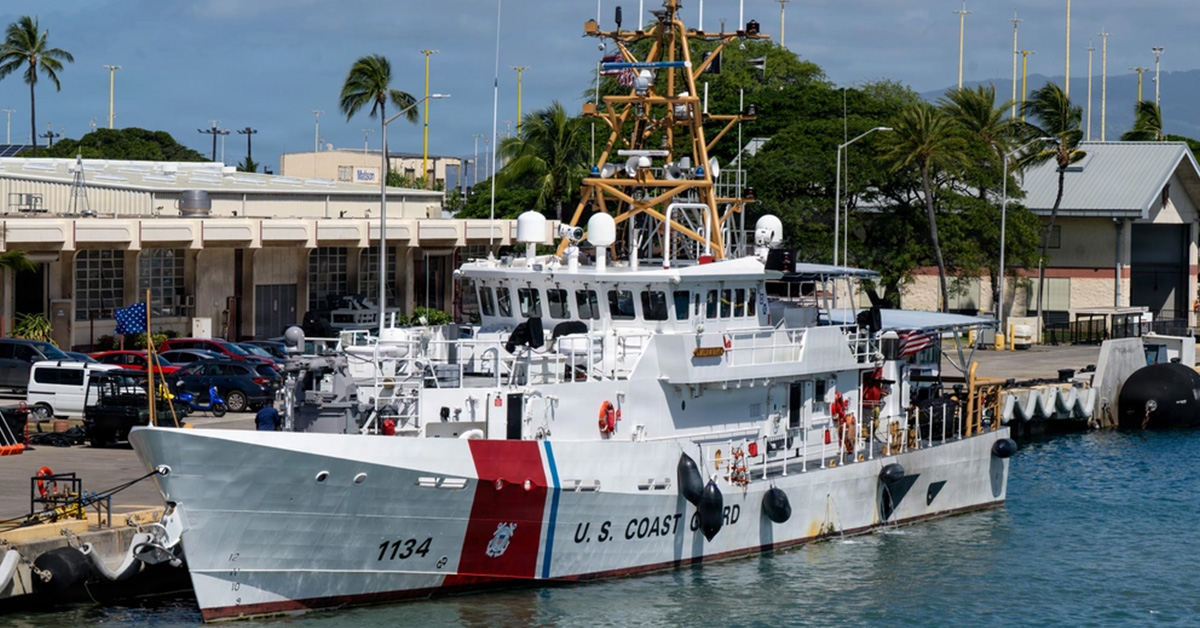
Bollinger is also making fast response cutters, or FRCs, for the Coast Guard. In September 2025, the Coast Guard announced a modification to a previously awarded contract to Bollinger to construct 10 more FRCs, bringing the total number of FRCs under the agreement to 77.
The Coast Guard has also purchased robotics and autonomous systems to support its mission. In September 2025, the service announced that it had purchased 16 VideoRay Defender remotely operated vehicles from AV for $4.8 million for its Deployable Specialized Forces. The service also procured $2 million worth of QinetiQ Squad Packable Utility Robot, or SPUR, and mini-SPUR robots and $4.3 million worth of SkyDio X10D short-range unmanned aircraft systems.
The Coast Guard’s shore contracts include an award of up to $400 million to Whiting Turner for new facilities at Training Center Cape May in New Jersey, which the service describes as the largest shore construction award in its history. Separate awards were made to Ocean Construction Services, Tutor Perini and Brasfield & Gorrie for construction services.
Hear more about the future of the Coast Guard under FD28 and discover opportunities to support service modernization at the Potomac Officers Club’s 2026 Homeland Security Summit on Nov. 10. The event will also explore artificial intelligence, unmanned aerial systems and counter-drone, and other technologies the Coast Guard and DHS are pursuing. Tickets are available here!