


- NASA has awarded Moon Base contracts to four companies
- Blue Origin secured lunar delivery task orders worth $188 million
- The 2026 Air and Space Summit will explore AI, optical networks and commercial space relay
NASA has awarded contracts to Astrolab, Lunar Outpost, Blue Origin and Firefly Aerospace to support the agency’s Moon Base initiative and future Artemis lunar surface missions.

NASA’s latest Moon Base contract awards underscore the growing collaboration between government and industry as the agency advances sustained lunar operations and future Artemis missions. Discussions at the 2026 Air and Space Summit on July 30 will explore many of the technologies shaping the future of space operations, including commercial space relay, interoperable optical networks, artificial intelligence and other emerging capabilities. Register today to save your seat and hear from government and industry leaders driving the next era of air and space innovation.
The agency announced the awards Tuesday during a Moon Base event at NASA Headquarters in Washington, where officials outlined upcoming lunar infrastructure, cargo delivery and exploration missions tied to sustained operations at the moon’s South Pole region.
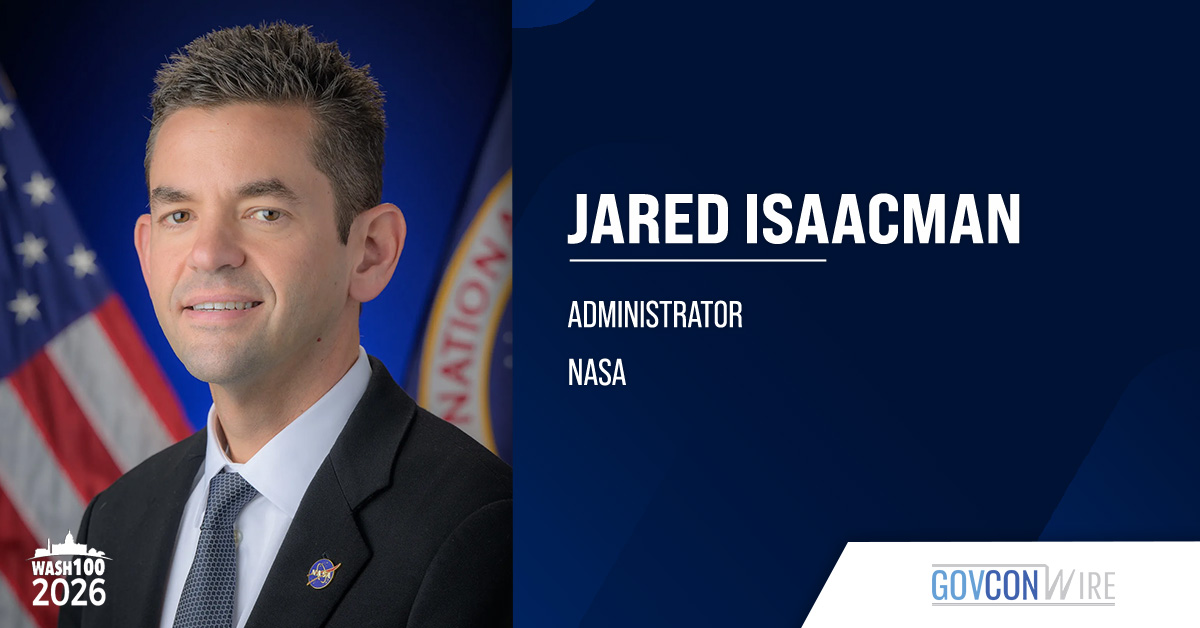
“The Moon Base will be America’s and humanity’s first outpost on another celestial world,” said NASA Administrator Jared Isaacman, a 2026 Wash100 awardee. “Every mission, crewed and uncrewed, will be a learning opportunity as we return to the lunar surface, build the infrastructure to stay, and master the skills required to live and operate in one of the most demanding and dangerous environments imaginable.”
What Lunar Terrain Vehicle Contracts Did NASA Award?
NASA awarded Astrolab a $219 million contract and Lunar Outpost a $220 million contract under Phase 1 High Achievability Mission task orders of the Lunar Terrain Vehicle Services contract.
The firm-fixed-price, performance-based awards will support the development and delivery of lunar terrain vehicles, or LTVs, to the lunar surface by 2028 through NASA’s Commercial Lunar Payload Services, or CLPS, initiative.
In April, NASA’s Johnson Space Center issued a notice announcing plans to raise the cumulative value of the CLPS contract from $2.6 billion to $4.2 billion.
What Rovers Will Astrolab & Lunar Outpost Develop?
Astrolab will develop the Crewed Lunar Vehicle-1, or CLV-1, derived from the company’s FLEX architecture.
The space agency said the rover is designed to transport astronauts, carry supplies and support remote operations. The vehicle will feature a compact stowed configuration, weigh about 2,000 pounds and travel at speeds above 6 mph on level terrain.
Lunar Outpost will develop Pegasus, a lunar rover derived from the company’s Eagle rover platform.
According to NASA, Pegasus will support autonomous, manual and teleoperated driving operations at speeds above 9 mph and remain operational for up to one year.
NASA said the providers will spend the next 18 months finalizing rover designs, conducting crewed assessments and qualifying flight units for operational readiness.
The agency added that the LTVs will support terrain preparation, autonomous traverses, scientific investigations, astronaut transportation and technology demonstrations during future lunar missions.
In 2024, Astrolab and Lunar Outpost secured spots on a potential $4.6 billion lunar exploration vehicle development contract.
What Are the Task Orders Awarded to Blue Origin?
NASA also awarded Blue Origin $188 million under two CLPS 1.0 task orders to deliver lunar terrain vehicles to the Moon’s South Pole region. The award includes an option period valued at $280.4 million based on initial phase performance.
NASA said the work will support mobility and infrastructure development activities tied to sustained lunar operations.
The agency executed the procurement under the CLPS 1.0 indefinite-delivery/indefinite-quantity contract vehicle.
What Will Be Firefly Aerospace’s Role in the MoonFall Mission?
NASA also selected Firefly Aerospace to build the spacecraft for the agency’s MoonFall mission, which will deploy four drones to survey potential Artemis landing sites near the lunar South Pole.
NASA’s Jet Propulsion Laboratory is developing the drone system, while Firefly will provide the spacecraft that transports the drones from Earth orbit to the moon. Launch is targeted for 2028.
The drones will collect high-resolution imagery of hard-to-reach terrain during a single lunar day mission.
What Are the Moon Base Missions That NASA Announced?
During the event, NASA announced the first three Moon Base missions.
Moon Base I is targeted for launch no earlier than fall 2026 and will use Blue Origin’s Blue Moon Mark 1 Endurance lander to deliver NASA payloads to the Shackleton Connecting Ridge region.
Moon Base II is planned for launch later this year aboard Astrobotic’s Griffin lander and will transport more than 1,100 pounds of cargo, including Astrolab’s FLIP rover.
Moon Base III is also targeted for launch this year and will use Intuitive Machines’ Nova-C Trinity lunar lander to carry the Lunar Vertex investigation and additional international payloads.
NASA said the missions represent the first of more than a dozen Moon Base missions the agency plans to announce this year.