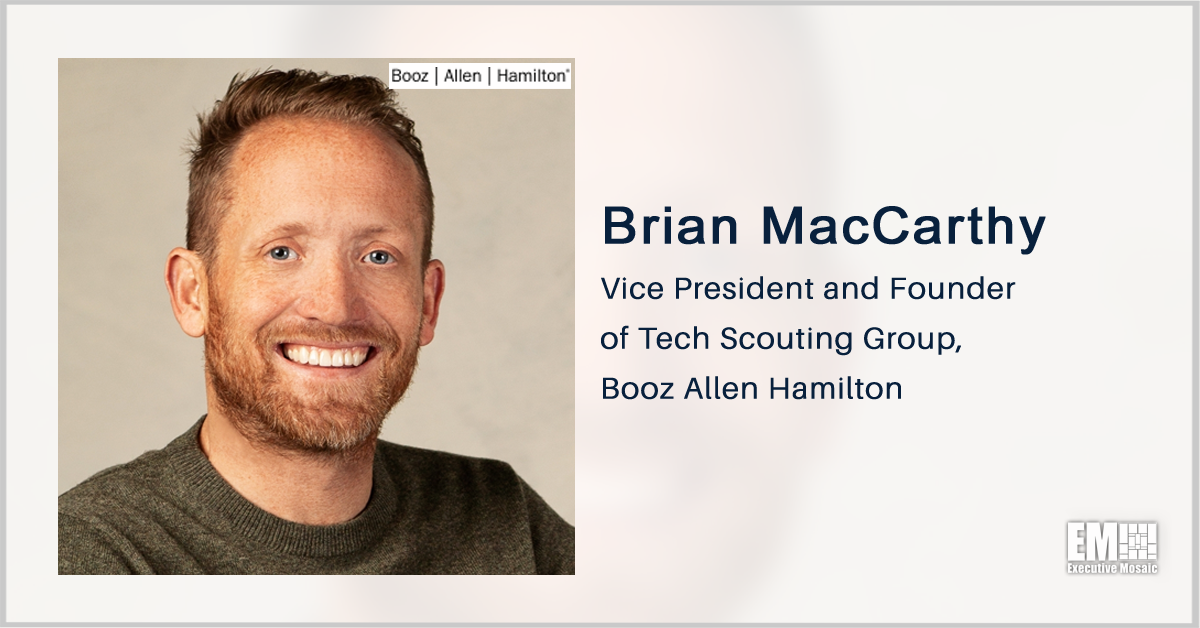
“The idea is: How could we get them in the hands of our clients?” McCarthy said in an interview. “How could we use Booz Allen contracts to look and find and vet them to get onto contract quickly? For us, kind of offsetting some our own R&D capabilities, we felt like this specific technology would fit within our larger AI and analytics strategic bets.”
He said he believes Latent AI could also move into internet of things and health care areas to help enhance capabilities in edge computing that could have potential benefits to the Department of Veterans Affairs and other federal agencies.
McCarthy noted that Booz Allen selected Latent AI out of a pool of 30 to 40 companies offering capabilities that could help the McLean, Virginia-based consulting firm deliver on some machine learning-related contracts with the Army.
“They were really best in breed,” he said of Latent AI. “It became fairly obvious very quickly that that was a capability that was needed for the mission set that we were doing the scouting, so we wanted to make sure we got that into the hands of the warfighter.”
The Naval Information Warfare Center Pacific is soliciting proposals for the development and fielding of intelligence, surveillance and reconnaissance systems…
The Department of War is accelerating its push into unmanned systems, moving beyond experimentation toward large-scale production, streamlined acquisition and…
BAE Systems has received a $117.7 million contract modification from the U.S. Navy to support depot-level modernization, maintenance and repair of USS…
Advanced wireless infrastructure is becoming as strategically important as artificial intelligence in modern defense operations 5G standalone enables network slicing,…