
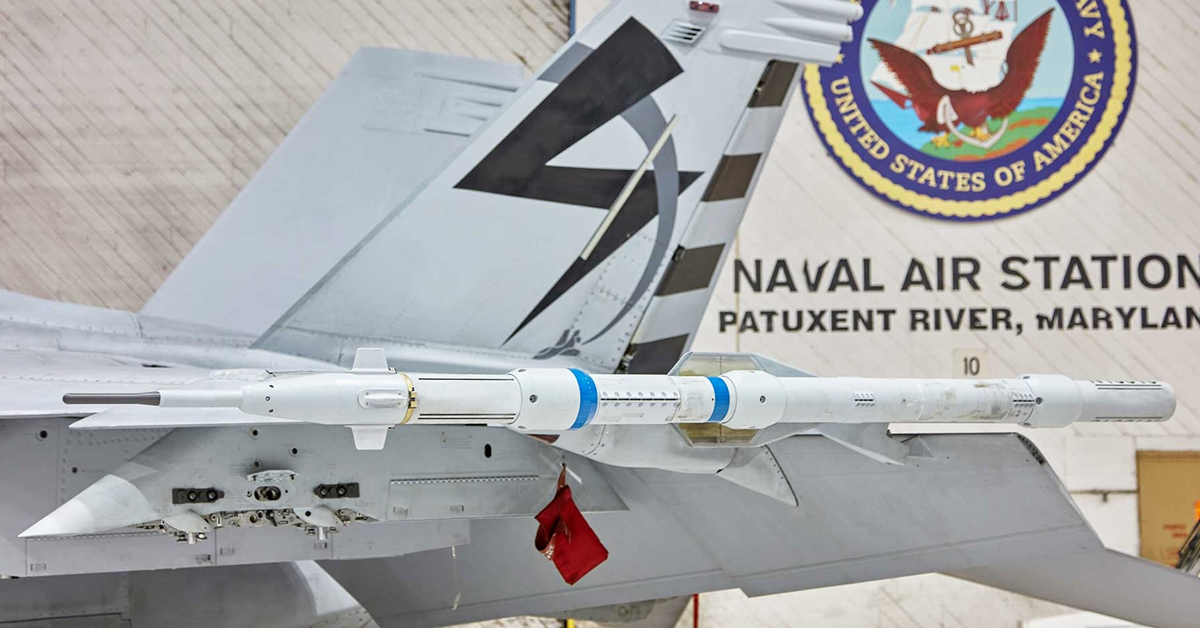

A Raytheon Technologies (NYSE: RTX) business has marked the move of the U.S. Navy’s air combat training system into the production phase with the Milestone C completion.
Raytheon said Wednesday Collins Aerospace also secured the first production order for the Navy’s Tactical Combat Training System Increment II, which is expected to reach initial operational capability in 2022.
TCTS Inc. II is a program of record of the Navy and the U.S. Air Force for fourth and fifth generation fighter aircraft. The system uses live virtual constructive technologies to simulate highly contested combat scenarios and gathers data to facilitate the development of procedures, tactics and techniques in real time.
The scalable system enables synthetic threats to stimulate the sensors of an aircraft through a Multiple Independent Levels of Security architecture by connecting to the Navy Continuous Training Environment. TCTS Inc. II facilitates information sharing in near real time when used with the onboard cross-domain platform and has security certification supporting encyption requirements from Unclassified to Top Secret levels.
“Enabling more realistic and secure cross-service air combat exercises is invaluable preparation for 4th and 5th generation pilots to ensure warfighters achieve the readiness levels needed,” said Heather Robertson, vice president and general manager of integrated solutions for Collins Aerospace.
In March 2017, the Navy originally awarded a potential $142 million contract for the TCTS Inc. 2 program to Rockwell Collins, which became Collins Aerospace after it was acquired by United Technologies Corporation in 2018. Collins Aerospace became a unit of Raytheon Technologies after UTC and Raytheon merged in 2020.