Author: Jane Edwards|| Date Published: August 19, 2020
The Department of Energy’s artificial intelligence and technology office and Microsoft (Nasdaq: MSFT) have established a consortium to advance the development of AI-based tools to enable first responders to better respond to natural disasters and help them save lives and protect property.
The First Five Consortium will bring together government, industry, academic and nonprofit organizations to develop AI platforms in support of humanitarian relief and disaster response efforts, DOE said Tuesday.
“AITO is proud to lead on getting near real-time information into the hands of our First Responders,” said Cheryl Ingstad, director of AITO at DOE. “This will allow them to save more lives and protect assets and our nation’s resources. This is just one project of the broader effort, which will include contributions from all our partners, to use technology to improve humanitarian assistance and disaster response in our nation.”
The consortium will apply AI and deep learning to advance research in several areas including wildfire prediction and fire line containment, search and rescue, damage assessment and natural disasters like tornadoes and hurricanes.
Nextgov reported that 10 partners have joined the First Five Consortium. Those are the Department of Defense; National Oceanic and Atmospheric Administration; ESRI; AT&T (NYSE: T); Hangar Alpha; Pacific Northwest National Laboratory; Pacific Disaster Center; Texas A&M; Berkeley Artificial Intelligence Laboratory-Computer Vision or BAIR-CV; and First Net Authority.
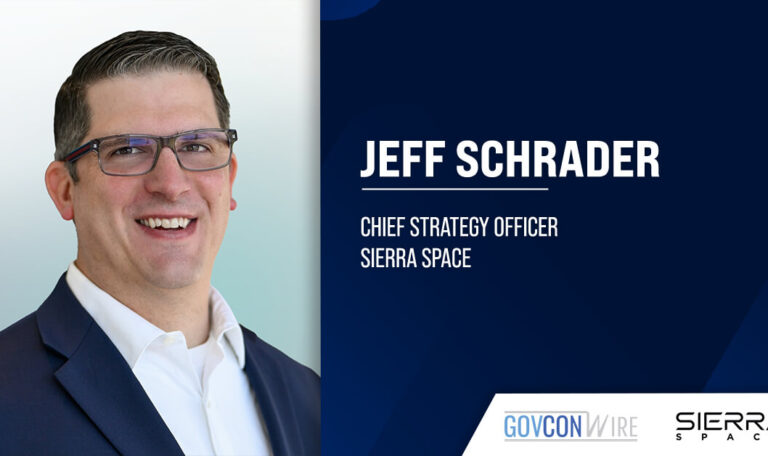
Sierra Space has appointed Jeff Schrader, former executive at Lockheed Martin, as chief strategy officer. The Louisville, Colorado-headquartered company said…