
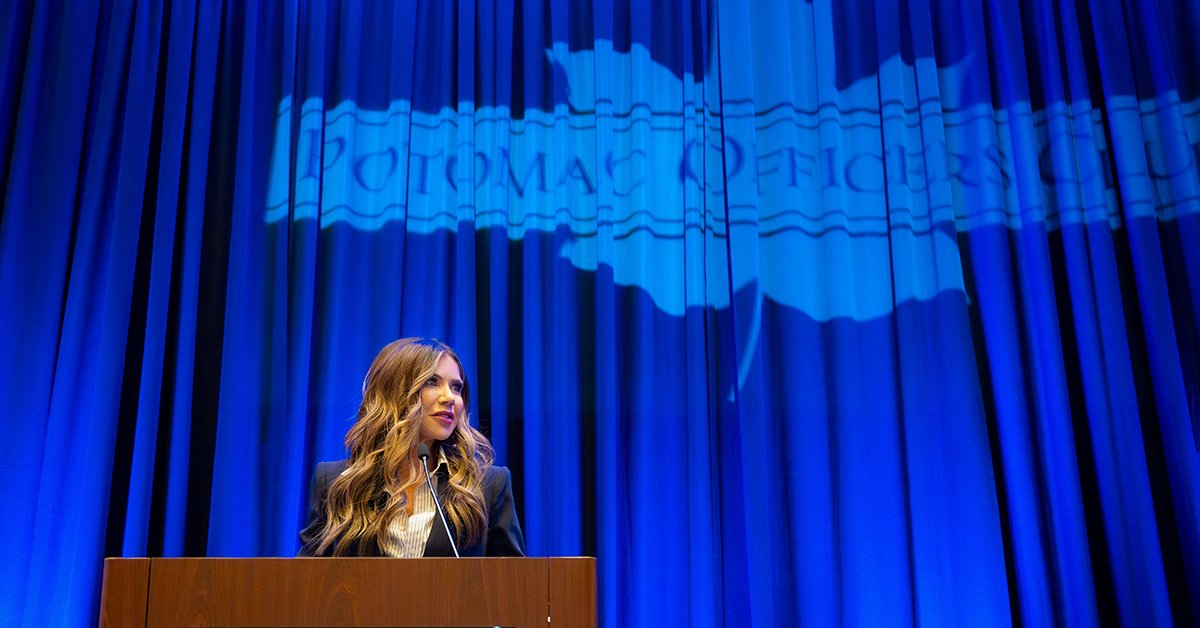

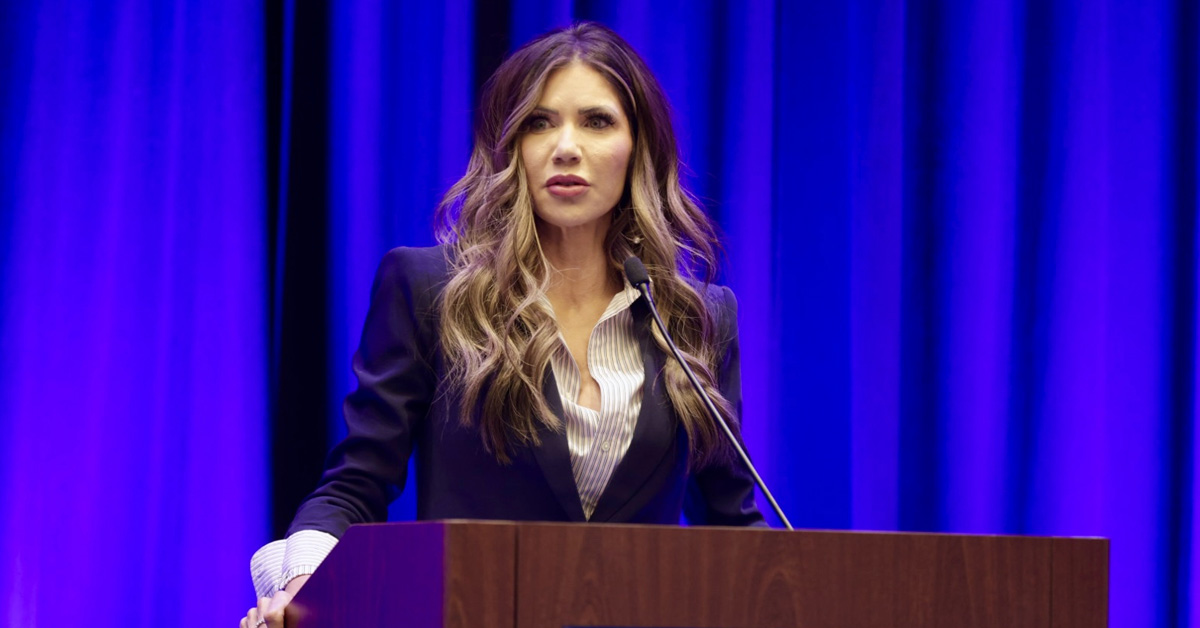
The $25 billion provided for the U.S. Coast Guard in the One Big Beautiful Bill Act is the largest investment in the service’s history, Homeland Security Secretary Kristi Noem told a packed ballroom on Wednesday during her keynote address at the Potomac Officers Club’s 2025 Homeland Security Summit.
Noem, who received two standing ovations during her speech, said President Donald Trump has prioritized modernizing the USCG during his second term. This includes new polar security cutters for advanced arctic and antarctic operations, but also new helicopters and fixed-wing aircraft. The service is also adding 15,000 new servicemembers—whom she dubbed “coasties”—to perform missions ranging from search and rescue to drug interdiction and others that include cooperating with the Department of Defense.
Be the first to learn of the latest DOD business opportunities at the Potomac Officers Club’s 2026 Defense R&D Summit on Jan. 29! Spark collaborations with other GovCon leaders and score that big contract. Get your burning questions answered by top DOD officials. Sign up today for this elite GovCon event!
The Department of Homeland Security is upgrading existing infrastructure and considering building new USCG bases as part of its investment.
“We’re cutting through a lot of the bureaucracy,” Noem said. “If you’ve had some kind of an idea or technology or service that you have not been able to deploy at the federal level…it’s a new day. I want you to come to the table and bring those ideas and those technologies to us because we need it.”
What Are Salt Typhoon and Volt Typhoon?
Noem encouraged the industry to provide ideas for new cyberspace technologies to be incorporated into the Cyberspace Infrastructure and Security Agency. She cited Salt Typhoon and Volt Typhoon, two Chinese state-sponsored hacking collectives responsible for targeting U.S. critical infrastructure.
The Chinese, Noem said, have demonstrated they can attack U.S. electrical grids and water systems and that the nation needs to prevent them from doing it again. This is another area where the U.S. needs the industry’s help.
“That’s where we need your help, your advice and your wisdom,” Noem said. “To work with us on what we do, know the tools that we have and work [with us] to make sure that we have the information we need to be strategic and to stop them.”
Noem celebrated recent successes in counter-drug missions. Since January, the service has stopped 91 metric tons of drugs, confiscated 1,067 weapons and seized more than $3.2 million in cash from terrorist cartels. Much of this has been due to Operation Pacific Viper, which Noem said is strategically designed to seize historic amounts of drugs from smugglers in the eastern Pacific.
If you missed our year-capping Homeland Security Summit, don’t worry–our 2026 Defense R&D Summit is right around the corner on Jan. 29! Check out the timely “Innovating Wirelessly within INDOPACOM” panel discussion featuring top DOD officials. Have the meaningful face-to-face conversations that only happen in live events. Don’t wait—secure your seat today!
Operation Pacific Viper has also led to the largest drug interdiction and offload in USCG history, valued at over $500 million. Noem said the USCG seized more cocaine in FY 2025 than in any other year in its history.
“Viper has saved millions of lives of individuals and Americans by stopping those drugs before they ever got to the U.S.,” she said.
Why Is the Coast Guard Not Military?
Noem is attempting to leverage the USCG’s unique status as both a law enforcement agency under DHS during peacetime and as a military branch under DOD during wartime to fight drugs and combat terror. Noem said this unique status is a very powerful tool for the Trump Administration to protect the U.S.
“We’re using every single authority that we have under DHS to do our jobs,” Noem said.
Who Is the Coast Guard Commandant?
Adm. Kevin Lunday, on Oct. 23, was nominated to serve as USCG commandant. He had previously been serving as acting commandant. The Senate Commerce Committee will consider Lunday’s nomination on Nov. 19, according to Bloomberg Law. Lunday spent his career as a national security lawyer, previously serving as the head of Cyber Command before becoming the USCG vice commandant in 2024.