



The Coast Guard has always been one of the United States’ most technologically advanced armed services. With missions and responsibilities that span law enforcement and search and rescue to requirements to operate across the world, the USCG ensures it has the most cutting-edge technologies to execute its unique mission sets.
As part of its ambitious Force Design 2028 initiative, the USCG will speed up the adoption of the latest technologies to have better situational awareness, bolster data-sharing and improve its overall operational effectiveness. Let’s dive into the five most significant and consequential investments the USCG has made in 2025 in its quest to become a more potent, capable and responsive fighting force by 2028.
Discover the latest business opportunities at the Potomac Officers Club’s 2025 Homeland Security Summit on Nov. 12! Get actionable intelligence at our five(!) different panel discussions on AI and homeland security. Find out how to tailor your offerings to secure some of the tens of billions of dollars appropriated by the One Big Beautiful Bill Act. Sign up today!
1. $951 Million for New Icebreaker
Acquiring new polar security cutters is one of the USCG’s highest priorities as it will allow the service to pass through the deep ice in the polar regions and operate in the strategically important Arctic. The service in March awarded Bollinger Shipyards a $951 million award to progress the detail design and construction of these icebreakers, Breaking Defense reported.
When the first ship of this contract is commissioned, it will be the first new, U.S.-made heavy ice breaker in generations. The award is also a major contracting milestone for the USCG as the Polar Security Cutter program was originally conceived more than 10 years ago before being delayed multiple times. Delivery of the first polar security cutter from this contract is expected in May 2030.
The operational polar fleet has one 399-foot heavy icebreaker (USCG Cutter Polar Star, which entered service in 1976) and another 420-foot medium icebreaker (USCG Healy, commissioned in 2000). Polar security cutters will allow the U.S. to maintain a defense presence in both polar regions, enforce laws and other treaties and provide logistical support, among other tasks.
2. $350 Million for Robotics and Autonomous Systems
The USCG didn’t waste any time leveraging new funds available from the One Big Beautiful Bill Act signed into law in July. The service on Sept. 24 announced it would spend $350 million on various robotics and autonomous systems.
The investments are slated as follows:
- $5 million for 16 VideoRay Defender underwater remotely operated vehicles. The VideoRay Defender, developed by AeroVironment, performs tasks including making unexploded ordnance safe or cleaning the nets of offshore fish farms.
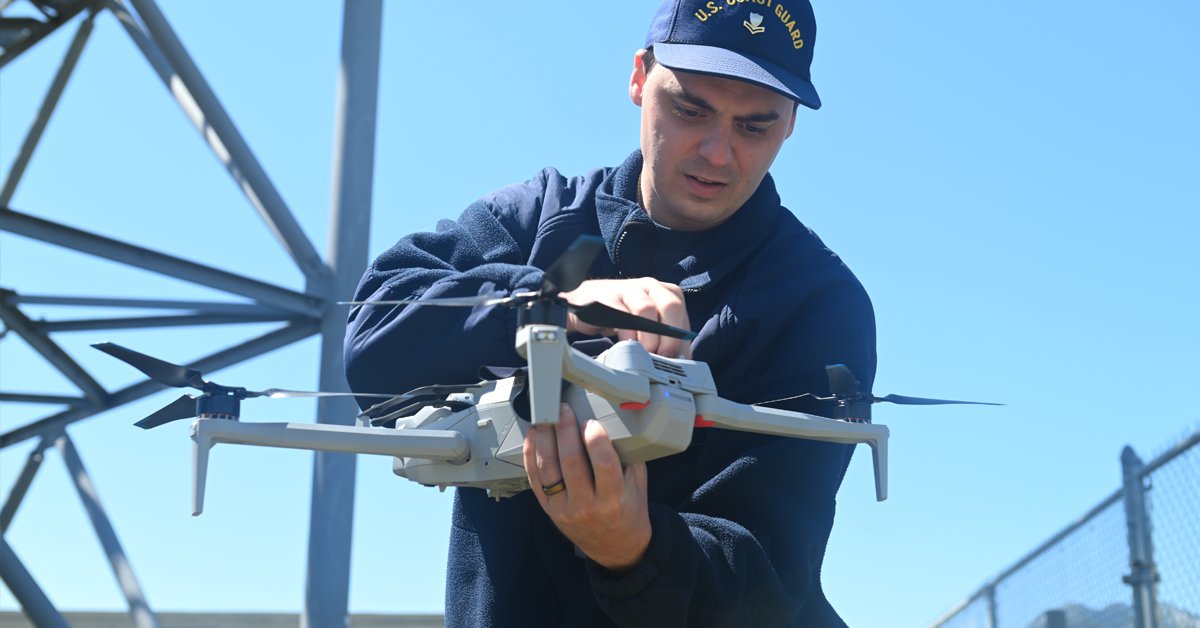
- $4 million for 125 SkyDio X10D short-range unmanned aerial vehicles. The X10D is a small system that has high-resolution visual and radiometric thermal cameras and can operate in positioning system-denied, or spoofed, environments.
- $2 million to acquire six Qinetiq Squad Packable Utility Robots and 12 mini-SPUR robots. The SPUR is a land robotic system that fits in a backpack and can perform tasks such as C2 in tight spaces such as sewer pipes.
Are you a GovCon technology executive with a homeland security portfolio? Then you cannot afford to miss the Potomac Officers Club’s 2025 Homeland Security Summit on Nov. 12—specifically designed for homeland security professionals! Get the latest spending priorities directly from Homeland Security Secretary Kristi Noem during her keynote address. Have your pressing questions answered during her Q&A session. Secure your seat today!
3. $314 Million Toward New Offshore Patrol Cutters
The Polar Security Cutter program isn’t the only shipbuilding effort being prioritized by the USCG. The service in September awarded Austal Limited contract options worth $314 million for long lead time materials for three offshore patrol cutters.
The 361-foot OPCs will perform most of the USCG’s offshore missions such as drug and migrant interdiction, law enforcement, and search and rescue. They also perform mass- migration, hurricane response and other tasks.
The cutters usually conduct missions more than 12 nautical miles from shore and have a range of 10,000 nm at 14 knots. They also have a 60 day endurance timeframe.
4. $266 Million for MQ-9 UAVs
The USCG will accomplish another milestone when it accepts delivery of its first General Atomics MQ-9A Reaper UAVs. The service plans to spend roughly $266 million of the approximately $25 billion it received in the OBBBA to acquire these long range robotic aircraft, MilitaryTimes reported.
Each MQ-9 can collect intelligence data for roughly 24 hours in a 60-to-80 mile flight radius. The platform can fly at altitudes as high as 50,000 feet and has a payload capacity of 3,850 lbs.
The aircraft is powered by a Honeywell TPE331-10 turboprop engine and has a fault-tolerant flight control system. It can carry a variety of advanced payloads such as an electro-optical/infrared sensor, a multi-mode radar, laser designators and electronic support measures.
5. $172 Million for New C2 Aircraft
The USCG on Oct. 17 upgraded its command and control capabilities when it awarded Gulfstream, a General Dynamics division, a $172 million contract for a pair of new Gulfstream G700 jet aircraft, according to Defense Daily.
These aircraft will be used to provide official transportation for the Department of Homeland Security secretary, deputy secretary, USCG commandant and other high-ranking federal officials. The acquisition replaces aircraft that were nearly 20 years old and suffering regular unscheduled maintenance.
“Modernizing the Coast Guard’s aging and obsolete aviation fleet is essential to ensuring our ability to successfully conduct national security missions,” Adm. Kevin Lunday, acting USCG commandant, said in a service statement.