
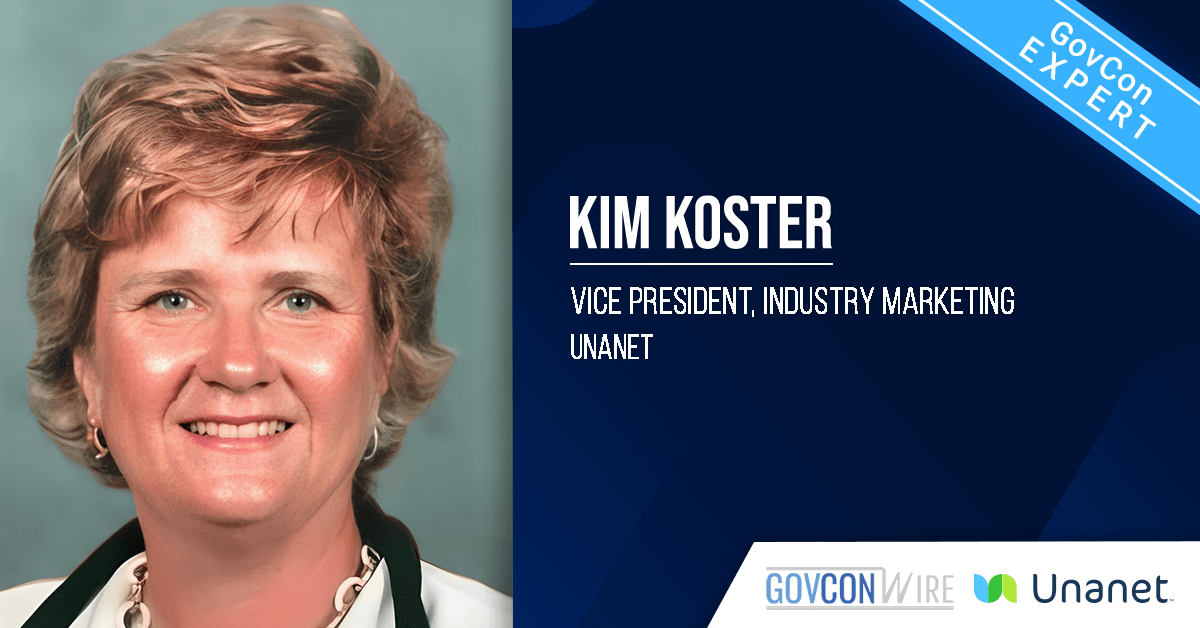

By Kim Koster, VP GovCon Strategy, Unanet
Across government contracting organizations, the baseline can feel like an anchor. It captures the plan at contract award. Staffing assumptions, expected costs and the margin you believed the work would deliver. When delivery is steady and invoices are moving, it is natural to assume performance is tracking as intended.
Yet in maturing GovCons, margin pressure rarely starts with an obvious project failure. More often, it starts when the business changes around the work. A new mix of contract types. A bigger subcontract footprint. Hiring ahead of funded backlog. A shift in utilization may appear small on paper but have a meaningful economic impact on the project or enterprise.
The baseline captures intent. Cost structure protects the outcome.
By cost structure, I am not referring to a chart of accounts or a rate sheet. Cost structure is the financial architecture that governs how direct labor, indirect costs, subcontracting, other direct costs and revenue mix translate into margin. It determines how overhead and general and administrative, or G&A, respond when utilization moves. It influences how hiring decisions, contract type mix and delivery strategy affect profitability.
When that architecture evolves without intention, margin volatility follows, even when projects appear stable. The positive takeaway is that the cost structure can be managed. With the right visibility and discipline, leadership can regain predictability and free teams from the distractions that result from chasing surprises after the fact.
Growth Quietly Changes the Economics
Growth in government contracting rarely comes from one big change. It comes from a series of smart moves. Contractors expand into new contract vehicles, diversify service offerings, hire ahead of anticipated awards and increase subcontract participation to meet demand. Each decision can be operationally sound. Many are necessary steps toward becoming a more resilient, scalable business.
Over time, though, those choices reshape cost behavior in ways that are not immediately visible in a standard project review:
- A handful of senior hires expands fringe and overhead before revenue fully absorbs them
- Increased subcontracting alters contribution margin and indirect absorption
- A shift toward more fixed-price work changes risk exposure and cost sensitivity
- Option year timing moves revenue across fiscal periods, affecting pool stability
None of these dynamics are inherently negative. They are normal growth patterns. The issue is timing and awareness. The baseline still reflects what was estimated at award, but it does not automatically update for a new enterprise reality. If your indirect pools are behaving differently than they did last year, your baseline can still look “on plan” while your margin is quietly tightening.
The Baseline Captures Intent, Not Structural Shift
A baseline answers important questions. What work was planned? What cost profile was assumed? What margin target was set? Those are the right questions. They remain essential for project control and for honoring commitments made to customers and stakeholders.
What the baseline does not automatically reveal is whether the operating environment that supported those assumptions has changed.
You may not see it right away in baseline reports, but you may feel it if:
- Utilization drifts below the rate assumptions used in pricing
- Hiring accelerates ahead of funded backlog or revenue ramp
- Revenue mix shifts toward lower-margin vehicles, labor categories, or subcontracts
- Indirect pools absorb differently because the organization is larger and more complex
These are cost structure signals. They often surface only after indirect rate variances appear, or margins tighten unexpectedly. At that point, leadership is reacting instead of steering.
For many government contractors, this can start to feel like “just how it goes.” It does not have to. When cost structure is owned at the leadership level, organizations gain earlier visibility and can adjust before small shifts become bigger surprises.
Cost Structure Is the Control System for Margin Stability
Cost structure is what makes margin and rates predictable.
Indirect pool design influences how resilient rates are to utilization shifts. Labor categorization affects the integrity of pricing models and forecasting. Subcontract strategy directly impacts contribution margin and absorption behavior. Shared services allocation affects how efficiently growth expands across teams, contracts and business units.
A contract can be executed exactly as planned and still underperform if the enterprise cost structure supporting it has shifted. That is why cost structure discipline is not simply an accounting concern. It is a strategic growth decision.
When cost structure is intentionally designed and periodically reassessed, leadership gains better control and predictability for the enterprise. Project teams spend less time explaining variances and more time improving delivery. Finance teams spend less time reconciling disconnected views of performance and more time providing forward-looking guidance. Executives gain the confidence to pursue growth without destabilizing profitability.
Strengthening Cost Structure Clarity
Improving margin predictability does not require more complex scheduling. It requires clearer alignment between operations and financial design, supported by consistent monitoring and practical forecasting.
Align Operational & Financial Structure
Project setup, task orders and labor categories should map cleanly to revenue reporting and rate modeling. Indirect pools should reflect the current operating model, not legacy assumptions from an earlier stage of the business. When alignment exists, reporting becomes analytical rather than reconciliatory. Teams can trust what they see, then act faster with fewer debates over which numbers are correct.
Monitor Utilization & Rate Sensitivity Consistently
Labor drives the economics of most professional services GovCons. A two- or three-point utilization shift can materially affect overhead and G&A rates, especially during periods of hiring and award timing changes. Monitoring utilization trends, hiring pace and subcontract mix monthly provides earlier visibility into rate stability. That supports more confident staffing decisions and more reliable pricing.
Incorporate Scenario Modeling Into Forecasting
Award delays, funding timing changes and hiring ramp variability are structural realities in government contracting. Scenario modeling helps leadership understand how margin responds when utilization dips, revenue mix shifts, or indirect pools expand. It does not need to be overly complex. The goal is to identify pressure points early and decide how to respond while options are still available.
The objective is not perfect prediction. It is structural awareness.
Cost Structure Clarity Supports Confident Growth
Forward pricing confidence depends on rate stability. Rate stability depends on disciplined cost accumulation. Disciplined cost accumulation depends on structural clarity.
When cost structure is intentionally designed and supported by integrated systems, government contractors can achieve more stable indirect rates, stronger proposal pricing confidence and improved audit readiness. More importantly, they gain control and confidence in the decisions that shape growth. That means fewer last-minute corrections, fewer surprises in rate calculations and more time spent leading the business instead of chasing explanations.
The baseline will always matter. It represents the commitment made at award and it remains a vital tool for measuring project execution.
Sustainable performance, though, is not protected by the baseline alone. If projects appear steady, the more important question is whether the underlying cost structure is evolving intentionally with the business, or absorbing risk quietly.
For government contractors, that distinction often determines whether growth strengthens margin and builds a business that is ready to grow or gradually erodes profitability over time.