
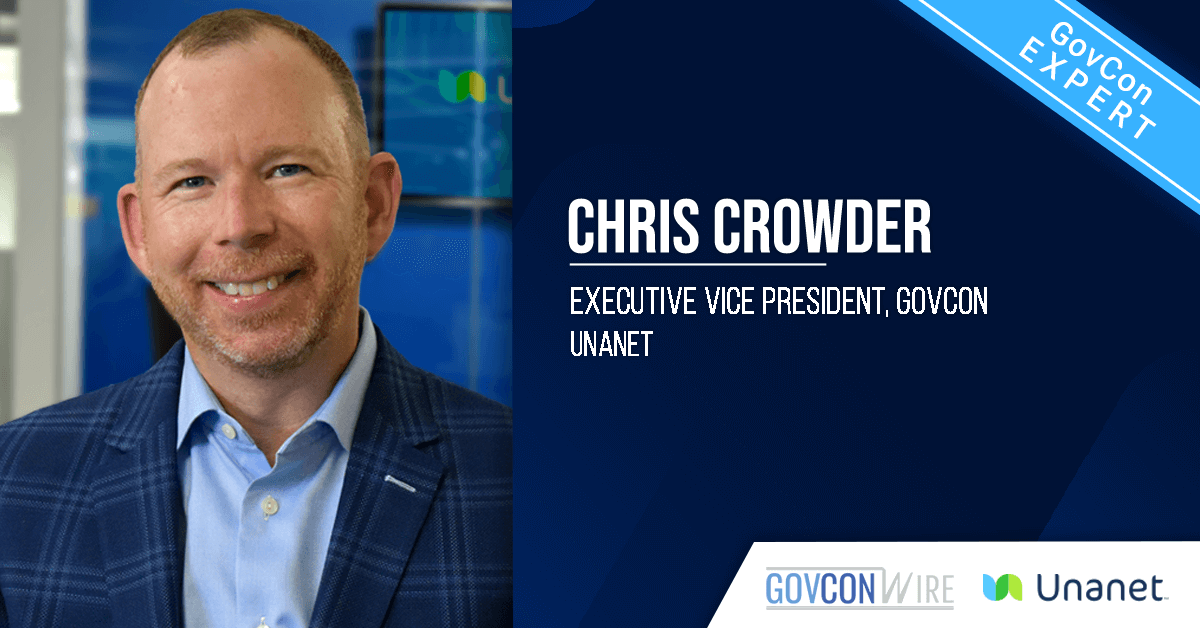

By Chris Crowder, executive vice president, GovCon, Unanet
Government contractors have heard this before. For decades, administrations and acquisition leaders have urged agencies to use more fixed-price contracts, often with less change in buying behavior than the rhetoric suggested. Skepticism about the latest push is understandable.
This time, however, there is reason to pay attention. President Trump’s April 2026 executive order established “fixed-price contracts with performance-based considerations” as the government’s “default and preferred method of procurement.” The direction has since entered the Revolutionary FAR Overhaul, or RFO, which requires additional justification for certain non-fixed-price approaches.
Federal contracting will not suddenly shift wholesale to firm-fixed-price. Fixed-price contracts already represent a significant share of the market, and some requirements still call for other contract types. But the stronger presumption in favor of fixed price changes the starting point for acquisition decisions.
For contractors, the issue is not simply contract type. It is risk. A fixed price does not eliminate risk; it determines who bears more of it. The executive order should be viewed positively among contractors with the right systems in place, since it creates the opportunity for them to earn more profit. However, as contractors assume more risk, accurate pricing, true cost visibility, performance forecasting and margin protection become critical.
Margin Risk Starts Before Award
On a firm-fixed-price contract, the government gains certainty about what it will pay. The contractor must deliver a specified scope within the established price. Labor costs may exceed estimates, the labor mix may change, a subcontractor may run over budget, or productivity may fall short. Individually, these issues may be manageable. Together, they can turn a profitable contract into a loss.
That increases pressure on an area where contractors already struggle. In the 2026 GAUGE Report, 55% of government contractors identified pricing to win as an operational challenge, second only to obtaining and winning new contracts (73 percent).
The challenges are related but distinct. A company can win work and still create a problem by pricing it below a profitable performance level.
During capture, the question should not be only, “Can we win at this price?” It should also be, “Can we perform at this price and earn the expected margin?”
That requires confidence in several assumptions:
- Labor mix and rates: Do we have the expected people, and what will they cost?
- Escalation and indirect rates: Are assumptions realistic for the full period of performance?
- Subcontractor costs: What exposure exists if a partner’s costs or schedule change?
- Staffing and productivity: Can the team perform the work within the estimated hours?
- Schedule and scope: Have we accounted for the work’s complexity and risk?
- Contingency: How much is unknown or out of our control?
Growth, finance and operations must work from the same assumptions. Capture teams need lessons from similar projects. Finance needs confidence in the cost model. Operations needs to understand what was promised and why it was priced that way. Without alignment, a contractor can win an award with margin erosion already built in.
After Award, Look Forward
Once performance begins, the challenge changes. Most contractors can report what they spent last month, but fixed-price work requires more: Where is the project headed?
A program may look healthy in traditional financial reporting while performance deteriorates. If the team has spent 45% of the budget but completed only 35% of the work, the income statement may not yet show a problem. The trend does.
The goal is not more reporting but earlier action. Contractors should monitor:
- Margin drift: Is projected margin falling below the award estimate?
- Labor variance: Are hours or labor costs exceeding plan?
- Staffing changes: Is the project using a more expensive labor mix?
- Schedule variance: Is spending on plan while deliverables fall behind?
- Subcontractor performance: Are partner costs or schedules increasing exposure?
- Estimate at completion: Based on current information, what will it cost to finish?
No single indicator proves a project is in trouble. The value comes from seeing trends together and early. Management may still be able to adjust staffing, improve productivity, address subcontractor issues or raise scope concerns with the customer. Months later, these options may be gone.
Project managers matter because daily delivery decisions affect financial results. Adding people may recover a schedule but increase costs. Assigning a senior employee to a problem may help the customer while changing labor economics. Extra work may seem minor until it becomes significant uncompensated effort.
Project managers do not need to become accountants, but they do need timely visibility into the financial impact of their decisions.
Forecasting Becomes an Early-Warning System
Forecasting under fixed-price projects should not be a month-end finance exercise. It should be an early-warning system. Leaders should compare the margin expected at award with the current forecast and understand why it changed.
If answering basic questions about labor, schedule, remaining cost, and profitability requires several teams and days of spreadsheet reconciliation, the organization is operating with a lag. That lag matters when the contractor owns the cost risk.
Better forecasting gives management time to intervene before a manageable variance becomes a major margin problem. It also brings operational and financial information together. Project managers, finance teams, and executives should share one view of project performance.
Not every federal contract will become firm-fixed-price. Other contract types remain appropriate when requirements or costs cannot reasonably be defined in advance. Fixed-price contracting was already common before this year’s executive order. The policy’s significance is its direction to the acquisition workforce: Start with fixed price and justify certain departures.
Contractors should ask whether they are equally deliberate about managing the associated risk:
- Do capture teams understand how similar projects performed?
- Do pricing assumptions carry forward after award?
- Can project managers see financial and operational performance together?
- Can finance identify margin erosion before it becomes a surprise?
These are management questions, not just technology questions. Answering them consistently, however, requires reliable data and a shared view of the business. When contract, project and financial data come together in the ERP, and AI makes that information easier to access and act on, teams can spot risk earlier, understand what is driving performance and protect margin before problems become surprises.
Fixed-price contracting rewards companies that understand costs, price risk intelligently and identify problems early. Winning still matters, but knowing which work can be performed profitably—and protecting that profitability after award—matters just as much.
When the government fixes the price, contractors must get better at managing everything underneath it.