

- Brandon Daniels has weighed in on the White House AI accord
- Exiger CEO backs independent audits and central oversight
- The 2026 FedCiv Summit will explore AI, shared services and more
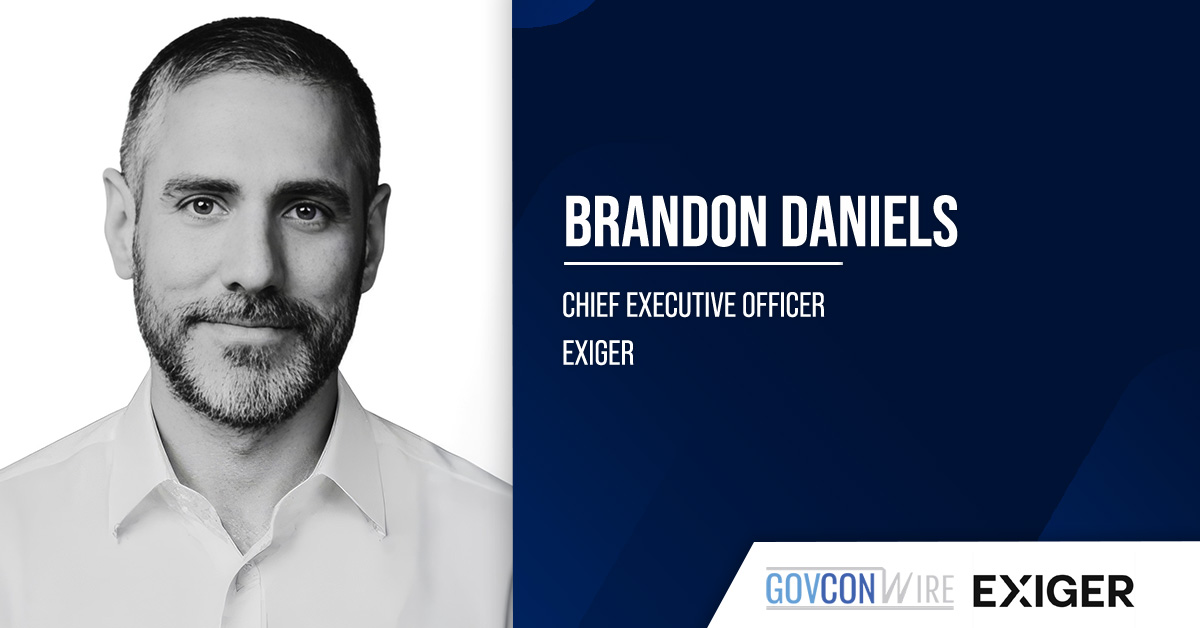
Brandon Daniels, CEO of Exiger and a 2026 Wash100 awardee, said a White House meeting between President Donald Trump and leaders of artificial intelligence companies produced a set of governance principles to guide the safe development of super intelligence.

As AI companies commit to new governance principles for super intelligence, federal civilian agencies continue to advance AI adoption across government. Government and industry leaders will gather at the Potomac Officers Club’s 2026 FedCiv Summit on Oct. 29 to discuss powering and deploying AI across government, data and cloud infrastructure, cybersecurity, federal shared services, IT modernization and more. Sign up now to hear from leaders shaping federal civilian priorities.
In an interview with NewsNation, Daniels, who attended the Sept. 29 meeting, told the network that participants agreed to be bound by a set of superseding principles and plan to codify them within their organizations. The meeting coincided with the release of the White House’s super intelligence executive order and accord.
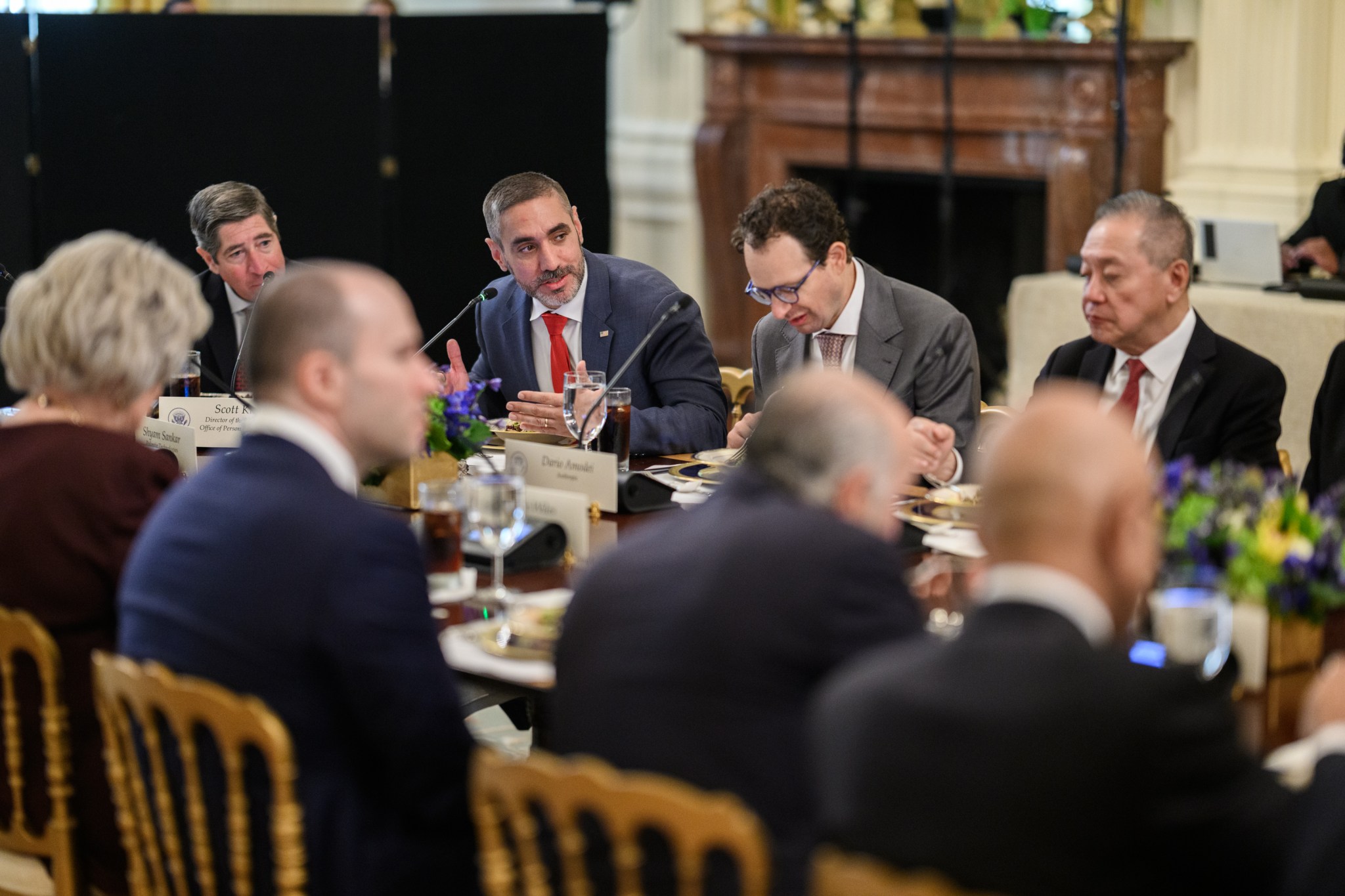
What Principles Did AI Leaders Agree On at the White House?
Daniels said the first principle calls for companies to develop AI tools with governance in place, including quality assurance and safety reviews.
He said participants also agreed to build the tooling that connects AI models to data and computing resources in a way that manages the risk of models making errors or causing disruptions. Daniels compared the approach to a surge protector that could shut off a model that spends excessive money or compute, or exposes a system to hacking.
The Exiger chief executive said the principles also include independent audits, board-level oversight and a potential central body to govern super intelligence for both safety and innovation.
On the day of the meeting, Trump signed an executive order directing executive branch agencies to use the term “super intelligence” in place of “artificial intelligence”.
The White House accord on super intelligence calls on companies developing frontier models to put four layers of controls and audits in place. These are internal monitoring controls, a dedicated internal verification team, an independent outside auditor and an independent board committee.
The accord’s signatories are Trump, Anthropic CEO Dario Amodei, Google and Alphabet CEO Sundar Pichai, Meta CEO Mark Zuckerberg, OpenAI President Greg Brockman, xAI Founder Elon Musk and NVIDIA CEO Jensen Huang. The participating companies agreed to meet regularly to develop safety standards and best practices.
Daniels said the mechanism to address AI risks remains under discussion.
“It’s under discussion, but we made a lot of progress from five hours ago … to make sure that we all agree in the key principles that allow us to create those mechanisms,” he said.
How Does Daniels View Government Oversight of Super Intelligence?
Asked whether the government should create an FAA- or FDA-style department to oversee AI, Daniels pointed to how the Federal Aviation Administration brought airlines together to build centralized systems for tracking planes and routes. He said AI companies are discussing a similar approach, with shared standards for reporting risk management efforts to a central authority.
He noted that, unlike safety regulations in mining or nuclear power, AI governance can be built directly into the technology.
“We can actually implant and embed these governance standards and ways of managing safety in the code itself,” Daniels said.
The accord states that its measures could eventually become law or regulation, and that the companies are committed to carrying them out whether or not they are required.
Daniels said the most significant super intelligence risk is the U.S. losing the AI race, which he described as existential for the country.
“And we don’t want, at this moment in time, people that don’t understand the technology regulating it in a way that could put us way behind,” he said.
What Are Exiger’s Recent AI Initiatives?
Daniels’ remarks on AI governance come weeks after Exiger launched 1Exiger.AI, an AI-native upgrade to its 1Exiger platform that uses autonomous agents to support supply chain, procurement, compliance, readiness and trade management operations. The company said the release completed a companywide AI transformation and built on a $1.2 billion investment led by Carlyle, Insight Partners and JMI Equity in 2023.
In March, Exiger made 1Exiger available on AWS Marketplace for government and commercial customers. The following month, Exiger Cyber earned awardable status on the Platform One Marketplace, which opened access to the offering for the Department of War through the P1 Solutions Marketplace.
The company added to its leadership team during the same period. In April, it hired former Zilliant executive Adi Kavaler as chief technology officer to accelerate the development of its AI platform. In July, it appointed retired Army Gen. Gustave Perna as a strategic adviser to support the delivery of its AI capabilities to defense and government customers.