

- Booz Allen has hired the founder of the Navy’s Task Force 59
- Michael Brasseur will help shape defense technology strategy
- The 2027 Defense R&D Summit will explore AI, unmanned systems and more
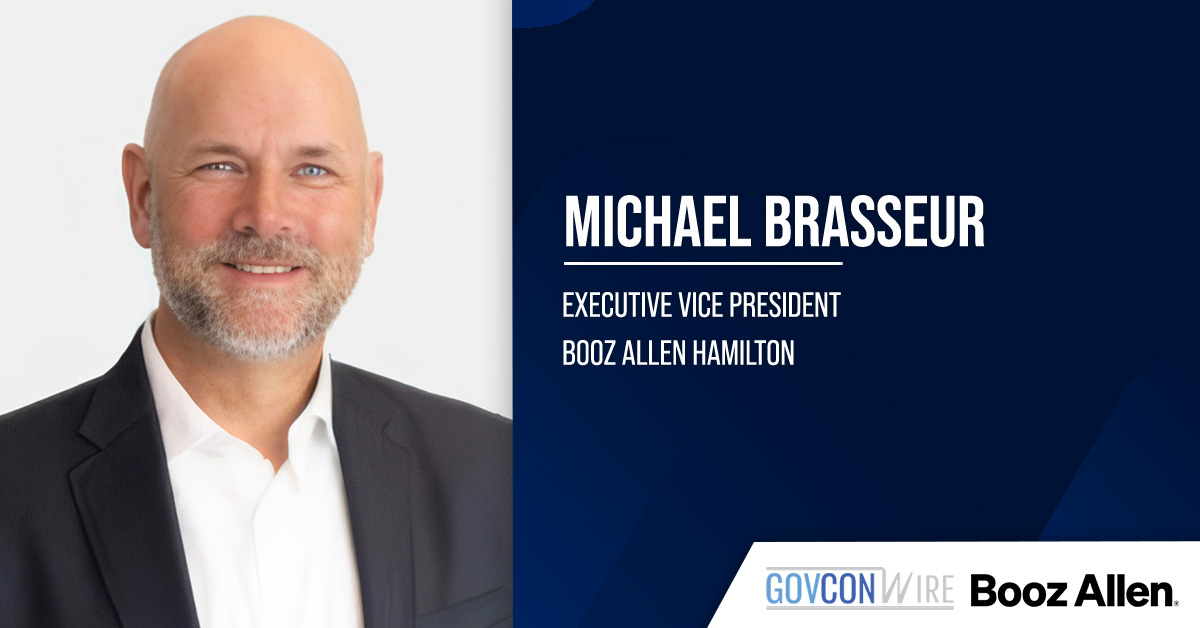
Michael Brasseur, a former U.S. Navy officer who founded the service’s Task Force 59, has joined Booz Allen Hamilton as an executive vice president in its defense technology business.

The latest executive appointment at Booz Allen comes as the Department of War increases its research and development investment in next-generation military technologies. Defense officials and industry executives will examine these and other technology priorities at the Potomac Officers Club’s 2027 Defense R&D Summit on Feb. 4, including unmanned systems, trusted artificial intelligence and autonomy, quantum computing, next-generation wireless networks, directed energy, and space technologies. Register now to gain insight into the department’s technology investment priorities.
What Are Brasseur’s Responsibilities at Booz Allen?
The McLean, Virginia-based company said Tuesday Brasseur will take on a leadership role in guiding its defense technology business. He will also help develop Booz Allen’s partnership and innovation strategies.
Steve Escaravage, president of Booz Allen’s defense technology business, said Brasseur’s familiarity with warfighter requirements and his record of bringing government and industry together will support the company’s growth and its delivery of new capabilities to military users.
“Michael brings an operator’s intuition and a technologist’s vision to Booz Allen,” said Escaravage, a five-time Wash100 awardee. “He understands the pressures warfighters face and the emerging technologies they need.”
Who Is Michael Brasseur?
Brasseur is a 26-year Navy veteran who served as the founding commodore of Task Force 59, the Navy’s first unit dedicated to unmanned systems and AI. During his tenure, the unit advanced from an initial concept to full operational capability within 18 months and logged more than 35,000 hours operating aerial, surface and undersea robotic systems. DOW continues to use the task force as a reference point for rapidly adopting dual-use technologies to address operational needs.
Before joining Booz Allen, he was chief strategy officer at Saab, where he oversaw development of the company’s five-year business plan and the rollout of its technology road map. Brasseur also served as general manager of Skapa by Saab, the company’s AI and autonomy accelerator. He was also a member of the Atlantic Council’s Commission on Software-Defined Warfare.
Brasseur said his new role at Booz Allen will allow him to keep delivering capabilities that produce measurable results for U.S. warfighters.
“Throughout my career, I’ve focused on bringing practical, mission-ready technology to operators who need it right now, not in five years,” Brasseur noted.
What Other Moves Has Booz Allen Made to Expand Its Defense Tech Business?
Brasseur’s appointment follows a series of leadership and portfolio changes at Booz Allen. In April, the company named Troy Lahr EVP and chief financial officer and elevated Chief Operating Officer Kristine Martin Anderson to the additional role of president.
In June, Booz Allen agreed to acquire Ultra I&C Mission Solutions for $720 million to add software, encryption and edge compute products to its defense technology portfolio. The company completed the purchase in August, with Ultra Mission Solutions handling commercial products within the defense technology business led by Escaravage.
The acquisition came after a fiscal year in which Booz Allen reported strong profitability while investing in AI, cyber and defense technology growth areas. Through its venture arm, the company invested in Hadean, a developer of digital wargaming and AI-driven simulation capabilities, and has backed unmanned aircraft systems developer Firestorm Labs.
Escaravage has outlined the business’s direction in recent interviews, citing partnerships with L3Harris, Shield AI and Carnegie Robotics and describing autonomy and AI as central to future warfighting. He has also discussed how AI, electronic warfare, edge networks and software-defined warfare are reshaping defense operations.