

- The Navy is building a fleet of unmanned systems across the air and maritime domains
- The service has already awarded contracts to multiple companies for prototype and production
- Navy and Pentagon leaders will take the stage at the 2027 Defense R&D Summit on Feb. 4 to discuss UxS and other battlefield technologies
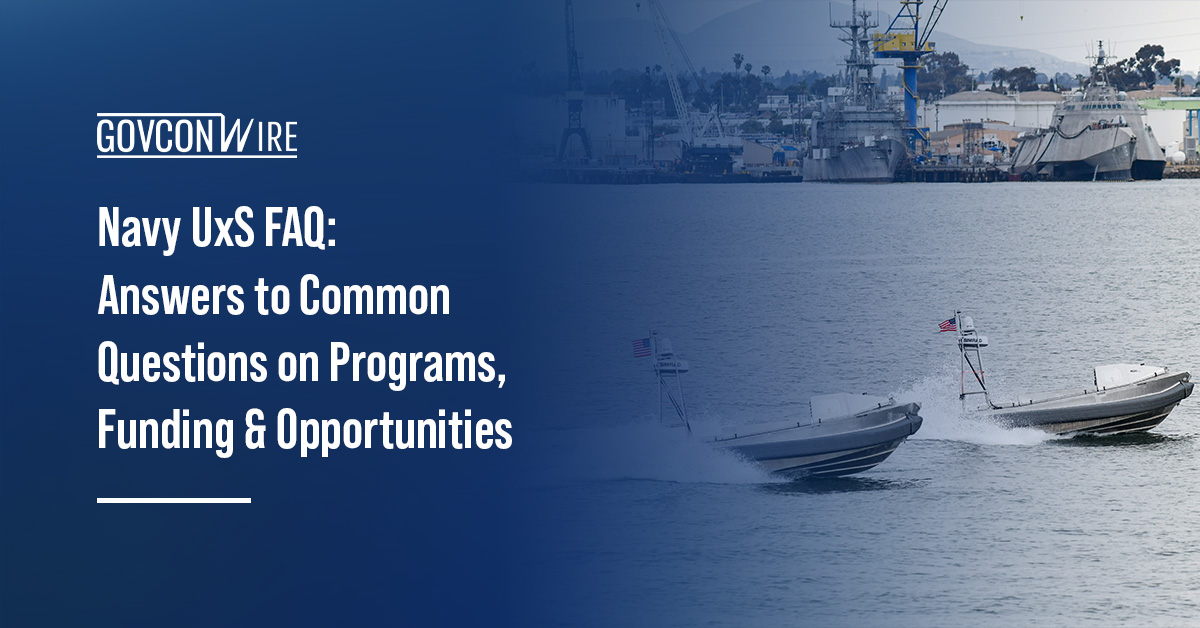
As adversaries, such as China, rapidly expand and modernize their naval fleets, the U.S. Navy is accelerating efforts to develop, field and acquire unmanned systems, or UxS, to expand its maritime reach and firepower.
Below are answers to some of the biggest questions surrounding the Navy’s push to build its arsenal of autonomous capabilities.

The rapid development, fielding and deployment of drones will be one of the top topics at the Potomac Officers Club’s 2027 Defense R&D Summit on Feb. 4. Pentagon leaders overseeing UxS development and deployment are set to take the stage to share progress and identify capabilities still needed to create a lethal force that can win in a fight against any adversary. Tickets are now available here!
Who runs Navy UxS now?
Christopher Miller oversees the servicewide acquisition, development and sustainment of unmanned systems as the Navy’s portfolio acquisition executive for robotic and autonomous systems, or PAE RAS.
Hung Cao, acting secretary of the Navy and a 2026 Wash100 winner, announced Miller’s appointment in October.
As PAE RAS, Miller is in charge of consolidating ground, air, undersea and surface unmanned systems efforts across the service. He is also tasked with cutting red tape and streamlining the procurement and fielding of unmanned systems to accelerate the delivery of a hybrid naval fleet.
Miller also serves as the direct reporting portfolio manager for robotic and autonomous systems, or DRPM RAS.
What unmanned systems does the Navy actually operate today?
The Navy operates different unmanned systems across aerial, surface and underwater domains.
Unmanned surface vessels:
- Leidos Sea Hunter and Seahawk medium displacement USV
- Global Autonomous Reconnaissance Craft small USV
- Saildrone Voyager sUSV
Unmanned undersea vehicles:
- Boeing Orca extra-large UUV
- HII Lionfish small UUV
- General Dynamics Mission Systems Knifefish medium UUV
Unmanned aircraft systems:
Has an unmanned ship been deployed with a carrier strike group?
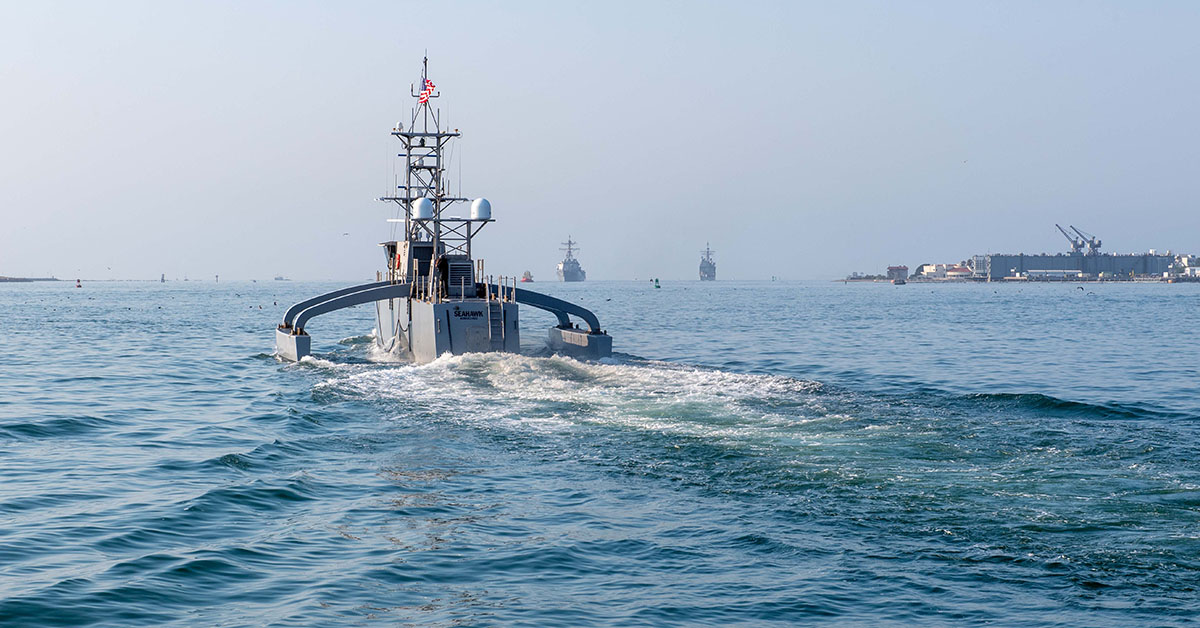
Yes. Cao confirmed at a recent Association of the U.S. Army, or AUSA, conference that the Theodore Roosevelt Carrier Strike Group deployed with an MUSV in October, becoming the “first carrier strike group to ever deploy with a large-size unmanned surface vessel,” DefenseScoop reported.
While the acting Navy secretary did not disclose the specific system that deployed with USS Theodore Roosevelt, Leidos said in September that its Seahawk MUSV is operating alongside the carrier strike group, according to Naval Today.
Has the Navy used drones in real combat?
Yes. Cao also confirmed at AUSA in October that the Navy used Saronic Technologies’ Corsair USV to rescue a helicopter pilot and gunner and for demining operations in the Strait of Hormuz.
From UxS to artificial intelligence, explore the advanced technologies changing the way wars are fought and won at the 2027 Defense R&D Summit! Key decision-makers from across the Pentagon will be present to discuss 5G and connectivity in contested environments, supply chain visibility, AI deployment on the battlefield, and other topics that are critical to the future of national defense. Reserve your spot today!
What is the MUSV program, and which companies won production awards?
The Navy’s MUSV vessel family of systems program is an acquisition effort to rapidly field and buy unmanned vessels.
Following Phase I at-sea testing, the Navy awarded production agreements totaling $1.2 billion to Galliano Marine Services, HII and Saronic. Each company will deliver 10 MUSVs starting in fiscal 2027.
How much do MUSV systems cost?
Under the production agreements, the MUSVs carry an average procurement cost of $40 million per vessel.
How many unmanned vessels will the Navy buy?
The Navy’s FY2027 shipbuilding plan, issued in September, revealed that the service wants to grow its fleet from 395 total vessels in FY27 to 450 vessels — consisting of 299 warships, 68 auxiliary ships and 83 unmanned vessels — by FY31.
For MUSV, the plan calls for the procurement of 47 MUSVs by 2031. The Navy said it also intends to acquire 16 extra-large UUVs by 2031.
Why are companies suing the Navy over MUSV, and is the program delayed?
Saildrone and Blue Water Autonomy sued the Navy, alleging that they were unlawfully excluded from the MUSV development program.
In a lawsuit filed in the U.S. Court of Federal Claims in late June, the companies claimed that the Navy did not follow its own criteria when selecting autonomous vessels for the MUSV program, USNI News reported.
Under the program, the Navy sought vessels that could travel 2,500 nautical miles at 25 knots in sea state 4, carrying a payload of up to 25 metric tons across at least two 40-foot shipping containers. The Navy selected seven of about two dozen companies to build a prototype MUSV for testing and inclusion on a list of approved vendors.
Saildrone said its Spectre MUSV exceeded program requirements but was rejected through what the company described as an “arbitrary and capricious evaluation of Saildrone’s proposal by Navy Portfolio Acquisition Executive for Robotic and Autonomous Systems.”
Meanwhile, Blue Water Autonomy stated in its complaint that it had already made significant investments to build a prototype of its vessel Liberty for the Modular Attack Surface Craft, or MASC, a USV program that was canceled and replaced with the MUSV program. The company alleged that the Navy “prematurely excluded” Liberty from competition.
The MUSV program has not been delayed. A ruling from the U.S. Court of Federal Claims ordered the Navy to reevaluate Saildrone’s vessel and prohibited the service from using its previously drawn findings under other evaluation criteria to eliminate the company. The court sided with the Navy against Blue Water Autonomy, Breaking Defense reported.
Why did the Navy stop pursuing ‘optionally manned’ ships?
The Navy stopped pursuing optionally manned or optionally crewed surface ships because vessels that may need to operate with people on board will come with requirements that ramp up cost and introduce complications, said Navy Capt. Matt Lewis, program manager of the Unmanned Maritime Systems program office within Naval Sea Systems Command.
Vessels that were designed from the outset to operate without a crew do not need berthing space, galleys, toilets and other features, TWZ pointed out, reducing overall cost and complexity.
What has GAO said about Navy unmanned systems?
The Government Accountability Office called on the Navy in a report issued in June to take additional steps to accelerate the development and deployment of autonomous systems. According to the congressional watchdog, existing challenges, such as leadership changes and outdated acquisition requirements and processes, could slow down efforts to modernize naval operations.
Will drones replace sailors and manned warships?
No. Drones are meant to augment, not replace, sailors and manned warships. Adm. Daryl L. Caudle, chief of naval operations, told lawmakers that unmanned systems will serve as a force multiplier.
When will drones fly off carriers?
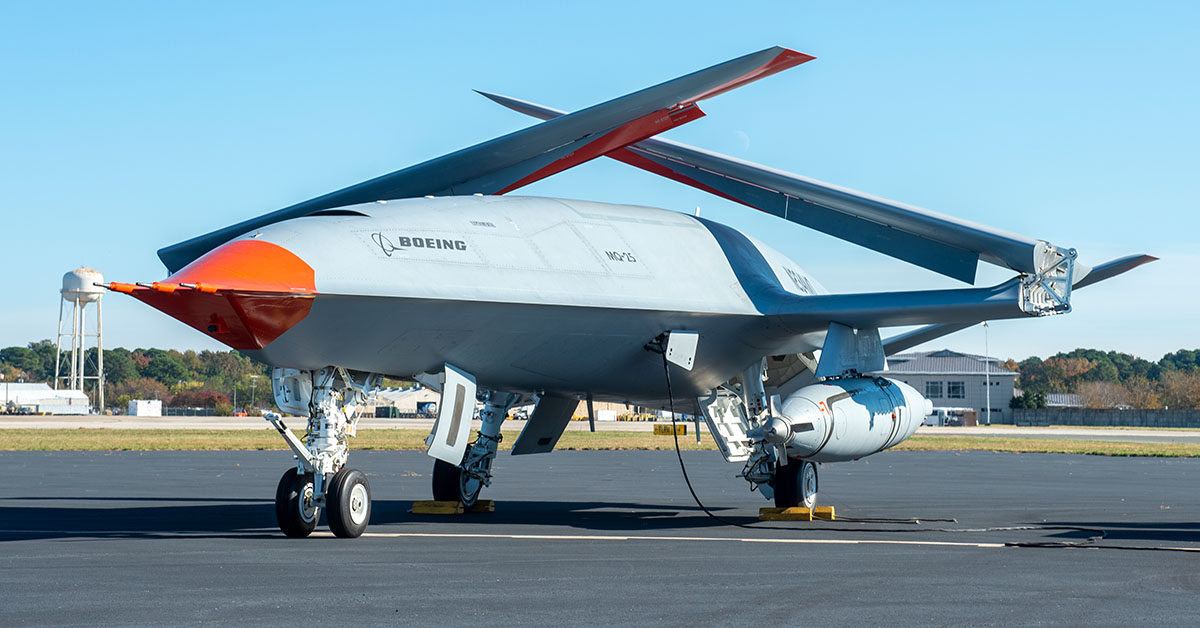
The Boeing MQ-25A Stingray, the Navy’s first operational, carrier-based unmanned aircraft, is not expected to deploy on aircraft carriers until 2029. Budget documents reviewed by USNI News revealed that the Stingray, which was scheduled to launch from USS Theodore Roosevelt in late 2026, will reach initial operational capability three years later than previously planned.
Meanwhile, the Collaborative Combat Aircraft, which are autonomous platforms designed to fly alongside fighter jets and launch from carriers, are scheduled for delivery beginning in the 2030s.
How can companies get into the Navy’s unmanned work?
The Navy has several pathways for UxS acquisitions:
- MUSV marketplace: The service’s primary procurement channel for mid-size drone ships is open to new industry partners through rolling solicitations.
- Defense Innovation Unit challenges: DIU hosts opportunities for nontraditional and venture-backed firms to develop and deliver new capabilities. The SWAP-USV Challenge, launched in July, offers up to $100 million for the fielding of USVs that can carry at least two armed drones.
- SBIR/STTR: Smaller firms can seek opportunities through the Small Business Innovation Research and Small Business Technology Transfer. The Navy is seeking proposals for a low-cost, portable and rapidly deployable UAS to support intelligence, surveillance and reconnaissance under a Navy SBIR Phase I topic announced on Nov. 4. Proposals are due Jan. 6.
Gain a better understanding of the Navy’s UxS needs at the Potomac Officers Club’s 2027 Defense R&D Summit on Feb. 4 at Hilton McLean in Virginia. With the Navy and other services increasing spending on UxS, there has never been a more critical time to gain insider insights into the Pentagon’s road map to acquire autonomous capabilities. The summit will convene government leaders and industry experts for keynotes and panels, giving government contracting companies plenty of opportunities to engage with potential partners and customers and align offerings with emerging requirements. Register today to secure your seat!