
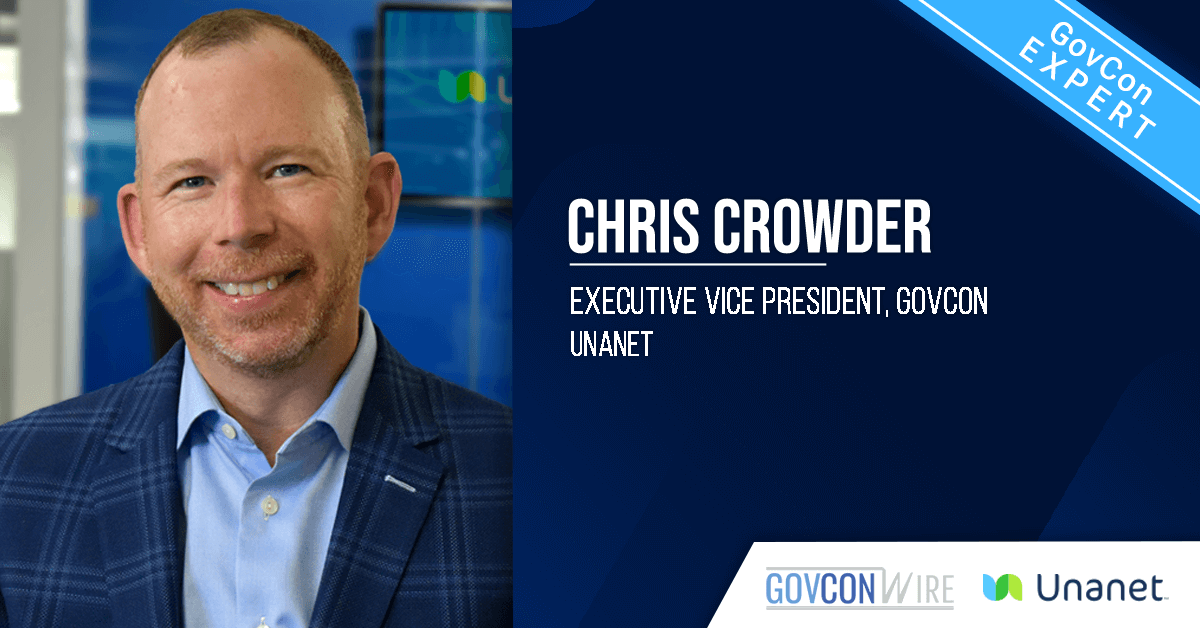

By Chris Crowder, executive vice president, GovCon, Unanet
Backlog has long been one of the standard measures of success in government contracting. Along with revenue growth, contract awards and pipeline, it gives leaders a useful view of company performance.
But backlog has its limits. A large backlog may signal strong demand. It does not necessarily show whether the work is profitable, whether the company can deliver it well, whether customers see value in the relationship, or whether the business is becoming more resilient over time.
That leads to a more useful question for today’s leaders: How valuable is the business becoming?
The question matters in today’s market. According to the 2026 GAUGE Report, competition and the ability to win contracts have become the industry’s top business challenge, while executive confidence has declined compared with previous years. Success increasingly depends on operational strength, financial discipline and leadership capacity that can sustain growth over the long term.
For years, many government contractors have measured progress by the next contract award or revenue milestone. Those goals still matter. But margins remain uneven and require tighter discipline, acquisitions continue to reshape the market, and technology is changing how companies manage their work.
The most successful organizations are expanding the conversation beyond growth alone.
Growth Is Not the Same as Value
Twenty percent annual growth can be a strong sign of momentum. But growth alone does not guarantee long-term strength; in some cases, scaling quickly can create strain. Growth can conceal areas that deserve additional attention, including margins, customer concentration, project execution and financial controls. Addressing these areas early helps companies scale with greater confidence.
A smaller federal contractor with consistent profitability, disciplined operations and a clear strategy may ultimately be in a better long-term position than a larger organization still trying to keep pace with its own growth.
Enterprise value reflects the confidence customers, employees, investors, lenders and potential partners have in a company’s ability to perform consistently. That confidence is earned through the way the business operates—not simply by winning more work.
What Creates Enterprise Value?
Every contractor follows a different path, but several characteristics consistently support stronger, more resilient businesses.
Profitable Growth
Not every opportunity deserves the same level of attention. Strong contractors understand which pursuits align with their capabilities, strategic priorities and financial goals. They look beyond the size of an award and consider the quality of the work, the likely margin, the customer relationship and the resources required to successfully deliver.
That discipline sometimes means walking away from opportunities that are not the right fit. Growth remains important, but the difference is making intentional decisions about where to focus.
A More Balanced Portfolio
Heavy dependence on one agency, contract vehicle, or prime contractor can leave a company vulnerable to changes it cannot control.
A more balanced portfolio helps reduce that exposure. Contractors with work spread across customers, missions, teaming partners and contract types are often better prepared to respond when priorities shift or funding slows.
Diversification does not eliminate uncertainty, but it gives leaders more flexibility when conditions change.
Stronger Operations
Financial visibility, project execution, cybersecurity, compliance, resource management and program management were once viewed primarily as back-office functions. Today, they are business capabilities that influence sustainable growth.
These areas affect how well a company forecasts, allocates resources, manages risk and delivers for customers. Over a decade of GAUGE research, operational maturity has remained closely associated with stronger business performance.
Companies with disciplined processes identify issues earlier, respond faster and take on greater complexity without losing control of execution.
That is where connected systems and reliable data become increasingly valuable. When leaders have visibility across projects, people and finances, they can make informed decisions based on current information instead of assumptions.
Leadership Beyond the Founder
A business becomes less resilient when too much knowledge or decision-making authority rests with one individual.
Leadership depth creates stability. It develops future leaders, improves decision-making across the organization and helps the company continue performing through periods of change.
This becomes especially important during periods of growth, succession planning, or acquisition discussions. Buyers, investors and partners all want confidence that the business can continue succeeding beyond any one executive.
More Predictable Performance
Predictability rarely receives the same attention as winning a major contract, yet it is one of the clearest signs of a well-run business.
Accurate forecasts, reliable project execution, stable cash flow and consistent program performance make planning easier while reducing uncertainty for customers, employees, lenders and investors alike.
The 2026 GAUGE Report found that many government contractors still rely primarily on spreadsheets for financial forecasting. While spreadsheets may work for smaller or less complex organizations, they become increasingly difficult to manage as companies grow. Information becomes fragmented, reporting slows and emerging issues are harder to identify.
The companies building the strongest businesses are improving how information flows across the organization. The goal is not to eliminate risk. It is to recognize it sooner and respond with greater confidence.
Changing the Conversation
Many leadership teams begin annual planning with a familiar question:
“How do we grow revenue by 15% next year?”
It is an important question, but it should not be the only one.
An equally important question is:
“What decisions will make this company stronger five years from now?”
The answer may involve pursuing fewer opportunities, improving margins, reducing customer concentration, strengthening forecasting, developing future leaders, or replacing disconnected systems.
Those decisions may not create immediate headlines, but they often build healthier organizations over time. Revenue becomes the result of a sound strategy rather than the only measure of success.
A Better Measure of Success
After a decade of observing the government contracting industry through the GAUGE Report, one lesson continues to stand out: the companies that perform best over time make deliberate choices about where to compete, how they operate and where they invest. Some investments develop people. Others strengthen processes, technology, or financial discipline. Together, they create organizations that can grow without sacrificing execution.
Backlog will always matter. Revenue will always matter. But the strongest government contractors are defined by more than the size of the work they win.
They build organizations that customers trust, employees want to be a part of, and leaders can confidently grow with. That foundation enables them to navigate changing budgets, shifting priorities and new opportunities alike.
In the end, the most valuable businesses are not simply the ones that win more contracts; they are the ones built to succeed long after those contracts end.