

Government contractors are navigating one of the most uncertain business environments in recent memory, but the companies achieving the strongest growth and highest win rates are not pulling back. Instead, they are investing more heavily in artificial intelligence, operational maturity and disciplined business processes.
Those are among the key findings from Unanet and CohnReznick’s 10th annual GAUGE Report, a survey of more than 1,200 contracting professionals that examines industry trends, performance metrics and emerging challenges facing the GovCon sector. This year’s report found that nearly 60 percent of respondents said their confidence in federal contracting declined over the past year, while 70 percent reported being affected by procurement slowdowns. At the same time, AI adoption reached its highest level since the survey began tracking the technology, with 70 percent of respondents reporting they are using AI to achieve business gains.
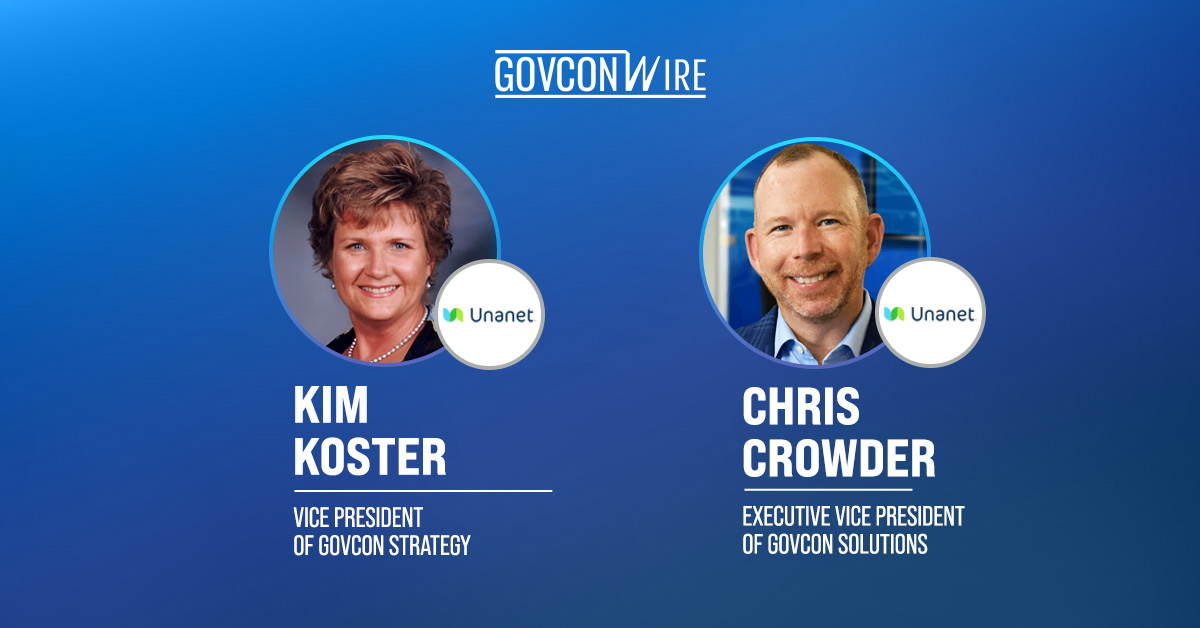
Chris Crowder, executive vice president of GovCon solutions at Unanet and one of Executive Mosaic’s esteemed GovCon Experts, said the survey captures an industry grappling with significant disruption while simultaneously searching for new avenues of growth.
“Historically, government contracting has been viewed as a very stable, very predictable market. This year, however, optimism has become more tempered as uncertainty has led more industry leaders to take a cautious view of the market,” Crowder told GovCon Wire in an interview.
Why Are GovCons Feeling Less Optimistic?
The survey’s confidence findings reflect a convergence of challenges that contractors have faced over the past year.
According to the report, procurement slowdowns remain the most significant operational concern. Respondents also cited contract uncertainty, regulatory changes, inflationary pressures and cybersecurity requirements as major issues affecting business performance.
Crowder said several unprecedented developments contributed to the industry’s changing outlook.
“We had DOGE, we had the longest shutdown in history, we had [the] DHS [shutdown] that was extended even longer, we had contracts that were canceled unexpectedly in a market that historically has been very secure,” he explained.
The report found that firms with lower profit margins and lower contract win rates were particularly pessimistic about the current business environment, while high-performing firms generally remained more optimistic about future opportunities.
Kim Koster, VP of GovCon strategy at Unanet and a fellow GovCon Expert, told GCW that uncertainty is creating a more challenging operating environment, particularly for smaller contractors.
“The industry is definitely under pressure,” Koster said. “When you have procurement slowdowns, contract delays and uncertainty around budgets, organizations have to become more disciplined about how they operate.”
What Are Winning Contractors Doing Differently?
One of the report’s central themes is that successful GovCons are distinguishing themselves through operational maturity rather than any single technology or strategy.
Researchers identified several characteristics that consistently appeared among firms reporting contract win rates above 50 percent, profit margins above 10 percent and more advanced AI practices.
Those organizations were more likely to have diversified revenue streams, mature capture management processes, established project management offices, integrated software environments and stronger compliance programs.
“We tried to look at the data correlations among the firms that were performing well,” Crowder said. “Stronger win rates, stronger profit performance and AI maturity all tended to show up together.”
Koster said project management discipline emerged as one of the strongest differentiators.
“Winning firms have a PMO,” she said. “More mature PMOs, those companies have win rates over 50 percent, and they’re using AI.”
The report also found that high-performing contractors are more likely to forecast staffing needs further into the future, conduct more internal audits and maintain stronger capture organizations than their peers.
“The headline for us is that successful firms are performing across multiple dimensions,” Crowder said. “It’s not just one thing that these winning firms do. They’re disciplined operationally across the board.”
Why Is AI Becoming a Competitive Differentiator?
Perhaps the most significant long-term trend identified in the report involves AI adoption.
The percentage of contractors using AI has climbed dramatically over the past three years, rising from 33 percent in 2024 to 54 percent in 2025 and 70 percent in 2026, according to Koster. The survey also found that 74 percent of respondents believe AI and process automation will transform GovCon over the next five years.
“In the past, our industry has taken a measured approach to adoption, but with this technology, we’re at the forefront,” Koster said.
Crowder believes the industry has crossed an important threshold.
“The tipping point has passed,” he said. “It’s now a matter of how you’re going to use AI, not if.”
The report found that AI adoption extends beyond business development and proposal support. AI usage for compliance functions increased from 14 percent last year to 36 percent this year, suggesting contractors are becoming more comfortable applying the technology to mission-critical business processes.
Still, both executives emphasized that governance remains essential.
“We always need a human in the loop,” Koster said. “The companies that are getting the most value out of AI are the ones that are putting the right policies and governance around it.”
Who Is Kim Koster?
Koster brings more than three decades of GovCon experience to her role at Unanet.
Before becoming vice president of GovCon strategy in July 2025, she served as vice president of product marketing at the company for more than eight years. Prior to joining Unanet, Koster spent nearly seven years at Deltek, where she held senior leadership positions in product marketing and solution architecture.
Her industry experience also includes leadership roles at ATK, where she directed earned value management and finance operations, and Raytheon Missile Systems, where she spent more than 17 years in increasingly senior financial and business management positions. Koster also served as controller for the JAVELIN Joint Venture.
Koster regularly contributes a GovCon Expert column at GovCon Wire, where she writes passionately about project management offices, project accounting and management.
Over the course of her career, she has worked across program finance, earned value management, forecasting, compliance, ERP implementation and government contracting operations, giving her a unique perspective on how the industry has evolved.
“We saw a trend toward operational maturity,” Koster said when reflecting on the report’s decade-long history. “The companies that are more data-driven, that have more integrated systems, that have more operational discipline, they continue to perform better.”
Who Is Chris Crowder?
Crowder has spent more than two decades helping government contractors improve business operations, technology adoption and organizational performance.
He currently serves as EVP of GovCon solutions at Unanet, where he works with customers, partners and industry stakeholders to enhance software and operational capabilities for government contractors. Before assuming that role in 2023, he spent seven years as regional vice president for Unanet’s GovCon business.
Prior to joining Unanet, Crowder was a principal at Baker Tilly, where he led consulting engagements focused on government contractors, higher education institutions and nonprofit organizations. His background also includes leadership positions at Beers & Cutler, BearingPoint and Arthur Andersen.
Throughout his career, Crowder has advised organizations on ERP implementation, strategic planning, business process transformation and program management.
That experience gives him a broad perspective on how technology-driven change is affecting the GovCon market.
“The amount of change that we’ve seen over the last decade is incredible,” Crowder said.
What Does the Next Decade in GovCon Look Like?
As the GAUGE Report marks its 10th anniversary, both executives believe the next decade will likely be defined by the same qualities that have helped contractors navigate previous periods of disruption.
The industry is expected to continue adapting to AI, cybersecurity mandates, procurement reform efforts and changing federal priorities. Contractors will also face increasing pressure to improve efficiency while maintaining compliance and competitiveness.
For Crowder, the lesson from the report is straightforward.
“The strategic answer is not retreat,” he said. “It’s becoming more disciplined, more efficient and more adaptable.”
Koster agreed.
“The firms that win are the ones that adapt,” she said. “That’s been true for the last 10 years, and I think it’ll be true for the next 10 years too.”
Check out the full 10th Annual GAUGE Report here