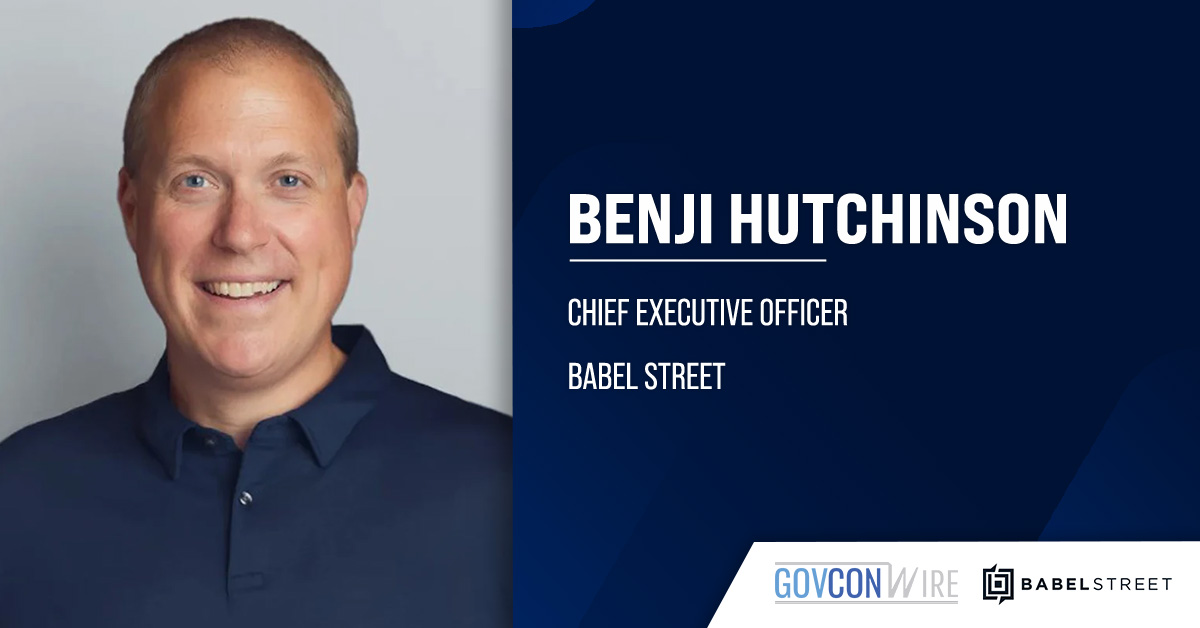

By Benji Hutchinson, CEO of Babel Street
Modern adversaries don’t attack in one dimension. They exploit global supply chains, digital identities and the information environment simultaneously, probing for weak seams where risk passes unseen between organizations, vendors and people.
For national security organizations, defense contractors and critical infrastructure operators, this convergence creates three mission-critical imperatives: identity screening, vendor monitoring and threat tracking. These are no longer separate lanes. They’ve collapsed into a battlespace where hidden connections determine who gets infiltrated and who stays protected.
According to the U.S. Department of War, today’s defense ecosystem includes hundreds of thousands of small, medium and large companies across the defense industrial base and the broader supply chain. That scale and complexity create significant potential entry points for foreign influence, cyber compromise, intellectual property theft and operational disruption.
This is necessitating a unified, intelligence-driven approach that transforms disparate data streams from wide-ranging online sources into actionable threat awareness, enabling the identification of compromised vendors, the unmasking of malicious actors and the prevention of infiltration before these threats reach mission-critical systems.
Identity Risk Intelligence: Knowing Who You’re Really Dealing With
Screening identities includes ensuring that all individuals with access to sensitive information or facilities, including employees, contractors and partners, are properly vetted and their access levels are appropriate. The risk of insider threats and the need for robust identity, authentication and access management are explicitly recognized in DOW strategies and other national security documents.
Identity has become one of the most critical — and most exploited — vectors of risk. Identity fraud and impersonation are rising exponentially, fueled by sophisticated deception tactics and vast amounts of accessible personal data. Traditional background checks, once sufficient, now miss vital contextual signals that reveal hidden intent or affiliation.
At the same time, compliance mandates such as anti-money laundering and know your customer continue to tighten, demanding greater transparency and precision in verifying who individuals and entities truly are. For border protection, national security and global commerce alike, the stakes have never been higher. Hidden associations, networked relationships and undisclosed ties can expose organizations to financial, operational and reputational damage.
To stay secure, institutions must evolve beyond surface-level verification toward deeper, intelligence-driven identity insight — truly knowing who they’re dealing with before risk turns into consequence.
Vendor Risk Intelligence: Protecting Your Extended Enterprise
Modern organizations rely on intricate supply chain ecosystems, often collaborating with thousands of third-party vendors to deliver products and services. Each of these relationships carries potential risk, from operational disruptions to security breaches. Supply chain attacks can exploit a single vulnerability that can cascade across an entire organization, amplifying impact and exposing critical assets.
Compounding the challenge, hidden ownership structures and foreign influence can obscure true risk, creating blind spots that traditional vendor assessments often miss. Vendor risk intelligence addresses this complexity by providing a clear, data-driven view of the extended enterprise. By going beyond self-attestation and tax ID, to uncover hidden connections and continuously monitor third-party exposures, organizations can safeguard operations, protect sensitive data and strengthen resilience across the supply chain before small issues escalate into major crises.
Threat Intelligence & Investigations: Turning Signals Into Actionable Cases
Events that begin as a social media post, a local protest or a probe in a network rarely stay contained. They evolve into campaigns that cut across physical, cyber and information domains and do it faster than traditional intelligence cycles can keep up. A headline in one region can translate into a targeting problem, supply chain issue or personnel risk somewhere else overnight.
To maintain situational awareness, organizations must monitor intelligence across languages, regions and channels, capturing signals that traditional intelligence cycles often miss. Conventional approaches are too slow to respond to the dynamic and complex nature of modern threats. Real value comes from being able to pivot from a signal to an investigation, helping identify who is involved and how they are connected.
Threat intelligence and investigations together should enable teams to connect external signals to people, vendors and networks and to build cases that can stand up to legal, regulatory and oversight scrutiny. The organizations that will win in the next decade are the ones that can do this at scale and speed.
Why a Platform Approach? The Integration Imperative
Specialized software tools may address individual challenges effectively, but they create silos that fragment data and obscure the bigger picture. Each tool requires manual correlation, duplicating effort and cost while slowing time to insight. As a result, organizations can miss critical connections between risk domains — connections that could expose hidden vulnerabilities or emerging threats.
A risk intelligence platform is designed to work with the systems that organizations already rely on. It works across case management, clearance, procurement, cyber and supply chain tools and operates over both structured and unstructured data. Instead of just visualizing data, it continuously screens and correlates people, entities and events while identifying risk signals. In doing so, it maps relationships and SEAD-4-aligned risk indicators and pushes that intelligence into workflows where investigations, vetting and operational decisions are made.
AI-native, modular and interoperable, a risk intelligence platform builds on and enhances prior investments while giving analysts and operators a coherent, mission-ready view of risk they can act on.
Now Is the Time: From Reactive Defense to Predictive Protection
National security organizations, the defense industrial base and enterprise organizations can no longer afford fragmented or siloed approaches around identity, vendors and threats. A unified risk intelligence platform closes visibility gaps to make an enterprise more secure and compliant, delivering strategic advantage and empowering organizations to anticipate and adapt as threats evolve.
By employing AI to scale intelligence capabilities beyond human limits, integrating insight directly into operational workflows and enabling faster, data-driven decisions, a risk intelligence platform approach addresses the need to shift from reactive defense to predictive protection. In an environment where adversaries already treat identity, supplier and threat vectors as one interconnected battlespace, our defenses and the technology that underpins them must do the same.