“Even in a mix of on-premises and cloud environments, agencies should be able to assess and monitor everything as though they are operating on a single platform,” Rucker wrote. “Otherwise, they will end up with disjointed chunks of information that cannot be manually correlated at the size and scale of the government environment.”
He discussed how a unified platform provides agencies a “centralized control” of on-premises and cloud environments and assurance when it comes to security.
“Having a unified platform for validating security controls while making sure that data is protected against vulnerabilities gives agencies a high level of assurance that all their systems are secure,” Rucker noted.
Rucker also cited the need for agencies to establish strong partnerships with industry to meet their missions in a speedy and efficient manner.
The Department of State has awarded spots on a multiple-award indefinite-delivery/indefinite-quantity contract with a combined potential value of $10 billion…
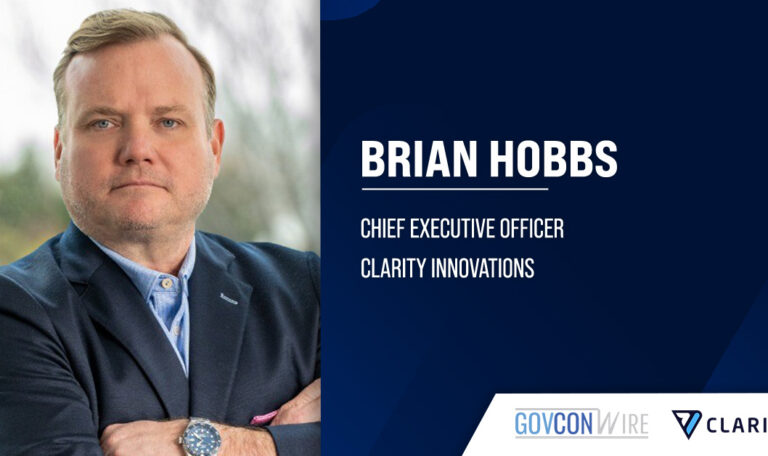
Brian Hobbs has been appointed CEO of Clarity Innovations, effective March 2, the company announced Tuesday. He succeeds founder and long-serving CEO Wes…
The Federal Aviation Administration has awarded a potential five-year, $437.4 million contract to ASRC Federal Advanced Research to provide second-level…