

Anduril Key Facts
- Founded: 2017
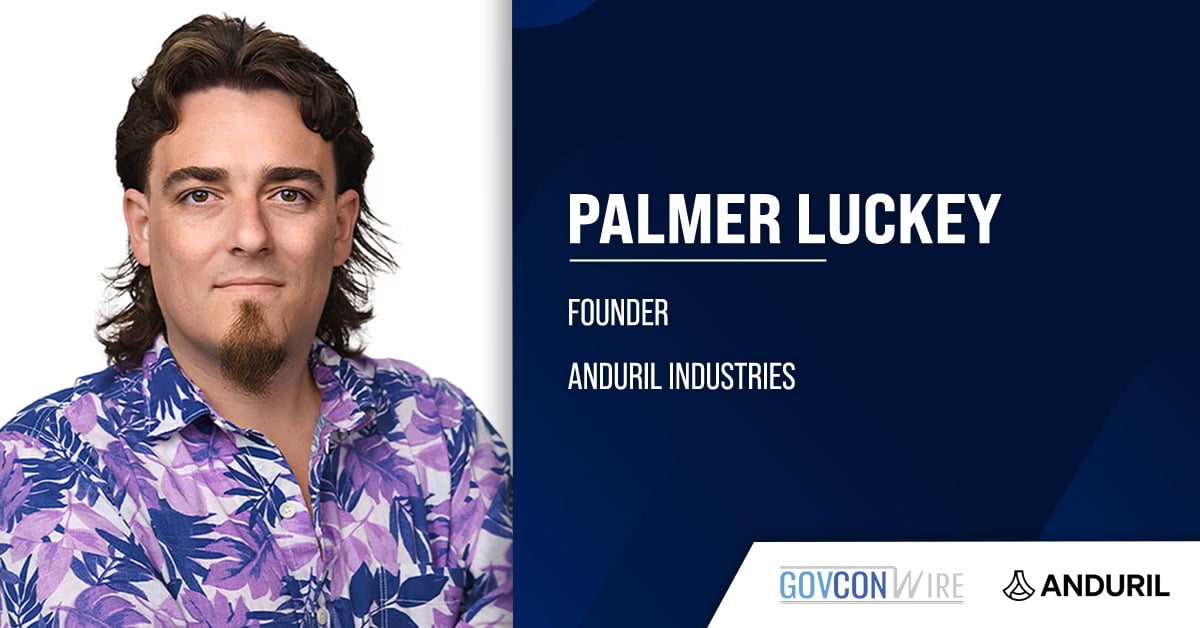
- CEO and founder: Palmer Luckey
- Ownership: Privately held, investors include Founders Fund
- Current valuation: $90 billion (as of Oct. 2026, from employee tender offers)
- IPO status: No date announced, but Luckey has confirmed the company will eventually go public
CNBC has reported that Palmer Luckey, founder of Anduril Industries, said the defense technology company will go public.
When asked about plans for an initial public offering, Luckey told CNBC’s Closing Bell: Overtime in a video interview that Anduril is “definitely going to be a publicly traded company.”
“We are running this company to be the shape of a publicly traded company,” added Luckey, who did not give details about the timeline of an IPO during the interview.
Latest Funding Round
Luckey’s remarks came after Anduril Executive Chairman Trae Stephens announced that the defense tech startup raised $2.5 billion in a round of Series G funding led by Peter Thiel’s venture capital firm Founders Fund, which contributed $1 billion.
The latest funding round brings the defense tech company’s valuation to $30.5 billion.
“As we continue working on building a company that has the capacity to scale into the largest problems for the national security community, we thought it was really important to shore up the balance sheet and make sure we have the ability to deploy capital into these manufacturing and production problem sets that we’re working on,” Stephens told Bloomberg TV.
In February 2025, Anduril signed a term sheet to raise up to $2.5 billion in capital.
Timeline of Anduril’s Valuations
Here are Anduril’s latest valuations, according to SmartAsset:
- December 2022, Series E, $8.5 billion
- June-August 2024, Series F, $14 billion
- June 2025, Series G, $30.5 billion
- May 2026, Series H, $61 billion
What Anduril Going Public Would Mean for the Defense Industry
Anduril going public would have significant ramifications for the company, including
- Capital access. Going public would allow Anduril to raise capital through equity and bond offerings, accoridng to EY. This could help it accelerate growth and achieve market leadership.
- Reporting requirements. Anduril would have to provide greater transparency into its financials and adhere to detailed disclosure requirements about potential liabilities.
- Potential pressure. Anduril would face significant pressure to deliver on its promises.
- Additional costs. Anduril would face add-on costs associated with the ongoing requirements of being a publicly traded company.
Anduril going public would deliver signals about the defense technology market. It would show that the company’s Silicon Valley-style software development and manfacturing speed, according to Investing.com, could compete in a market traditionally dominated by long procurement cycles and large prime contractors like Lockheed Martin, Northrop Grumman and RTX.
Other defense technology companies that recently went public could have lessons for Anduril’s eventual IPO. Palantir went public in September 2020 through a direct listing with no underwriters nor an offiering price. It had an opening strade of $10 per share, above the $7.25 reference price listed by the New York Stock Exchange. A $10,000 investment at that first trade bought 1,000 shares, which are worth $132,000 as of July 2026, according to The Motley Fool.
SpaceX had the largest IPO in history as it priced its 555.6 million shares at $135 each to raise $75 billion, TechCrunch reported. The company lost $4.9 billion on revenue of over $18 billion in 2025, which is a sliver of the more than $37 billion the company has lost since its inception in 2002. CEO Elon Musk holds about 85.1% of the company’s voting power.
Arsenal-1
When asked about how Anduril will spend the money from the latest funding round, Luckey told CNBC that the company will allocate about $900 million to build a new manufacturing facility in Ohio, called Arsenal-1.
“We’re going to be hiring thousands of people there. It’s about 5 million square feet of cutting-edge manufacturing space that we’re going to be using to build autonomous fighter jets, missiles, torpedoes, a whole bunch of other really cool weapon systems,” the Anduril founder stated.
Anduril continues to receive impressive Pentagon contracts. The company in October 2026 was awarded a five year contract worth as much as $1.8 billion to provide the Next-Generation Command and Control, or NGC2, common data layer across operational units. Anduril in September also received part of $192 million in Tactical Intelligence Targeting Access Node, or TITAN, production orders.
Partnership With Meta, OpenAI
Anduril announced a partnership with Meta to build and deploy integrated extended reality systems that could enhance battlefield awareness and enable intuitive control of autonomous platforms.
In 2014, Facebook, now under Meta, acquired Oculus, a virtual reality headset company founded by Luckey.
“I’m working with Meta because we’ve buried the hatchet and because there’s a lot of incredible technology that they have, that paired with Anduril, can make a huge difference for the American warfighter,” Luckey noted.
In December, OpenAI, developer of ChatGPT, teamed up with Anduril to integrate its AI technology with the latter’s counter-unmanned aircraft systems and Lattice software network to improve U.S. defense systems that protect U.S. and allied personnel against drones and other aerial attacks.
Expanding Connected Warfare Capabilities
In May 2025, Anduril agreed to acquire Klas, a Dublin-based engineering and design company specializing in edge computing and tactical communications, to expand its portfolio of autonomous systems and connected warfare capabilities.
With Klas-built rugged hardware, Anduril intends to enhance its capability to deliver integrated platforms to support operations in demanding environments at the tactical edge.
This article, originally published in June 2025, was updated by a member of Executive Mosaic’s editorial staff.