
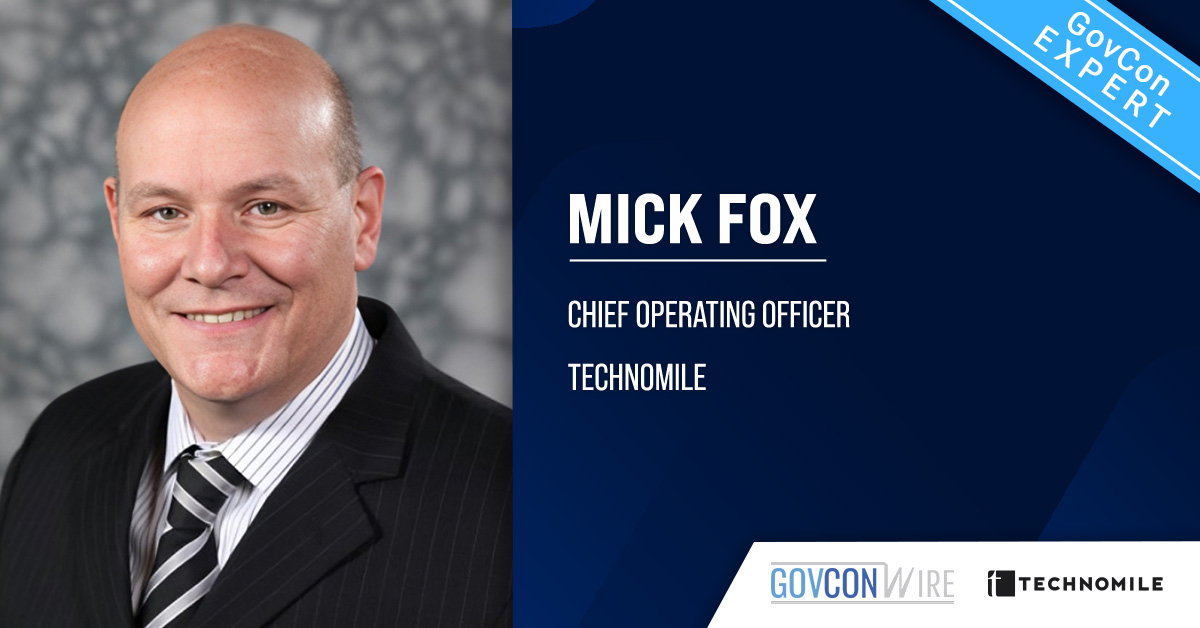

By Mick Fox, Chief Operating Officer, TechnoMile
Government contractors aren’t asking for more AI features. They’re asking for fewer surprises.
Missed funding deadlines. Contract modifications that never reach program managers or the execution team. Deliverables that fall through the cracks because no one connected the contract, CRM, ERP and program systems. Those are the problems practitioners told us they’re trying to solve.
During our recent webinar, The Contracts Tipping Point: From First-Generation CLM to AI-Native, we polled contracts professionals live on the state of Contract Lifecycle Management, or CLM. The responses painted a remarkably consistent picture: confidence in today’s CLM platforms is low, manual work remains pervasive and organizations believe the next generation of CLM must be fundamentally different – not simply enhanced by another AI assistant.
That distinction gets to the heart of what “AI-native” actually means.
What “AI-Native” Actually Means
“AI-native” gets thrown around so casually in the CLM market that it risks becoming meaningless, so let’s be precise.
First-generation CLM was built as a repository, a place to store executed contracts, track metadata and route documents through approval workflows. Any AI added later is just that: added later. A chatbot bolted onto a document store can summarize a contract someone has already found, but it can’t tell you a CDRL deliverable is due next week, recognize that a contract modification changed the delivery schedule, or alert the program manager before the government asks why it wasn’t submitted.
I’ve sat in enough contract reviews to know the difference isn’t academic. Teams don’t lose money because they lack a chatbot. They lose money because nobody connected the dots until it was too late.
Why Bolt-On AI Hits a Ceiling
The limitation isn’t the AI model – it’s the architecture underneath it.
If AI only has access to contract files sitting in a repository, it can summarize those documents remarkably well. What it can’t do is understand how those contracts relate to active opportunities, funding actions, contract modifications, invoice status, program performance, or obligations tracked across other business systems. That is why first-generation CLM hits a ceiling in federal contracting – it was built to store documents, not understand them or connect them to the systems that determine whether a program stays compliant, funded and on schedule.
AI-native platforms are built differently. They treat contracts as living operational data, not static files. That architectural shift allows AI to continuously monitor changes, surface risks and recommend actions across the entire contract lifecycle: pre-award, award, post-award administration, execution and closeout.
In plain English:
First-gen CLM: “Here’s the contract. I will store it and remind you about the deadlines.”
AI-native CLM: “I understand what this contract means, how it connects to your other contracts, what actions are required, and I can help execute them.”
This distinction isn’t theoretical; it’s exactly where practitioners say their current tools fall short.
The Market’s Wake-Up Call
There’s a real gap between what CLM systems do today and what practitioners need them to do next, and it’s not a close call. We got firsthand confirmation of this when we polled the audience during our webinar: most practitioners either have no CLM system at all, or don’t trust that the one they have is truly AI-native. Only a small minority expressed strong confidence in their current CLM’s AI readiness. The sentiment in a room full of active practitioners was unmistakable – the market remains overwhelmingly unconvinced that legacy CLM can meet modern contracting demands.
Thisisn’tt a split market. It’s a market waiting for something better.
Where First-Gen CLM Breaks Down
Among the areas where practitioners said their systems struggle, most map directly to the architectural limits of first-generation CLM. Two stood out far above the rest.
The first was integration with CRM, ERP and financial systems – a clear sign that legacy CLM tools still can’t connect contract data to the systems that drive federal program execution.
The other was obligation management and real-time awareness. Contractors aren’t just tracking renewal dates. They’re tracking when the government may exercise an option, Limitation of Funds thresholds, CDRLs, subcontractor flowdowns, cybersecurity reporting requirements, property accountability and dozens of FAR and DFARS obligations that can change throughout contract performance. Teams need ongoing insight into these commitments and triggers, not a static repository that waits for someone to go looking.
Practitioners also pointed to complex workflows and approvals, along with the challenge of maintaining a consistent line of sight across the entire contract lifecycle. Taken together, the pattern is unmistakable: disconnected systems, obligations that disappear into the noise and rigid workflows aren’t feature gaps – they’re structural limitations of first-generation CLM.
This is exactly where AI-native contracting is designed to operate: unifying data across systems, surfacing obligations automatically, adapting to complex workflows and giving teams continuous situational awareness across the entire lifecycle.
Why Consolidation Matters – and What It Actually Means
When practitioners talk about consolidation, they aren’t asking for fewer tools. They’re asking for one intelligent platform that connects the dots.
In our poll, the areas they said would benefit most from consolidation – unified data, obligation tracking, pipeline alignment, performance visibility – are the exact areas where fragmented systems create drag. Forecasting, compliance, revenue alignment and performance management aren’t “nice-to-have” features. They’re core business drivers.
Think about it this way: AI-native platforms don’t just consolidate tools. They consolidate intelligence. They turn siloed data into actionable insight, eliminate the swivel-chair problem between CRM, ERP and financial systems, and give leaders a single source of truth instead of five dashboards that disagree.
Where Organizations Would See Fastest Time-to-Value
The fastest win organizations expected wasn’t a new feature — it was relief from manual data entry and metadata upkeep. That’s the most telling response from our poll: practitioners aren’t looking for something flashy first. They just want the busywork gone.
It’s a quietly revealing result. Metadata upkeep rarely gets top billing when people talk about what’s broken in CLM — it’s not the pain point anyone leads with. But when practitioners were asked where AI would pay off fastest, this is where they pointed. That’s usually how the biggest inefficiencies work: not loud, not top-of-mind, but quietly expensive.
The Takeaway
The message from practitioners is clear: the market doesn’t need another layer of AI on top of legacy CLM. It needs a platform built around intelligence, connectivity and action from the start.
AI-native isn’t a differentiator anymore. It’s quickly becoming the baseline.
My prediction: in two years, “AI-native” won’t be a pitch anymore; it will be table stakes. The same way “cloud-based” stopped being a selling point once everyone had it. The organizations that make the shift now will be leading the pack, not scrambling to catch up later.
If these findings sound familiar, the real questions aren’t “Do we need to modernize?” but “Where is our obligation visibility today and what would it take to get one unified view of contract-to-performance data by next quarter?”
The organization that gains the greatest advantage won’t simply automate document management. They’ll give their contracts teams something they’ve never really had before: continuous awareness of what’s changing across every contract and enough intelligence to act before small issues become expensive ones.
Fewer surprises. That’s not a feature request. That’s the whole point.