
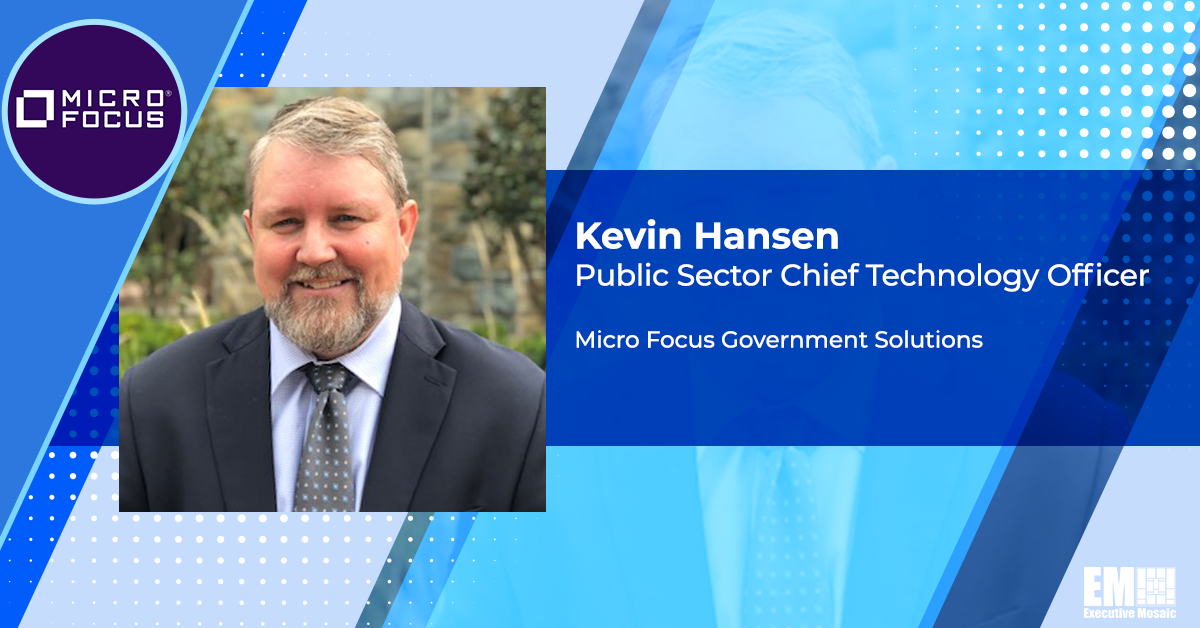

Kevin Hansen, public sector chief technology officer at Micro Focus Government Solutions, said government agencies looking to implement cloud-based systems and manage mission-critical legacy information technology platforms should develop a strategy that takes agility, flexibility and governance into consideration.
“To avoid legacy IT dependencies and future-proof their IT landscapes, agencies should incorporate a strategy that embraces flexible system design, enables on-demand hybrid IT resources with built-in governance, and encompasses on-premises legacy systems, multiple public/private cloud infrastructures and new software-as-a-service offerings,” Hansen wrote.
He discussed the importance of having visibility into deployed cloud services in ensuring the security of such platforms.
“Without knowing it, federal workers could be deploying cloud services that don’t comply with the government’s security controls. And without visibility into all the areas where cloud services are being used, IT leaders won’t have the control they need to secure the environment or plan for the associated costs of those resources,” Hansen said.
He explained how cloud advances the use of artificial intelligence and machine learning to generate insights from data and enables agencies to address issues with citizen-facing applications.
Hansen also offered information on Micro Focus Hybrid Cloud Management X and how the platform could help agencies manage their complex IT environments and cloud assets while advancing their digital transformation efforts.