Author: Jane Edwards|| Date Published: June 17, 2024
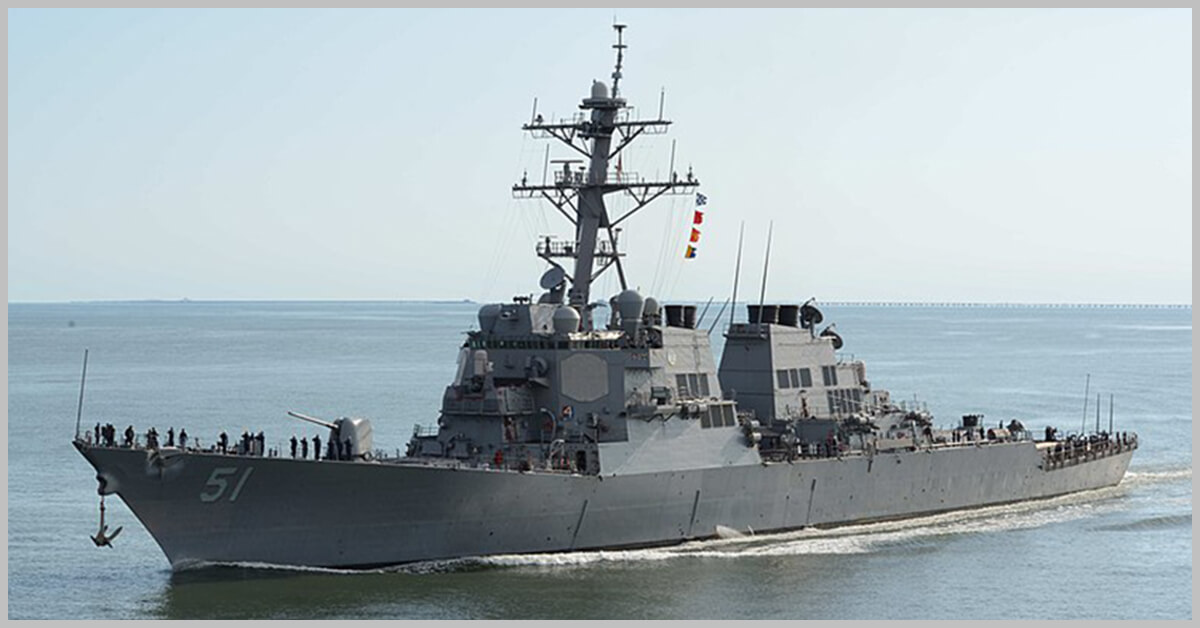
A General Dynamics (NYSE: GD) subsidiary has received a potential five-year, $1.13 billion contract from the U.S. Navy to provide planning yard support services for the military branch’s DDG 51 Arleigh Burke-class guided-missile destroyers.
The Department of Defense said Friday the cost-plus-award-fee contract awarded by Naval Sea Systems Command to Bath Iron Works has a base value of approximately $202.7 million.
The vendor will perform work in Bath, Maine, through July 31, 2029.
NAVSEA will obligate $7.2 million in other procurement funds for fiscal year 2024 and $5.9 million in FY 2024 operation and maintenance funds.
In a presolicitation notice published in March 2023, the command announced its intent to award a sole-source contract to General Dynamics Bath Iron Works to provide planning yard support for DDG 51 destroyers and FFG-7 frigate ships.
Contract work includes planning yard technical and engineering support; alteration design and planning, systems platform integration, logistics and configuration management support; CNO availability planning and execution support, including availability duration analysis; PIO material procurement; and on-site technical support, modernization and repair support.