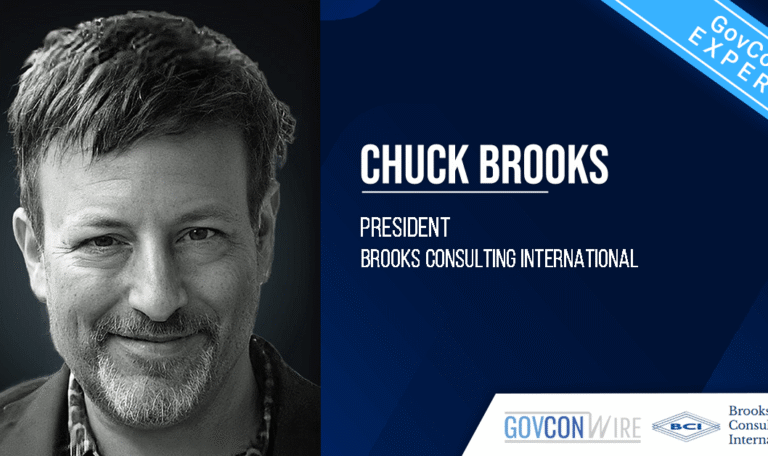

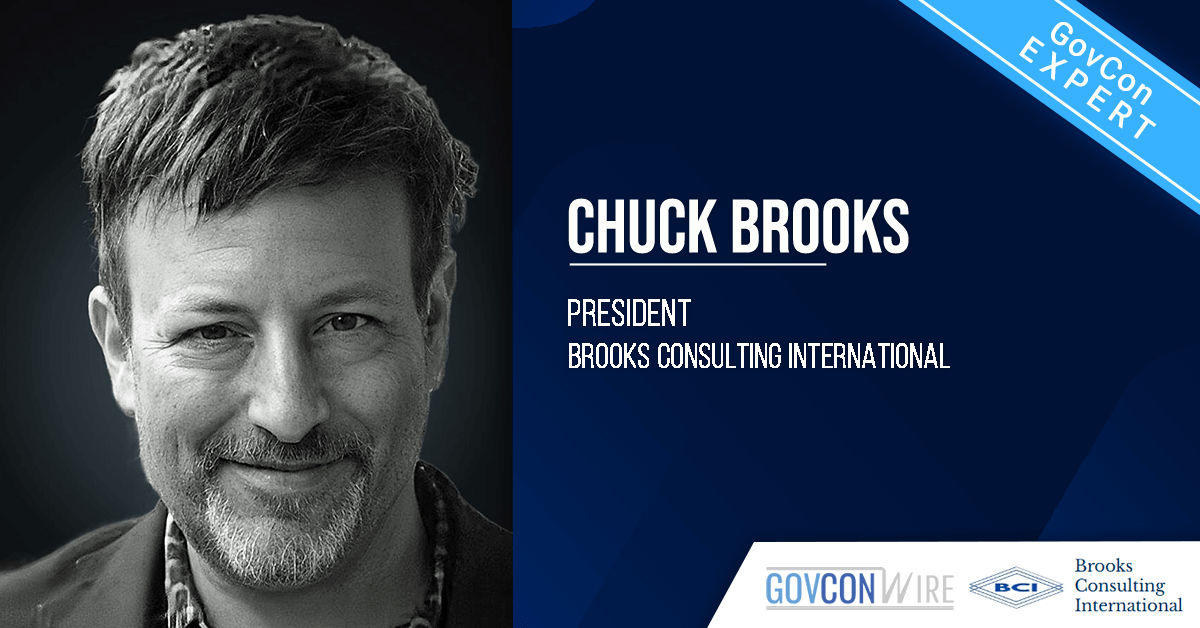

Chuck Brooks is the president of Brooks Consulting International and one of Executive Mosaic’s GovCon Experts.
The convergence of AI and quantum tech is creating a new frontier of innovation and risk.
This trend is evident from the White House’s FY27 research and development goals that put Artificial intelligence and quantum technologies at the center of the national agenda.
Because of the national security needs for the speed of discovery, advanced semiconductor manufacturing facilities, or foundries, are fundamental. Cutting-edge chips are essential to AI and quantum systems’ increased performance. The strategic significance of domestic semiconductor innovation in the face of international competition is highlighted by laws such as the Science Act and CHIPS. These establishments are developing into centers of innovation where physical manufacturing and AI-driven intelligence coexist.
This transformation is amplified by quantum technologies, which promise advances in materials research, drug discovery, optimization and sensing. However, they also come with concerns, like the possibility of “Q-Day,” or breaking the present encryption standards.
As I explained in my GovCon Wire article titled “The AI & Quantum Revolution Reshaping Innovation. The AI & Quantum Revolution Reshaping Innovation” Beyond minor advancements, they act as revolutionary catalysts in the industrial, military, energy and health sectors.
Recent Executive Orders issued by the White House specifically address this:
• Ushering in the Next Frontier of Quantum Innovation (Executive Order 14413): Federal Register and White House link.
• Executive Order 14412: Protecting the Nation from Advanced Cryptographic Attacks: Federal Register and White House link.
The National Quantum Strategy should be updated, strong quantum computers should be developed (with targets for capabilities by 2028), quantum sensing and networking should be advanced, and PQC migration for high-value assets should be prioritized (with a schedule of 2030–2031). In addition to industry partnerships and talent development, they demand coordinated initiatives by DOE, DOW, Commerce, NSF and other agencies.
National Labs’ Crucial Function in Promoting Cooperation
National laboratories, especially those under the Department of Homeland Security, Department of Energy and Department of War, are essential centers for cooperative research and development in the fields of artificial intelligence and quantum computing. They connect applied innovation with basic research, frequently in collaboration with academia and business.
At the vanguard are DOE National Laboratories. DOE oversees programs including the Genesis Mission, which combines AI, high-performance computing and quantum systems to speed scientific discovery and the Quantum Computer for Application Development and Discovery Science, or QC-ADDS, initiative. DOE has 17 labs.
Major quantum research centers, supercomputing facilities (like Frontier) and public-private collaborations for quantum hardware, error correction and applications in materials science, energy and national security can be found in labs like Oak Ridge (ORNL), Argonne, Lawrence Berkeley and Los Alamos.
National Quantum Information Science Research Centers’ contribution in scaling innovations through consortia and testbeds is highlighted by recent funding renewals (e.g., $625 million across numerous labs).
Mission-critical applications like secure communications, quantum-resistant technologies and quantum sensing for Intelligence, Surveillance and Reconnaissance, or ISR, are the focus of DOW-affiliated initiatives, including those carried out by the Defense Innovation Unit and labs that support the Army Research Office. Measures such as
In direct support of the Executive Orders, the NSA and Army Research Office place a strong emphasis on supply chain resilience, ecosystem expansion and algorithms.
In the areas of cybersecurity, critical infrastructure protection, emergency response, counterterrorism and threat mitigation, DHS contributes through its Science & Technology Directorate, management and partnerships with national labs.
DHS labs and partnerships assist in converting quantum and AI developments into robust systems for homeland security, such as PQC implementation and AI-driven anomaly detection, even if they are less essential to the development of core quantum hardware.
These labs are excellent at hosting CRADAs, industry consortia and multi-agency projects, which facilitate talent development, secure technology transfer and rapid prototyping—exactly the tools required for the AI-quantum era.
Collaboration’s Power: Foundries, Labs & Public-Private Partnerships
Transforming R&D into safe, scalable solutions requires public-private-academic cooperation. This was confirmed by my experience working in the DHS Science & Technology Directorate: federal programs are successful when they strike a balance between innovation, security and execution through strategic planning and cooperation.
• Foundries and Research Labs: Examples of government-industry co-investment include the IBM-U.S. Department of Commerce quantum foundry. This is enhanced by national labs through shared infrastructure.
• CRADAs and Broader Partnerships: As stated in the White House directives for workforce development, supply chain resilience and commercialization, these mechanisms promote technology transfer and risk-sharing.
The White House Quantum Executive Orders reflect the “Quantum Frontier” requirement: aggressive public-private-academic leadership will define dominance in a time when cybersecurity, AI and quantum are linked. Error correction and quantum algorithms can be optimized by AI, and safe transitions are facilitated by hybrid techniques.
The Reasons Why Collaboration & Cooperation Are More Important Than Ever
1. Increasing Innovation and Competitiveness: Collaborative efforts expedite innovations (rest as before).
2. Strengthening Resilience and National Security
3. Ecosystem Development and Workforce:
4. Ethical, Secure and Scalable Implementation:
The White House’s directives on quantum and artificial intelligence offer a precise framework and mandate. It’s time for government, business and academia to step up their innovation efforts by utilizing national labs and cooperative vehicles. We can secure America’s leadership in the AI and quantum future, safeguard our data and infrastructure and bring forth transformative advancements by cultivating these alliances.
The future will be constructed through coordinated convergence rather than individual endeavors. Proactive cooperation today will protect our way of life and open the door to tremendous prosperity.