
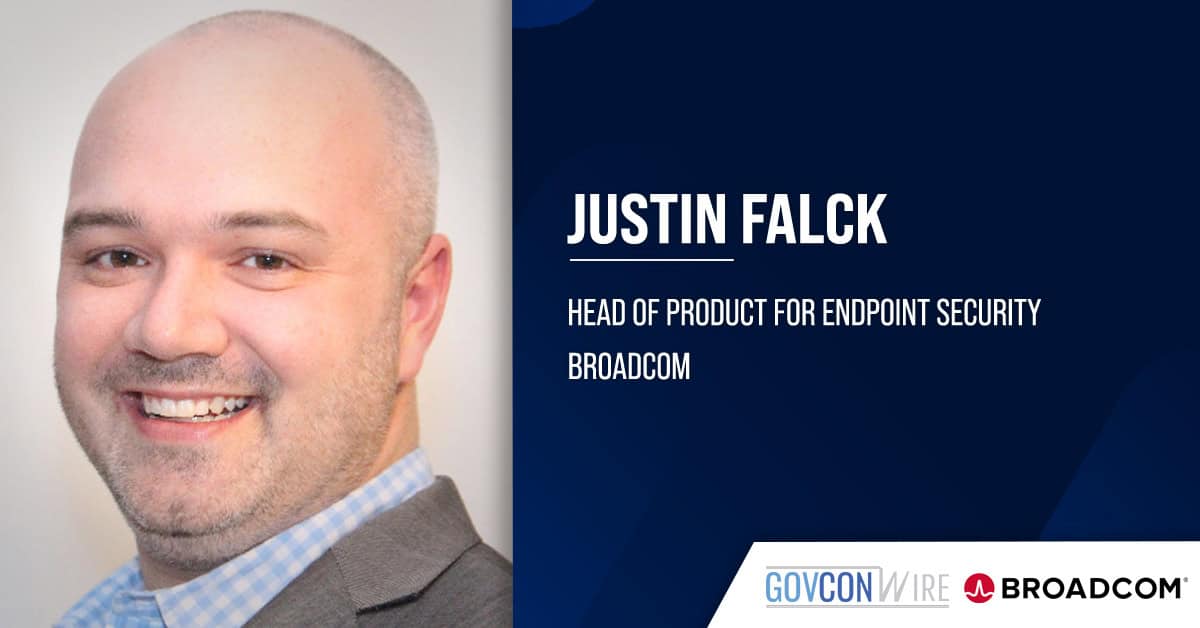

Justin Falck, head of product for endpoint security at Broadcom, said stronger endpoint management plays a key role in applying zero trust principles to network security.
In an article published on Carahsoft.com, Falck wrote that shifting from fragmented platforms to a unified, intelligence-driven approach to endpoint management could help government agencies improve how they secure and track network endpoints and strengthen the security of users, applications and data.
“That means consolidating endpoint telemetry across all platforms and correlating that telemetry with identity and network activity to glean insights that can help with threat detection and response. In addition, automating the analytical process can reduce the time it takes to highlight areas of risk,” he added.
According to Falck, the goal of strong endpoint security is prevention.
“When continuous monitoring is paired with adaptive policy enforcement, agencies gain the ability to respond to threats before they can have an impact. The addition of an endpoint detection and response solution can give agencies wide visibility into devices so the security team can thoroughly understand any threats or incidents and determine remediation steps,” he noted.
Comprehensive Endpoint Security
In this piece, Falck said Broadcom could help agencies unify and automate endpoint management across their platforms with its comprehensive portfolio of endpoint security tools, which he said could offer consistency to how they monitor and manage mobile devices, laptops, desktops, servers and other endpoints, whether they operate on premises or in the cloud.
“Unifying all those environments in a single console makes it easier to apply policies, detect anomalies and respond to threats,” he noted. “Agencies can achieve real-time continuous management of endpoints inside and outside the perimeter, while streamlining deployments and simplifying asset and patch management.”
He also mentioned other tools that Broadcom offers to help improve endpoint management, including automation, customer-usable application programming interfaces and Symantec Global Intelligence Network, a civilian security threat intelligence network.
“When agencies make decisions quickly with the assistance of real-world threat intelligence, they can keep networks up and running while reducing costs and maintaining compliance with government security mandates,” Falck said of Symantec Global Intelligence Network.