

- The Air Force has awarded production contracts to General Atomics and Anduril for their CCA
- Six vendors have won separate autonomy software contracts, with the Air Force planning to pick a primary provider by summer 2027
- The service wants roughly 1,000 CCA total and has requested close to $1 billion to start buying them in fiscal 2027
 General Atomics Aeronautical Systems Inc. and Anduril have secured Air Force production contracts for their Collaborative Combat Aircraft, clearing the way for both semi-autonomous drones to advance from the prototype phase to manufacturing.
Want to know how the Air Force is fielding autonomy and next-generation airpower at speed? Hear from the leaders driving it — including Vice Chief of Staff Gen. John Lamontagne — at the Potomac Officers Club’s 2026 Air and Space Summit on July 30 in McLean, Virginia. Register now.
Which CCA Drones Is the Air Force Buying?
The contracts support the engineering and production of Increment 1 air vehicles: General Atomics’ FQ-42 and Anduril’s FQ-44, the U.S. Air Force said Wednesday. The companies received the contracts after a competitive selection, with the awards coming four months early.
They framed the decision as a milestone reached at unusual speed. General Atomics said its FQ-42 went from contract award to first flight in 15 months, while Anduril said its FQ-44 traveled from a 2024 prototype award to a production contract faster than any fighter in more than half a century and represents the first time a new entrant has won a fighter program since the 1970s.
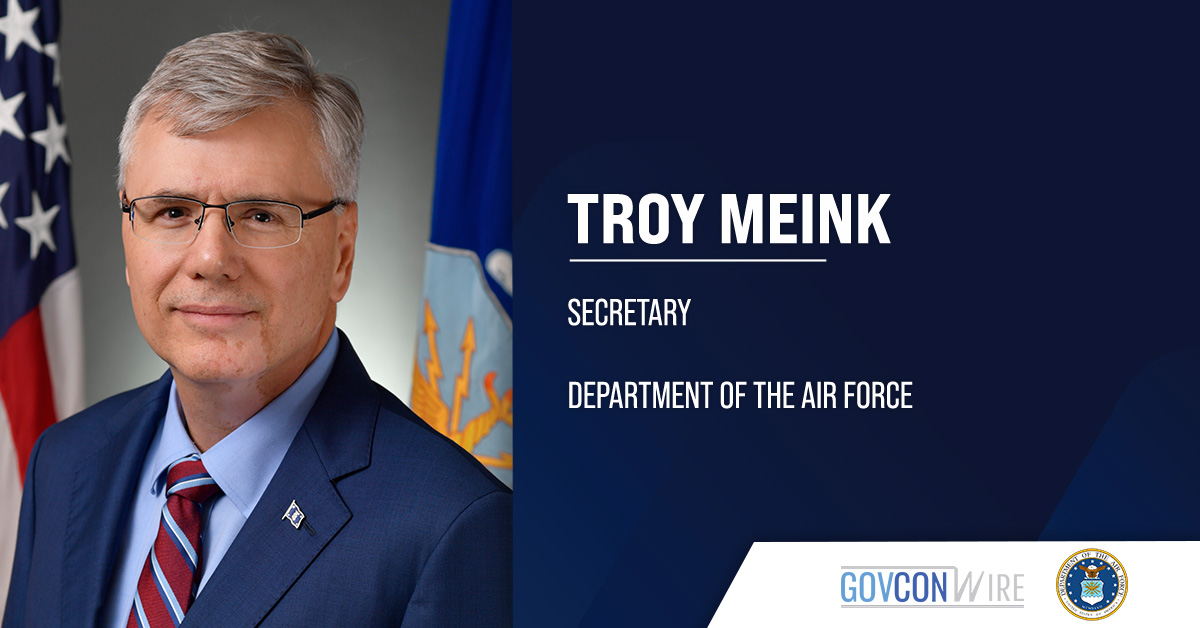
The aircraft are among the first to carry the new “FQ” designation — “F” for fighter and “Q” for uncrewed — dropping the “Y” that marked their prototype phase. Air Force Secretary Troy Meink, a 2026 Wash100 Award winner, said the move into full-scale manufacturing keeps the service on track to buy more than 150 combat-capable CCA by the end of the decade.
How Is the Air Force Handling the Autonomy Software?
Rather than tie the software to one airframe, the Air Force awarded separate mission autonomy production contracts to six vendors: Anduril, General Atomics, Lockheed Martin, Northrop Grumman, Collins Aerospace and Shield AI. The six-year baseline vehicle is built to keep those companies competing. The service can buy a software license from any of them at any point during the contract period.
To speed things along, the Air Force gave production options to three of the six — Anduril, Collins Aerospace and Shield AI — funding the first of two six-month competitive phases. After evaluating progress, the service plans a second competition and intends to pick a primary autonomy provider for Increment 1 by summer 2027. Shield AI, whose Hivemind software is already flying aboard Anduril’s FQ-44, said its offering allows the Air Force to upgrade autonomy independently of the aircraft.
The service tied payment to performance through what it called a first-of-its-kind award-fee approach: it will pay a vendor’s full licensing fee only if the delivered capability matches what operators need in combat. Underpinning the whole structure is the government-owned Autonomy Government Reference Architecture, an open standard that all vendors must keep meeting so software can move across different aircraft.
How Big Is the CCA Program?
The Air Force intends to field roughly 1,000 combat-capable CCA, relying on continuous competition to drive down costs as it expands its fighter fleet. The drones are designed to fly alongside crewed fighters as semi-autonomous teammates, extending their reach and survivability in contested airspace.
According to Air & Space Forces Magazine, the service requested close to $1 billion to begin buying CCA in fiscal 2027 — about $996.5 million in procurement plus $150 million in advance funding — part of a $2.37 billion request for the program that year. The Air Force has spent roughly $1.91 billion developing the aircraft since fiscal 2024.
General Atomics and Anduril emerged as the Increment 1 airframe finalists in 2024 from an earlier field that also included Boeing, Lockheed Martin and Northrop Grumman.