

- Quantum Space has agreed to go public through a $1.2 billion SPAC merger with Inflection Point Acquisition Corp. VI
- The transaction will fund the production of the company’s Ranger spacecraft platform
- The merger positions Quantum Space to meet growing demand for sustained mobility in contested orbital environments
Quantum Space has agreed to merge with special purpose acquisition company Inflection Point Acquisition Corp. VI in a transaction that would take the space mobility company public and provide capital to expand production of its Ranger spacecraft platform.
Assuming zero shareholder redemptions, the transaction values Quantum Space at approximately $600 million pre-money and $1.2 billion post-transaction. The deal includes a $300 million private investment in public equity, anchored by Inflection Point Asset Management, Quantum Space said Monday.
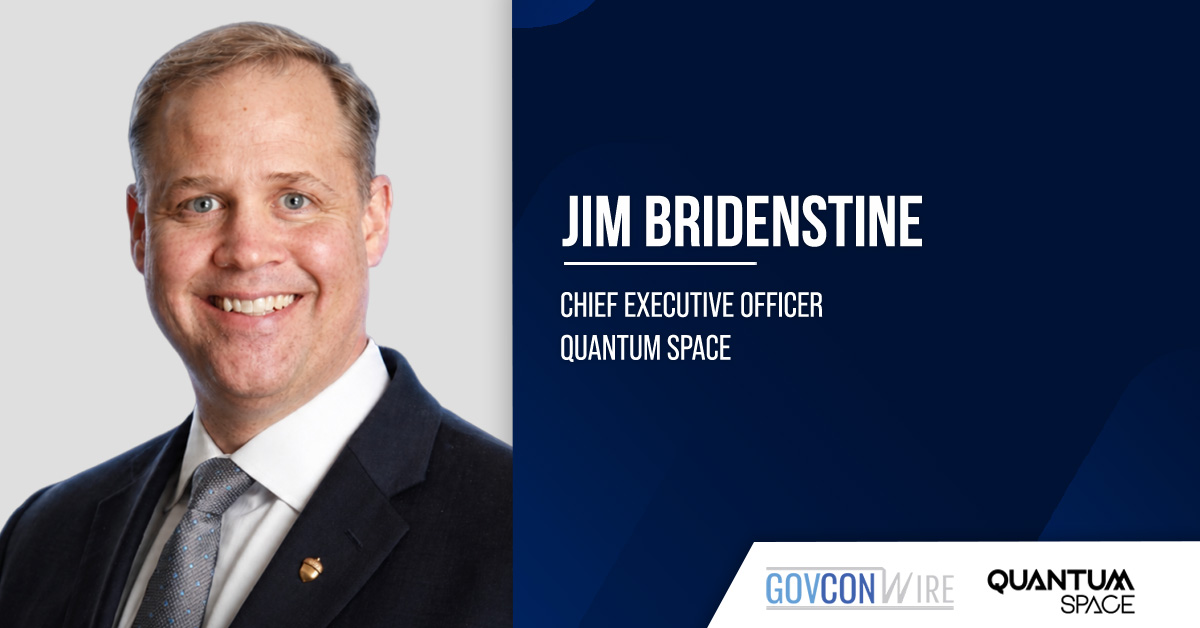
The Rockville, Maryland-based company develops maneuverable spacecraft designed for national security, civil and commercial missions. Quantum Space is led by Jim Bridenstine, former NASA administrator and a 2019 Wash100 Award winner, and was co-founded by Executive Chairman Kam Ghaffarian.
“I founded Quantum Space to build a company I believe the United States needs to lead in this contested era,” Ghaffarian said.
What Is Quantum Space’s Ranger Platform?
At the center of Quantum Space’s growth strategy is Ranger, a spacecraft platform designed to operate across multiple orbital regimes, including low Earth orbit, medium Earth orbit, geosynchronous orbit and cislunar space.
Ranger combines a single-fuel, multi-mode propulsion architecture with more than 4,000 kilograms of storable propellant capacity, a modular design and refueling capability intended to support missions lasting up to 15 years.
The platform is being developed to support maneuverability, persistence and autonomous operations for defense and commercial customers operating in increasingly contested orbital environments.
“We have designed Ranger to satisfy the U.S. Space Force’s Theory of Competitive Endurance: avoiding operational surprise, denying first-mover advantage, and enabling counter-space campaigning. We believe Ranger will enable us to meet accelerating demand in an environment where sustained maneuverability is no longer optional,” Bridenstine said.
How Will the Transaction Support Growth?
Quantum Space said proceeds from the transaction will help accelerate Ranger production and support expansion of manufacturing operations, including development of a spacecraft production facility in Tulsa, Oklahoma.
The company’s federal portfolio includes six contracts and pending proposals with key defense entities, including the U.S. Space Force, the Air Force Research Laboratory, the Department of War and the Defense Advanced Research Projects Agency.
Quantum Space is eligible to compete for task orders under the Space Force’s Andromeda contract vehicle, a $6.2 billion indefinite-delivery/indefinite-quantity program focused on deploying maneuverable and refuelable spacecraft to GEO.
“Being a public company will better allow us to scale production, deliver on the contracts we’ve already won, and serve new national security, civil, and commercial customers who have been waiting for this platform,” Bridenstine said.
The transaction is expected to close during the fourth quarter of 2026, subject to shareholder approval and customary closing conditions. Following completion of the merger, the combined company will operate under the Quantum Space name and trade on Nasdaq under the ticker symbol “QSPC.”
Recent Quantum Space Developments
The merger announcement comes one month after Quantum Space appointed Bridenstine as CEO to lead the company’s next phase of growth. Bridenstine served as NASA administrator from 2018 to 2021 and helped advance initiatives that expanded commercial participation in space programs. Before leading NASA, Bridenstine served three terms representing Oklahoma’s first congressional district in the House of Representatives, where he sat on the armed services and science, space and technology committees and supported the establishment of the Space Force.
In September 2025, Quantum Space expanded its spacecraft mobility portfolio through the acquisition of Phase Four’s multi-mode propulsion assets and integration facility to support development of the Ranger platform.