
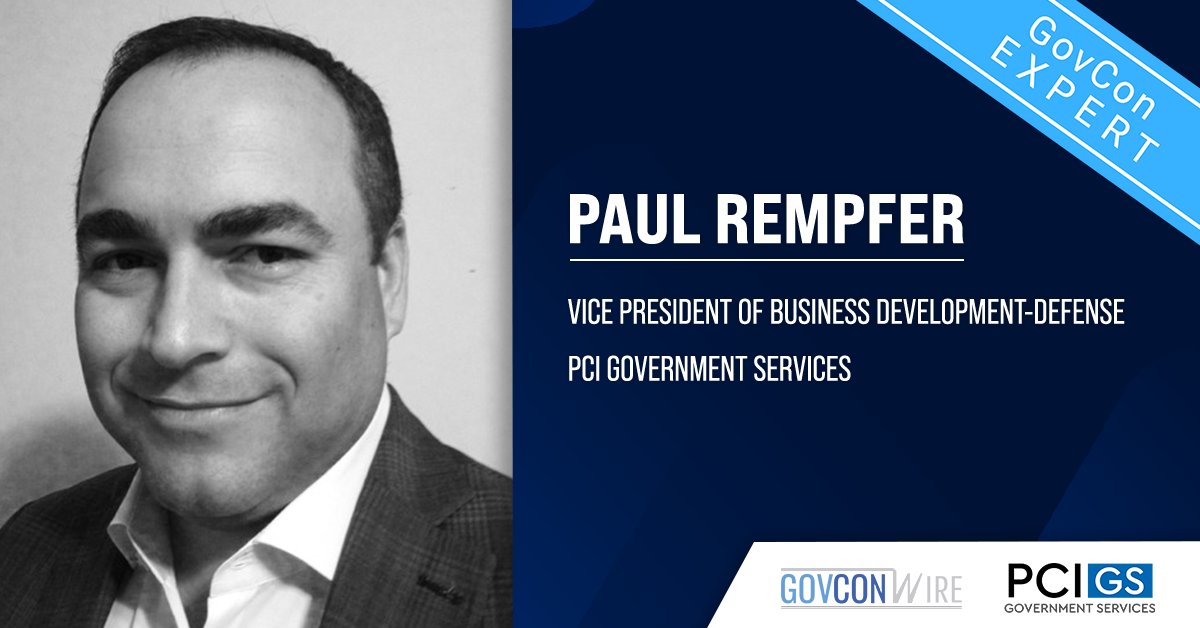

By Paul Rempfer, vice president of business development-defense at PCI Government Services
The Manhattan Project’s greatest feat wasn’t just mastering the physics of the atom; it was the coordination of chemical plants, university labs and industrial giants to build a history-altering weapon in just three years. Today, the Golden Dome initiative is a 21st-century successor to that mobilization. It’s a high-stakes choreography that will force Silicon Valley startups, legacy aerospace titans and federal agencies to bridge cultural gaps, all to integrate AI into a functional multi-layered national shield.
Like the Manhattan Project, the Golden Dome initiative is ambitious in the use of technology. More crucially, the Department of War sees the project as a high-stakes testing ground for a radical ecosystem model of collaboration between the defense industry, Silicon Valley and the federal government. With the administration expecting a major demonstration of these capabilities by January 2029, the window to prove this new method of integrated delivery is narrow and the margin for error is non-existent. 
For GovCon leaders, the Golden Dome isn’t just a missile shield, it is a road map to a new way of doing business with the government. Speed, interoperability and sovereignty are the new measures by which success will be measured. Leaders who continue to rely on ‘process-as-a-product’ will find themselves being left behind. Thriving in this new era requires a fundamental shift in strategy.
Join the Potomac Officers Club’s 2026 GovCon Executive Leadership Summit on Feb. 26 to hear industry leaders talk about Golden Dome and other initiatives affecting the landscape. Register here.
How Leaders Are Re-Aligning Their Organizations in the Golden Dome Era
GovCon CEO’s need to prepare their organizations for working within a mission-based portfolio environment, rather than a program office. Portfolio acquisition executives have the leeway and power to take funding designated for your company and move to someone who can deliver faster, all in the name of “mission health”. Executives will need to provide a clear focus on how their company is contributing to the health of the entire portfolio’s performance, rather than checking off on a narrow set of requirements.
Leaders of companies involved with Golden Dome need to realize that commercial solutions are now the default, which radically alters the calculus for innovation and compliance. The days of cost-plus models, where the government would subsidize research and development, are fading. The burden has shifted to contractors, with the expectation that technology is relatively mature and developed through internal R&D before it ever reaches the government. The shift also places a premium on the speed of delivery, with greater penalties for non-compliance. GovCon CEO’s need to set the tone that teams are no longer paid to practice; they are paid to perform.
Technologically, products must be “plug and play” to adhere to the Modular Open Systems Architecture (MOSA). Closed technology and walled gardens are relics of the past; the competitive advantage of proprietary technology has been replaced by the ability to integrate seamlessly with others. This requires a shift toward agentic AI, allowing systems to move beyond simple data processing to autonomous reasoning and action.
A Blueprint for Strategic Integration
This is the logic driving modern strategic alignments, such as the collaboration between PCI-GS and Seekr. By pairing deep acquisition expertise with a transparent, sovereign AI foundation, such partnerships illustrate the new standard: utilizing agile contracting pathways to bypass multi-year cycles while ensuring the technology remains free from near-peer influence.
The Manhattan Project proved American industry could master the atom through radical coordination. The Golden Dome will prove we can master modern threats through radical innovation, integration and efficient project execution. For the GovCon executive, this is the roadmap: speed, sovereignty and the willingness to integrate into the ecosystem now. It requires a deliberate fusion of commercial agility and federal rigor. The choice facing industry leaders is binary: Integrate into the ecosystem now, or become a footnote in the history of the old way of doing business.