
The Department of War is accelerating its push into unmanned systems, moving beyond experimentation toward large-scale production, streamlined acquisition and integrated doctrine. From mass-producing low-cost attack drones to expanding counter-unmanned aircraft system capabilities, recent moves signal a decisive shift that defense contractors and technology providers can no longer ignore.

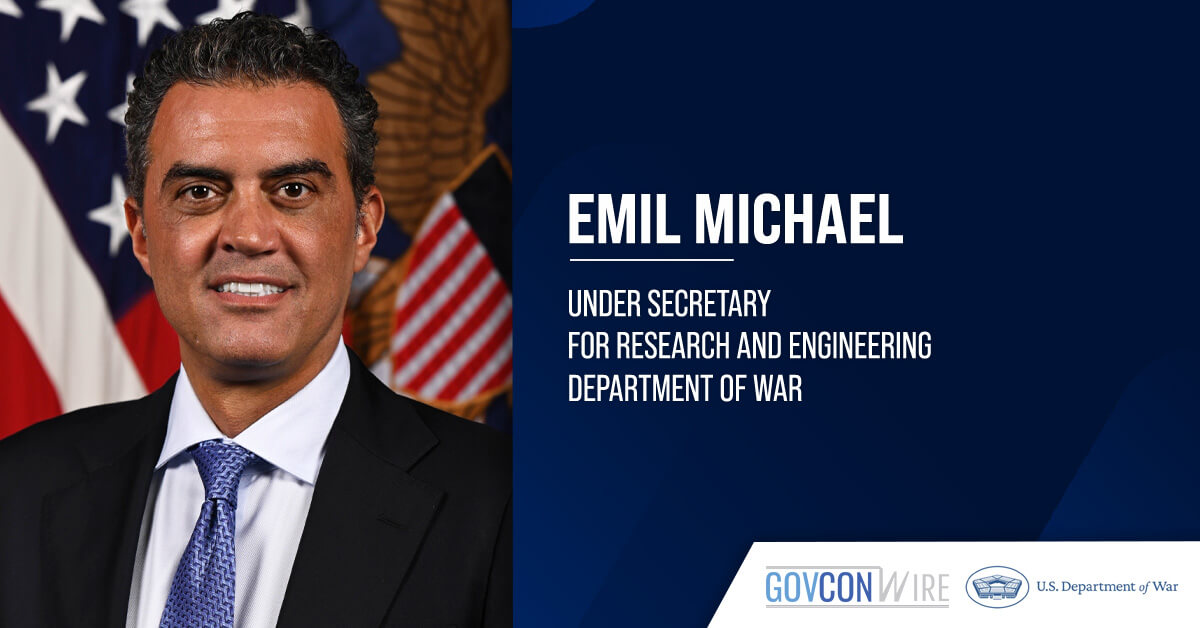
These developments will be a major focus of Potomac Officers Club’s 2026 Defense R&D Summit, where Under Secretary of War for Research and Engineering Emil Michael is slated to deliver a keynote address. The Jan. 29 event will bring together senior defense leaders and industry executives to examine how emerging technologies are reshaping modern warfare. Register for this top-tier GovCon conference now!
Below are some of the most consequential drone-related developments across the Department of War and what they mean for the GovCon community.
Why Is the War Department Betting Big on Drone Dominance?
The War Department recently asked industry to assess its ability to rapidly produce more than 300,000 small unmanned aerial systems, a move tied directly to the Trump administration’s “Unleashing American Drone Dominance” executive order.
Secretary of War and Wash100 Award winner Pete Hegseth framed the effort as both an industrial base initiative and a warfighting imperative. In a department-wide memo issued earlier this year, he said the U.S. must field large quantities of inexpensive, attritable drones to keep pace with evolving threats.
“Drone dominance will do two things: drive costs down and capabilities up,” Hegseth said in a video message accompanying the latest request for information.
For industry, the message is clear: the department is signaling long-term demand, flexible contracting and a willingness to shift risk toward vendors that can scale quickly.
What Is the Drone Dominance Program?
At the center of the push is the Drone Dominance program, a $1 billion initiative designed to rapidly expand the military’s small UAS arsenal through iterative competition, DefenseScoop reports.
Under the program, the department plans to conduct four production phases known as “gauntlets,” beginning in early 2026. During the first phase, 12 vendors will collectively deliver 30,000 one-way attack drones at a unit cost of $5,000. Later phases will reduce the vendor pool while increasing volume and driving prices as low as $2,300 per system.
Why Do Gauntlets Matter?
Defense officials said the gauntlet model allows operators to directly evaluate commercial drones in realistic scenarios, while giving companies a clear path from prototype to production contracts.
For GovCon firms, the approach rewards scalability, supply-chain security and ease of use as much as performance.
How Is DCMA’s Blue List Changing Drone Procurement?
Another major development is the launch of the Blue List Unmanned Aircraft Systems website by the Defense Contract Management Agency’s US-X organization.
The platform provides warfighters with a centralized, vetted source for purchasing trusted drones and components and aims to turn what was once a fragmented market into a streamlined acquisition pipeline.
“This is an enabler for getting UAS to the warfighter to prepare for any future conflict,” Air Force Col. Dustin Thomas, commander of DCMA US-X, said in a statement announcing the launch earlier this month.
Officials said the Blue List is expected to evolve into a full marketplace by 2027, creating new opportunities for manufacturers that meet the department’s security and performance standards.

Is the Replicator Initiative Really Dead?
Despite questions surrounding the future of the Biden-era Replicator initiative, senior Pentagon leaders say the effort is very much alive, albeit under a new name.
Now operating as the Defense Autonomous Warfare Group, or DAWG, the initiative is focused on larger, longer-range attack drones and is actively conducting wargames and live exercises, Breaking Defense said. Speaking at the Reagan National Defense Forum, Emil Michael said the effort complements the Drone Dominance campaign rather than competing with it.
“We have to be dominant in both,” Michael said, referring to small and large drones. “What we’ve learned from the Ukraine-Russia war is that the front lines of a conflict over territory are robot-on-robot now.”
Michael also emphasized the growing importance of counter-drone defenses, particularly for homeland security and major events such as the 2026 World Cup.
That dual focus on offensive and defensive systems will be a key theme at the 2026 Defense R&D Summit, where Michael is expected to expand on how the department is aligning research, testing and acquisition.
Where Does the Army Fit Into the Drone Transformation?
The Army is translating these policy shifts into operational change. At its UAS and Launched Effects Summit this fall, service leaders showcased lethal drone demonstrations, live-fire experimentation and new training pipelines for small UAS operators.
Army officials said commanders at lower echelons will soon gain access to secure online storefronts to purchase drones for training and experimentation, further decentralizing innovation.
“This was the single largest transformation venue solely focused on UAS across all of DOD,” said Col. Nicholas Ryan, director of capability management for UAS.
For industry, the Army’s approach underscores the demand for adaptable platforms, modular payloads and rapid iteration informed by soldier feedback.
What Should GovCon Leaders Be Watching Next?
Taken together, these initiatives point to a sustained, multi-pronged unmanned systems strategy that spans manufacturing, acquisition reform, doctrine and counter-UAS defense.
With Emil Michael set to headline the 2026 Defense R&D Summit on Jan. 29, the event will offer GovCon executives a timely forum to understand how the Department of War is prioritizing drone technology and where industry can align to support those goals. Save your spot before it sells out!
As drone warfare continues to reshape the character of conflict, companies that can deliver speed, scale and security are likely to find themselves at the center of the department’s next wave of contracts.