
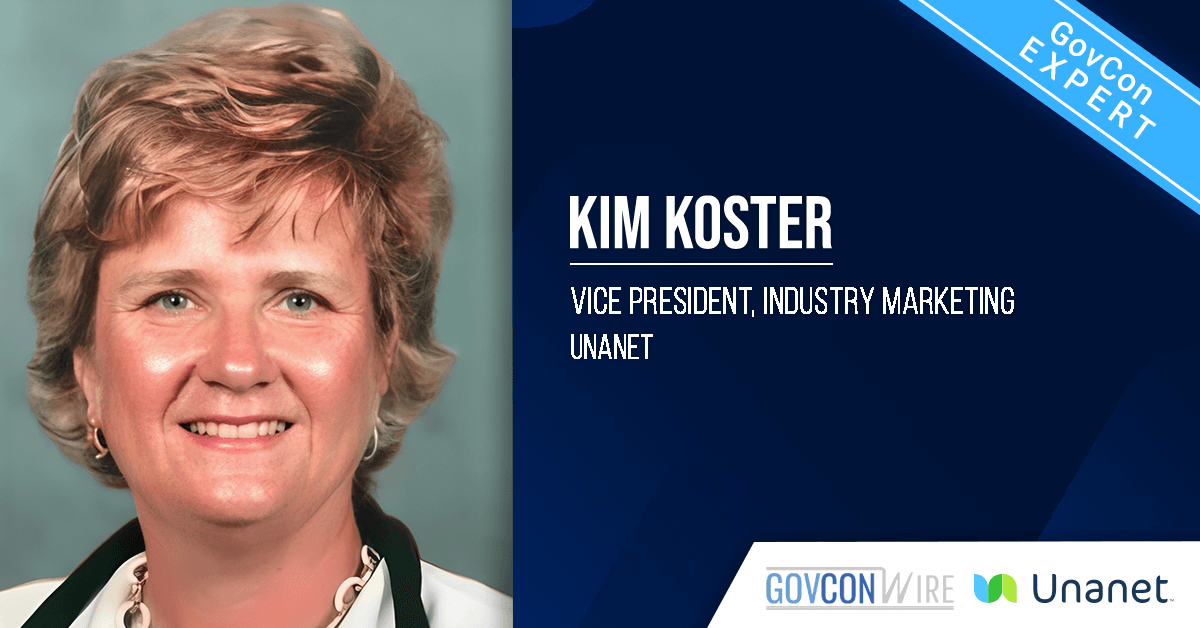

By Kim Koster, Vice President of Industry Marketing at Unanet
In the world of government contracting, your pipeline isn’t just a list of leads. It’s the heartbeat of your business. But managing that pipeline without a clear, consistent way to assess each opportunity is like flying blind in a competitive market where every decision carries weight.
That’s why seasoned government contractors rely on three key metrics to guide their business development strategies: probability of go, or Pgo, probability of win, or Pwin, and the combined probability of award, or PoA.
Together, these metrics move business development from guesswork into disciplined, data-informed forecasting. Here’s how they work and how you can use them to sharpen your win strategy.
Understanding Pgo, Pwin and PoA
These terms often come up in business development discussions, but clarity matters, especially when deciding where to invest limited time and resources.
Pgo is the likelihood your company will actively pursue an opportunity. This decision typically occurs in the early stages, before the request for proposal is even released and is based on internal readiness, strategic alignment and perceived value. Factors influencing Pgo include how well the opportunity aligns with your strategic goals, the resources available to pursue it, potential return on investment, strength of the client relationship and the competitive landscape.
For example, a Department of Energy opportunity might seem appealing. But if your team is stretched thin and your past performance with that agency is weak, your Pgo might only be 60 percent.
Pwin measures how likely you are to win the contract if you decide to bid. This estimate is shaped during the capture and proposal phases based on how well you understand the customer, your competitive position, the strength of your solution and the quality of your proposal. Key factors include customer intimacy, competitive intelligence, technical strength, past performance, pricing strategy and the fit of your team.
If you’re the incumbent on a recompete and have strong agency relationships, your Pwin might be around 75 percent.
PoA combines both metrics to estimate your overall likelihood of winning the contract. It’s calculated by multiplying Pgo and Pwin. This score is central to opportunity evaluation and is often used in revenue forecasting and pipeline prioritization.
Here’s one example. Let’s say you’re eyeing a $10 million opportunity:
Pgo = 70 percent (You’re 70 percent sure you’ll bid)
Pwin = 60 percent (You estimate a 60 percent chance of winning if you go)
Your PoA becomes: 0.7 × 0.6 = 0.42 or 42 percent.
Multiply that by the contract value and you get an expected pipeline value of $10M × 0.42 = $4.2M.
The formula is PoA = Pgo × Pwin. This helps you not only prioritize opportunities but forecast revenue with greater accuracy.
Putting Structure Behind the Numbers
To make these scores actionable, many government contractors adopt scoring models for both Pgo and Pwin.
A typical Pgo scorecard includes strategic fit, resource availability, return on investment, client relationship strength and contract type or risk profile. Each category is weighted and scores range from one to five. A total score below 40 percent signals a no-go decision. Scores between 41 and 65 percent suggest a need for executive review. Anything above 66 percent indicates the opportunity is worth pursuing.
Pwin scorecards follow a similar structure, with categories like customer relationship, competitive positioning, technical solution, past performance, pricing strategy and team composition.
A score below 40 percent may mean the opportunity requires a reassessment. Between 41 and 70 percent, focused capture efforts are needed. A score above 71 percent suggests a strong competitive position.
Once you have your Pgo and Pwin scores, convert them to percentages and calculate PoA by multiplying the two. This gives you a data-driven way to evaluate the expected value of each opportunity.
Applying Best Practices in Real Time
At the early stage of an opportunity, your focus should be on refining Pgo. This is where gate reviews and internal decision points help keep your team aligned and objective. As you move into the middle and late stages of the opportunity, turn your attention to refining Pwin. Conduct capture reviews, price-to-win analysis and competitive assessments to improve your odds.
Use PoA to build a weighted pipeline forecast. This allows your leadership team to view the business development funnel with greater accuracy, confidence and clarity.
Common Pitfalls to Avoid
It’s easy to overestimate Pgo based on enthusiasm or strategic desire. But optimism without evidence can mislead your pipeline planning. Avoid assigning static Pwin values that never adjust based on new information. A strong desire to win is not the same as a high probability of winning. Keep your assessments honest, current and objective.
Also, be mindful of the risk of turning opportunity evaluation into an academic exercise. If your team spends more time updating spreadsheets than engaging with the customer, you may be missing the point.
Why It Matters
When used consistently, Pgo, Pwin and PoA provide the structure and discipline needed to make better decisions. They help you allocate resources wisely, improve forecast accuracy and avoid chasing low-value opportunities. More importantly, they support a more strategic and sustainable approach to growth.
For government contractors navigating complex procurements and limited internal capacity, this methodology provides a way to bring clarity to the chaos. With the right metrics in place, you can pursue opportunities with purpose and position your team to deliver wins that truly move the business forward.