
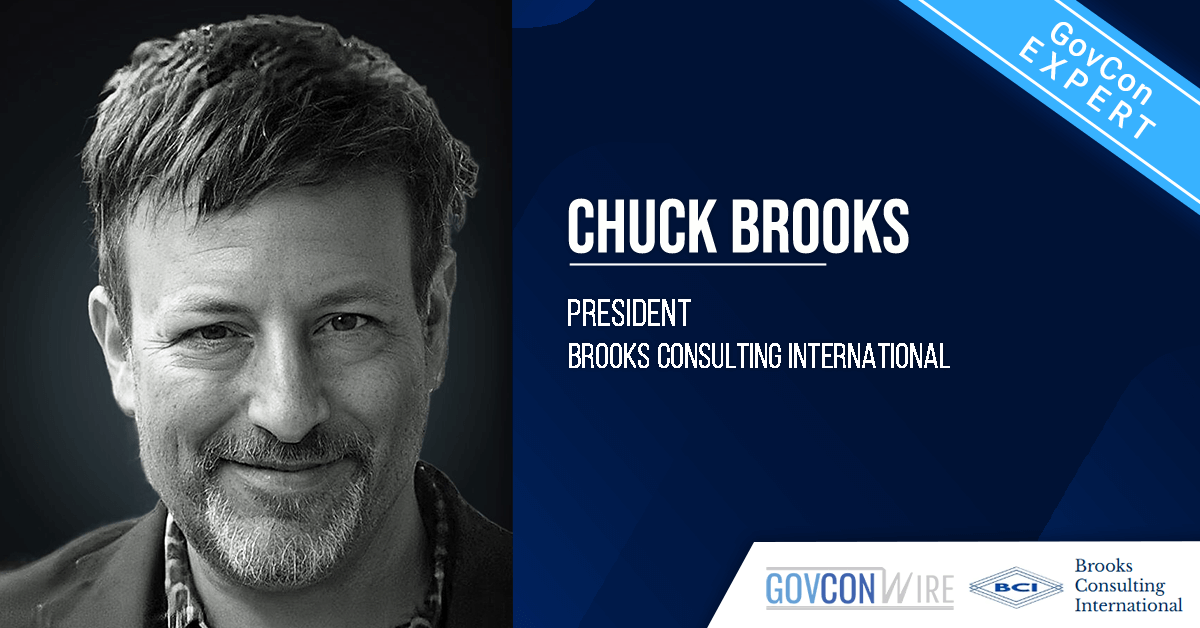

Chuck Brooks is the president of Brooks Consulting International and one of Executive Mosaic’s GovCon Experts.
The cyber arms race has moved into a new stage. These days, data exploitation and exfiltration happen at speeds that are unmatched by conventional security operations. Patching cycles, which used to provide a significant window of protection, are losing their operational significance. Businesses that continue to rely on human-paced, reactive defenses are already falling behind.
Autonomous, machine-paced systems are increasingly controlling devices that were previously controlled by proficient human adversaries. Attack timelines have been reduced from days or weeks to minutes or seconds thanks to agentic AI—self-directed agents that can perform reconnaissance, recursive exploitation, lateral movement, adaptation and persistence with little human supervision.
The systemic acceleration is emphasized by recent data. In recent reporting periods, the number of AI-driven cyber incidents has increased by about 72% year over year. With averages in the low tens of minutes and extreme cases measured in seconds, breakout times—the time between initial access and lateral movement—have drastically decreased. Sensitive data has been staged and exfiltrated within minutes of compromise in documented intrusions. In the real world, agentic frameworks have proven to be able to pursue several goals concurrently, iterate across technique families in hours and produce purpose-built scripts at a cadence of one every one to two minutes. Adding more employees or speeding up notification pipelines won’t be enough to close this gap in traditional security operations centers, or SOCs, which are based on human analysts reviewing alerts and coordinating responses.

As agentic AI drives cyberattacks at machine speed and defenders turn to AI-enabled systems to keep pace, the Potomac Officers Club’s 2027 Artificial Intelligence Summit on March 18 will bring government and industry leaders together to discuss deploying AI securely and responsibly. Register today!
Human Detection Is Outpaced by Machine-Paced Offense
These machine-based attacks differ from earlier generations of threats:
*Recursiveness and autonomy. In response to defensive measures, malicious agents recursively alter their own code or strategies after conducting independent reconnaissance and discovering vulnerabilities more quickly than traditional network tools can log traffic. Once within an environment, they become accustomed to the local conditions.
*Social engineering on an industrial scale. Hyper-personalized phishing, complex deepfakes and voice clones that allude to recent calendar entries, internal communications, or executive mannerisms are made possible by generative and agentic AI. Attacks that scale both intimacy and volume at the same time are difficult for traditional awareness training to handle.
*Compressed chains of death. Previously requiring coordinated specialized teams, tasks like target selection, vulnerability discovery, exploitation, privilege escalation and data exfiltration can now be completed in minutes.
*Adaptive avoidance. The value of purely signature-based or static behavioral defenses is diminished by polymorphic and behaviorally adaptive malware, which constantly modifies signatures and strategies.
These features increase success rates while lowering the barrier to complex operations. Because automation makes high-volume, high-precision campaigns affordable, smaller organizations and operators of critical infrastructure that previously felt relatively insulated are now feasible targets.
Reactive Models’ Inherent Limitations
Reactive cybersecurity’s inherent limitations are turning into structural liabilities. Since AI-driven malware can replicate, mutate and spread in milliseconds, machine-paced offense is intrinsically superior to human-paced detection and response. The main goals of an attack, particularly data collection and exfiltration, may already be accomplished by the time analysts discover it. This disparity is not eliminated by larger teams or quicker alerts. When the time between vulnerability disclosure and automated exploitation decreases from weeks to hours, the reassuring notion that we can simply detect faster and patch more aggressively is no longer valid.
This reality has been acknowledged by CISA and other authorities. Instead of using traditional patch-centric calendars, guidance now favors risk-based, autonomous remediation that ranks vulnerabilities based on exploitability, mission impact and known exploited vulnerabilities. Periodic reviews and static posture evaluations are unable to keep up with agents that function continuously and adaptively.
Zero Trust as the Foundation: The Necessary Architectural Change
Treating AI as a fundamental security architecture rather than an add-on is necessary to survive in this environment. The idea of “never trust, always verify,” or Zero Trust Architecture, or ZTA, is the cornerstone of a successful response. Zero Trust eliminates implicit trust based on network location or ownership. It was formalized in NIST SP 800-207 and operationalized through the CISA Zero Trust Maturity Model. Before access is allowed, each user, device, application, workload and transaction must undergo ongoing authentication, authorization and validation using identity, device posture, context and risk signals. Access is per-session, least-privilege and regularly reviewed.
Zero Trust offers tangible, quantifiable benefits that directly address machine-speed threats:
*Limited lateral mobility and a significantly smaller attack surface. Attackers who manage to get past the outer defenses can move around quite freely in traditional perimeter models. Micro-segmentation and resource-level controls are used by Zero Trust to prevent compromising one system from automatically granting access to others. Analyses consistently reveal substantial contraction of the effective attack surface and significant reductions in successful lateral movement (typically 70–90 percent in well-implemented environments).
*Faster recovery and more robust containment. The “blast radius” of any intrusion is limited since Zero Trust assumes breach by design. Quicker detection, automated or semi-automated containment and faster recovery of critical functions are made possible by ongoing monitoring and policy enforcement, which enhance visibility into access patterns.
* Uniform security in remote, multi-cloud, hybrid and OT/IoT settings. Workloads, devices and users can be located anywhere. Regardless of location, the same identity- and context-based controls are applicable, which lessens the need for VPNs and the ongoing expansion of trusted network perimeters.
*Increased resistance to insider and AI-driven threats. It is much more difficult for compromised credentials, agentic AI, deepfakes, or malevolent insiders to escalate privileges or exfiltrate data at scale thanks to continuous behavioral validation and dynamic policy decisions. Governance and compliance are further strengthened by having visibility into who (or what) is using which resources.
*The value of operations and business. Improved visibility helps with risk management and auditing. Over time, least-privilege and automated controls can support secure digital transformation, lower costs associated with breaches and improve cyber-insurance postures.
*Strong identity and access management (including non-human and AI-agent identities), device posture assessment, micro-segmentation or software-defined perimeters, ongoing monitoring and analytics and risk-based policy engines are the foundation of Zero Trust’s architecture rather than a single product. The five pillars of CISA—Identity, Devices, Networks, Applications & Workloads and Data—as well as cross-cutting visibility, automation and governance all go through stages of maturity: Traditional, Initial, Advanced and Optimal.
Complementary Skills That Augment Cyber Defense
Complementary capabilities that run at machine speed must be combined with Zero Trust:
*Defensive AI systems. Use AI-powered tools for Security Orchestration, Automation and Response, or SOAR, automated threat hunting, behavioral analytics, real-time anomaly detection and predictive modeling. Without requiring human consent at every stage, these agents should correlate signals across endpoints, networks, cloud and identity systems and start containment actions, such as isolation, credential revocation and micro-segmentation.
*Constant validation of behavior. Go beyond static signatures and rules to continuous proof of expected behavior. Look for signs of machine speed, such as unusual data staging, fast lateral sequences, recursive code changes, or abnormal API call rates.
*Independent remediation based on risk. Sort vulnerabilities according to their mission impact and practical exploitability. When feasible, automate triage and remediation based on operational context and known exploited vulnerabilities, but keep human oversight for critical decisions.
*Strict identity governance for both human and machine identities, safeguarding AI training data and models from poisoning and prompt injection, thorough asset inventories (particularly IoT/OT), Software Bills of Materials, tested immutable backups and practiced incident-response playbooks that particularly address AI-speed scenarios are all still necessary supporting practices. In light of “harvest now, decrypt later” campaigns, preparing quantum-safe cryptography is also wise.
Resilience as a Success Measure
At machine speed, perfect prevention is impossible. The practical goal is to anticipate intrusion, limit blast radius with Zero Trust controls, quickly detect and contain with defensive AI and swiftly restore critical functions. Instead of focusing on checkbox compliance or pure prevention rates, success metrics should highlight resilience under stress, mean time to recovery and containment effectiveness.
This is not just an IT or compliance problem; boards and C-suites need to consider it an enterprise risk. It is strategically necessary to fund the ongoing modernization of identity-centric controls, defensive AI, Zero Trust architectures and practiced response capabilities. Although the architectural principles are universal, managed security providers that offer AI-augmented capabilities can help close gaps for organizations that lack scale.
The time of reactive, static cybersecurity is over. Models designed for human-paced threats are being destroyed by agentic AI-driven systemic acceleration. Businesses that keep using yesterday’s tools to combat tomorrow’s threats will always lag behind. They can lessen the asymmetry and function with managed resilience if they use Zero Trust as the cornerstone, supported by defensive AI agents, ongoing behavioral validation and risk-based autonomous remediation.
There are frameworks and technology in place. The organizational will to carry them out at the necessary scale and pace is what’s left. Speed is now essential for survival in this environment, not just an advantage.