
- Stanislav Elenkrich says AI has lowered the barrier to attacks on federal targets
- Elenkrich highlights the hybrid design of Broadcom’s Symantec security tools
- The 2027 GovCon Executive Leadership Summit will explore agentic AI, cyberthreats and more
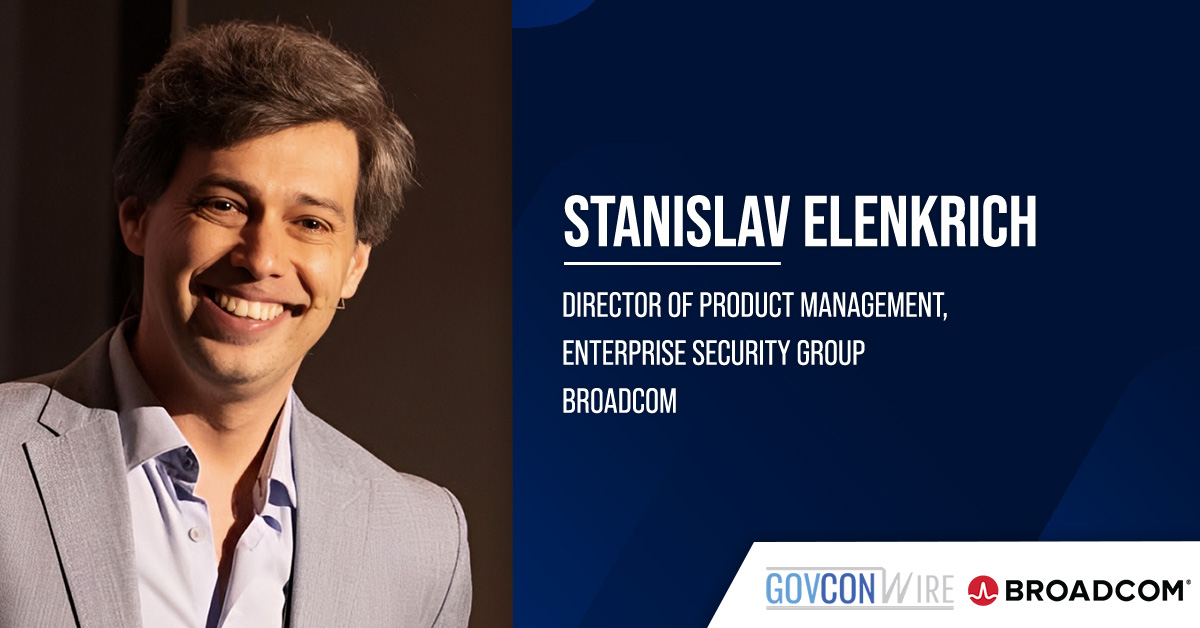
Stanislav Elenkrich, director of product management in Broadcom’s enterprise security group, said government agencies could strengthen their security posture by taking a new approach to zero trust using their existing security tools.

Artificial intelligence is changing how both attackers and defenders operate across federal networks. Senior government and industry executives will gather at the Potomac Officers Club’s 2027 GovCon Executive Leadership Summit on Feb. 25 to discuss agentic AI, the evolving cyberthreat landscape, federal acquisition requirements and contract capture strategies. Reserve your seat now to join the conversation.
In an article published on Carahsoft.com, Elenkrich wrote that most agencies already have many zero trust components but now face the challenge of determining whether that architecture delivers full protection.
How Is AI Changing Zero Trust Security?
Elenkrich said AI is changing the security paradigm for both attackers and defenders, even though the core questions behind zero trust remain the same: which users can be trusted and which resources they can access or download.
He explained that AI has made it easier for adversaries to launch sophisticated attacks against government targets and to move more quickly. As a result, defenders face greater risk from exposed credentials or data, with that risk rising as the attack surface expands.
On the defense side, Elenkrich said Broadcom applies machine learning to classify sensitive data more quickly in data loss prevention tools, detect unusual behavior across human and machine identities, and correlate signals from endpoint, proxy and identity telemetry to help agencies respond to risk as it emerges.
How Does Broadcom Support Agency Zero Trust Programs?
Elenkrich said Broadcom helps agencies extract more value from the zero trust tools they already own rather than deploying new ones. He noted that many organizations use only a fraction of their architecture’s capabilities and miss chances to set detailed rules that differentiate user levels, adjust access as conditions change and govern interactions in real time.
He explained that access decisions should reflect context, with a contractor pulling sensitive data from an unmanaged device warranting different treatment than a full-time employee using an agency-managed laptop. He added that while most agencies have the technology to separate those scenarios, few have established policies to do so.
Elenkrich said Broadcom’s Symantec tools, used across federal, state and local government systems for more than two decades and multiple administrations, are hybrid by design. Symantec’s proxy, data loss prevention and endpoint security tools can run in the cloud or on premises, allowing agencies to shift resources between the two environments.
Broadcom also provides access to the Symantec Global Intelligence Network, which Elenkrich described as one of the largest civilian threat telemetry networks, giving government security teams worldwide insights beyond their own logs.
“As AI adoption accelerates, the ability to scale proven security and governance approaches is vital for delivering mission outcomes,” Elenkrich said.