
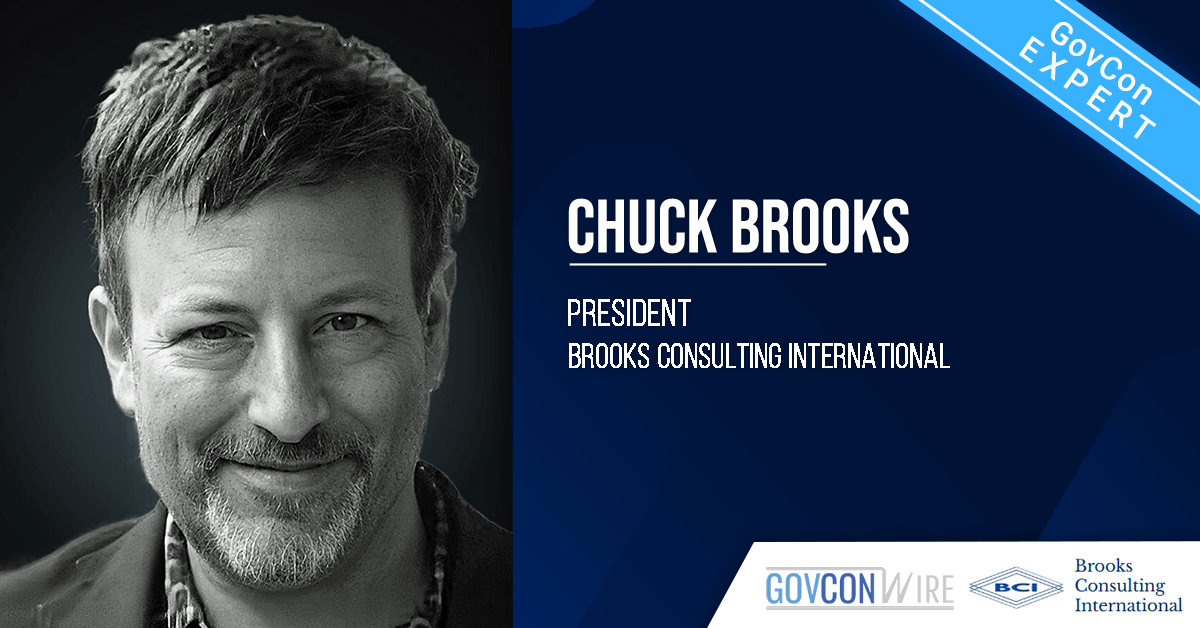

Chuck Brooks is the president of Brooks Consulting International and one of Executive Mosaic’s GovCon Experts.
By 2026, national security is being shaped by a technology competition that is shifting from incremental advancements to rapid prototyping and convergence. The United States government and industry are adapting to the growing interdependence of artificial intelligence, quantum technology, autonomous systems and space capabilities.

The Potomac Officers Club’s 2026 Intel Summit takes up the same convergence at its lunch panel, titled “Agentic AI and Quantum Risk: The Blast Radius Problem in Classified Environments.” The event on Sept. 24 will feature keynotes from NSA Deputy Director Tim Kosiba, Space Force Deputy Chief of Space Operations for Intelligence Maj. Gen. Brian Sidari and NRO SIGINT Directorate Chief Architect Ryan Lewis. Register now to join the discussion.
A key component of this change is agentic artificial intelligence and its impact on cybersecurity. Agentic systems can interact with tools and data, plan and carry out multistep activities, and function with variable degrees of autonomy, in contrast to traditional software or many generative AI applications. That could result in quicker threat hunting, detection and remediation in cybersecurity. The same skills might be used by an attacker to automate parts of the cyberattack lifecycle, phishing, social engineering, reconnaissance and vulnerability identification at machine speed.
A distinct but connected strategic dilemma is posed by quantum technology. Eventually, popular public-key cryptography algorithms may be compromised by a sufficiently powerful cryptographically relevant quantum computer. The problem is no longer theoretical as a result. In addition to investing in quantum computing, sensing and networking as possible sources of national security advantage, the US government is already getting ready to switch to post-quantum cryptography, or PQC.
In the renewed frontier of space, the convergence of these technologies has become critical. Communications; location; navigation and timing; missile warning; intelligence, surveillance and reconnaissance; meteorological data; and other capabilities vital to military operations and the larger economy are provided by satellites and the ground infrastructure that supports them. Quantum sensing could enhance precise navigation and sensing, while artificial intelligence could make these systems more responsive and autonomous.
However, the technologies that these missions rely on may be threatened by adversarial AI-enabled attacks and future quantum capabilities. Therefore, creating new technologies alone is not a strategic imperative. The goal is to accelerate the transition of innovation into operational capabilities while including security and resilience into the architecture from the start.
The Technology Race Is Accelerating in Washington, DC – The Need for Speed
This is not just a forecast from the private sector. The Washington, DC, Beltway of vendors and contractors increasingly sees AI and quantum technologies as national security priorities, as seen in current U.S. government projects.
In July 2025, the White House published “Winning the AI Race: America’s AI Action Plan,” which included over 90 federal initiatives focused on boosting worldwide technological leadership, developing AI infrastructure and driving innovation. The administration then issued a National Security Presidential Memorandum on AI in June 2026, instructing the national security industry to expedite the use of sophisticated AI while upholding human accountability and guaranteeing that systems are dependable, resilient and manageable.
Quantum technology has also advanced under the administration. The government was instructed by an executive order issued in June 2026 to revise the National Quantum Strategy, accelerate American leadership in quantum computing, sensing and networking, and promote collaborations with American business.
The reaction has been especially impactful within the Department of War. DOW introduced an AI Acceleration Strategy in January 2026 with the goal of boosting experimentation, eliminating administrative obstacles and integrating cutting-edge AI capabilities into enterprise operations, intelligence and warfighting. Since then, the department has increased its attempts to incorporate agentic AI into military applications.
Concurrently, DOW has restructured its larger ecosystem for innovation. With a focus on speedy contracting, commercial adoption and technology scouting, the Defense Innovation Unit was named a Department of War Field Activity. Over 100 capabilities have been put into practical use through the Accelerate the Procurement and Fielding of Innovative Technologies, or APFIT, program, which has now awarded more than $2 billion.
These programs tackle an important issue: if the government is unable to transfer promising technology from the lab into the hands of those in need, technological dominance will be of little use. Important avenues for accomplishing this are provided by programs like DARPA, DIU, APFIT, SBIR/STTR and Other Transaction Authority procedures. The SBIR and STTR programs were reauthorized in April 2026, increasing opportunities for small companies to leverage cutting-edge innovations for national security applications.
The emerging approach is becoming more and more obvious: the business ecosystem provides much of the speed and innovation, while the government sets mission requirements and adoption paths.
The Cyber Equation Is Modified by Agentic AI
Parts of the cyberattack and defense lifecycle may be compressed from human time scales to machine time scales using agentic AI. AI agents can help defenders by continually monitoring networks, correlating massive amounts of information, identifying anomalies, prioritizing vulnerabilities, supporting analysts and starting predetermined remedial activities. When used appropriately, these skills could enable security teams to react to assaults more quickly than traditional human-centric procedures.
However, the same traits also pose new concerns. Autonomous agents could be used by an adversary to look for weaknesses, tailor social engineering operations, conduct reconnaissance across exposed infrastructure, modify tactics and possibly coordinate several stages of an attack. The worry is not that AI will launch every complex cyberattack on its own. It is believed AI can lower the expense, time and human labor needed to carry out large-scale attacks.
Because of this, government organizations and contractors now have to incorporate AI systems into the security architecture. The same level of rigor that is typically applied to privileged users and applications must be extended to machine identities, model access, data provenance, permissions, tool use, logging and human authorization. When an AI agent has access to private networks, it shouldn’t be granted the same level of power as the human company using it.
Securing government information systems and enhancing AI-enabled defensive cybersecurity capabilities are specifically highlighted in the White House’s June 2026 advanced AI policy. This makes it possible to deploy AI to protect government networks while also enforcing stricter regulations on the AI systems themselves.
For more on the topic, please see: AI & Quantum Computing Are Redefining Research & Development, Manufacturing & Technological Exploration.
Quantum Is an Issue That Exists Today, Not in 2035
An equally practical evaluation of quantum computing is warranted. There isn’t currently a gateway quantum computer that is dominant for exploiting cryptography, and nobody can accurately forecast when that will happen, although it could be sooner than later. However, this uncertainty does not justify delaying preparation.
The “harvest now, decrypt later” paradox suggests that if sufficiently powerful quantum computers are made available in the future, enemies may be able to obtain encrypted data today and possibly decrypt some of it. Therefore, government data with lengthy secrecy restrictions is especially crucial.
In 2024, NIST completed the first three post-quantum cryptography standards, and it still supports interoperability and migration initiatives. Organizations have been asked by CISA, NSA and NIST to start getting ready by creating road maps for quantum readiness, doing cryptographic inventory and ranking systems for migration.
The same is being done by the Department of War. The department unveiled a Post-Quantum Cryptography Strategy in June 2026 with the goal of deploying quantum-resistant cryptography throughout the force by 2031 and for high-impact systems by 2030.
Because of this, cryptographic adaptability is strategically crucial. It should be possible for organizations to swap out cryptographic protocols and algorithms without having to rebuild entire systems. It will be difficult for agencies and contractors to carry out a timely transition if they are unable to identify where cryptography is deployed, what algorithms are being used and which systems rely on them. This implies that PQC should be seen more and more by federal contractors as a supply-chain and technical problem rather than just a cybersecurity compliance exercise.
The Potential of Quantum Transcends Encryption
The threat to encryption should not be the sole focus of the quantum issue. In the long run, navigation and intelligence, surveillance and reconnaissance may find significant uses for quantum sensing and timing. The Defense Innovation Unit of the Department of War began an effort in June 2026 with the goal of moving advanced quantum sensing and timing technology toward operational military applications. Over the course of the following year, up to $200 million might be committed.
This is a crucial differentiation. The technical properties and maturity curves of quantum computing, quantum sensing and quantum communications differ. The near-term potential in sensing and timing could be just as important for national security as general-purpose quantum computing.
This more comprehensive approach is reflected in the White House’s June 2026 quantum executive order, which highlights quantum computing, sensing and networking as elements of a broader national technology policy.
Space Is Emerging as the Domain of Ultimate Convergence
The combination of cybersecurity, AI and quantum may be most significant in space. The U.S. Space Force is already working toward an architecture that is increasingly dependent on distributed capabilities, AI-enabled decision-making, commercial collaborations and robust networks. AI-enabled command autonomy, quantum and optical communications, quantum sensing, on-orbit computing, robust architectures and zero-trust communications are all envisioned in its 2040 planning documents. Additionally, the service is speeding up adoption of business technology. Its acquisition changes prioritize quick iteration and commercial innovation while moving authority closer to mission portfolios.
In order to develop AI and machine-learning capabilities for space operations, the Space Force established its first AI Accelerator at Stanford University in April 2026, bringing together government employees, researchers, national laboratories and industry.
Another significant example of public-private cooperation is the Space Force’s Orbital Watch program. More than 900 businesses are part of the original network, which was launched in 2025 and offers commercial space providers unclassified threat intelligence. The goal is to give commercial operators a better understanding of dangers, which include electronic warfare, cyberattacks and on-orbit operations.
These initiatives acknowledge a growing reality: the national security domain is no longer solely an environment created by the government. The national security architecture increasingly includes commercial satellites, communications networks, cloud infrastructure, ground stations and software.
Innovation Generates Risk as Well as Opportunity
Although a satellite constellation may be extremely resistant to physical assault, its software, supply chain, ground infrastructure or identity management systems may make it vulnerable. On the other hand, traditional bespoke systems frequently fall short of the redundancy and quick technological updates offered by distributed commercial designs.
Therefore, cybersecurity must include every aspect of the space ecosystem, including ground stations, cloud services, data pipelines, third-party vendors, and satellite hardware and firmware. Securing space systems is imperative. Satellite security must be comprehensive, covering every facet of both terrestrial and orbiting satellites.
The national security establishment has recognized that cyberthreats are becoming a greater threat to satellites and communications networks. The Department of War and US Space Systems Command recently announced testing for cybersecurity guidelines regarding commercial satellites in response to those concerns.
Zero Trust Autonomy to Zero Trust
Zero trust is still a crucial basis, but as robots become more independent, the idea must change. Least privilege should be applied by federal agencies and contractors to autonomous agents, AI models, devices, applications and workers. Continuous permission and authentication are necessary for machine identities. Contextual and ongoing evaluation of access is necessary. Sensitive settings need to be monitored, divided and able to quickly isolate affected systems.
Organizations should also keep audit trails for AI-enabled settings that detail what an AI system accessed, what tools it used, what decisions it influenced and what actions it took. Complete autonomy in cybersecurity shouldn’t be the goal. It should be managed autonomy, with humans maintaining proper oversight and the capacity to step in while robots function at machine speed under well-established authorities.
This is especially crucial in space and other settings where communications could be hampered, delayed, or disputed. Resilience can be increased by autonomy, yet poorly circumscribed autonomy can potentially hasten the effects of a mistake.
The Model of Innovation Has to Change
The commercial technology ecosystem in the United States is remarkable. Connecting that ecosystem to national security missions in a timely manner is the difficulty. Pathways to reduce that distance include the Department of War’s innovation reforms, APFIT, DIU, DARPA, SBIR/STTR and OTA procedures. A similar approach is being pursued by the Space Force through partnerships with business and academics, portfolio-based acquisition, and commercial integration.
Another model is offered by the Genesis Mission. The Department of War declared in July 2026 that it would collaborate with the White House-led project to deploy advanced computing, data, artificial intelligence and scientific equipment to address national science and technology issues. In order to address important science and technology issues, the Department plans to invest more than $200 million in FY2026 and more than $1.3 billion in FY2027.
The focus of the Genesis Mission on cybersecurity, data protection, supply chain resilience and governance shows that its creators recognize the significance of these elements. This technology is not an afterthought; it is a crucial part of the plan. If executed well, the Genesis Mission can produce a cascading set of positive outcomes. They include breakthroughs in energy (e.g., fusion) or materials that unlock whole new industry sectors. A resilient national innovation infrastructure that doesn’t just spin off one breakthrough but becomes an ongoing engine.
These programs indicate the emergence of a national security innovation ecosystem where government, business, academia and national laboratories function more as an integrated technology base than as distinct silos.
The next technical race won’t be won by the person who creates the best algorithm or quantum processor, which makes that ecosystem crucial. Whoever can develop, test, secure, produce, purchase and field those technologies on a scale will win.
For more specifics on innovation topics at the Department of War and the Department of Homeland Security, read: The New Innovation Ecosystem at the Department of War: From Technology Silos to a National Security Engine and The Innovation Engine of Homeland Security: Why the DHS Directorate of Science &Technology Matters More Than Ever
What Contractors and Agencies Should Do Right Now
A number of initiatives for government organizations and contractors should be put into action as soon as the strategy documents are released. Agencies should first create thorough inventories of cryptographic assets and pinpoint systems that hold sensitive data for a long time. PQC migration ought to be risk-based, with a focus on mission-critical systems, valuable data and hard-to-replace infrastructure.
Second, before implementing agentic AI extensively, businesses should set up governance for it. Clearly specified authority, identification controls, logging, data security, testing specifications and escalation procedures should all be present in any autonomous system.
Third, agencies should increase transition mechanisms and quick prototyping. Instead of permitting promising prototypes to become permanent demonstrations, the goal should be to evaluate potential technology against actual operational issues.
Fourth, contractors ought to consider supply chains for hardware, software and cryptography as a component of the security border. SBOMs are becoming more and more common; when suitable, complete asset inventories and cryptographic bills of materials should be given equal weight.
Fifth, prior to launch, space companies should plan for cyber resilience. This includes supply chain security, segmentation, anomaly detection, robust identity and access management, secure software development, robust command and control, and the capacity to recover from compromised systems.
Lastly, leaders must use this technology. AI-enabled cyberattacks, compromised autonomous agents, quantum transition scenarios, satellite interruption and loss of ground infrastructure should all be included in tabletop exercises. Policy texts by themselves cannot demonstrate resilience.
The Importance of Strategy
I made the case in my book Inside Cyber: How AI, 5G, IoT, and Quantum Computing Will Transform Privacy and Our Security that convergence increasingly presents the biggest technological hazards and opportunities. As AI, quantum technologies, autonomy and space systems all develop concurrently, this observation becomes increasingly pertinent.
The White House’s AI and quantum plans, the Department of War’s AI acceleration, PQC migration, APFIT, DIU, DARPA and the Space Force’s commercial and AI programs are just a few of the initiatives the US is reacting with. Whether Washington acknowledges the convergence is no longer a question. It is.
Whether business and government can act quickly enough to transform that recognition into robust operational capacity is the more difficult question. Technology alone won’t determine the solution. Acquisition reform, public-private partnerships, competent staff, secure-by-design engineering and leadership prepared to take measured risks in experimenting while upholding strict controls surrounding technologies that impact national security are all necessary.
It is not necessary for the United States to forecast the exact date of the next significant technological disruption. When it occurs, it requires institutions and systems that can adjust. Those who can secure at mission speed and create at machine speed will have the strategic advantage. That is more than just a benefit in the developing confluence of space, quantum technology and agentic AI. It is increasingly necessary for national security.