
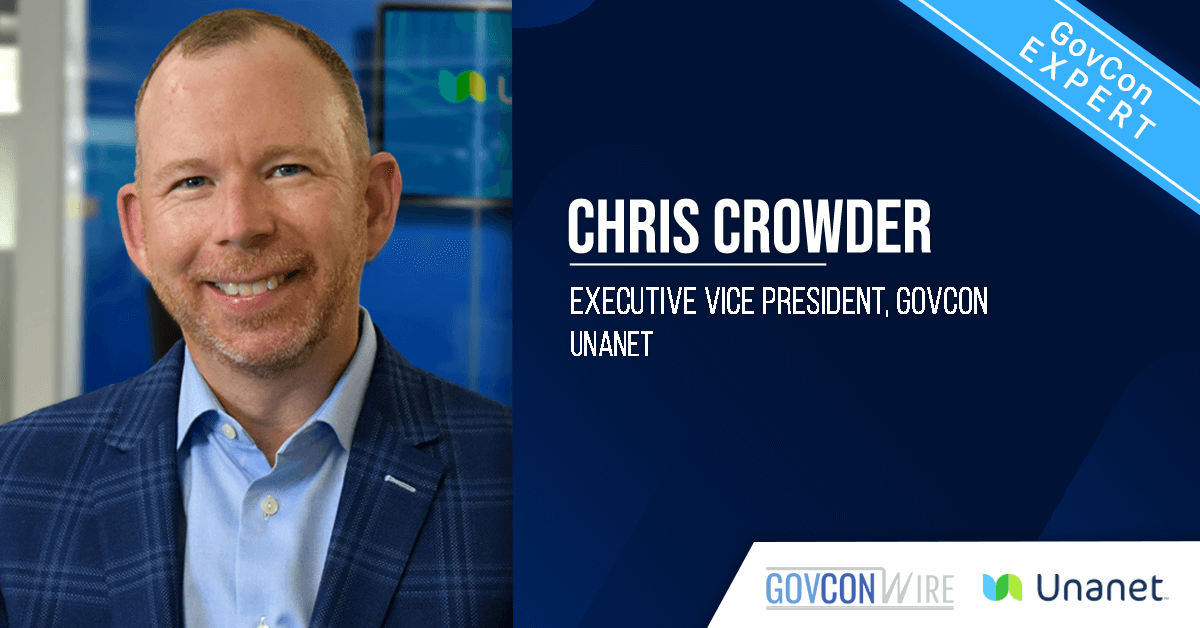

By Chris Crowder, executive vice president, GovCon, Unanet
Ten years ago, government contracting felt more predictable than it does today.
Cybersecurity requirements were still taking shape. Artificial intelligence has yet to enter everyday business conversations. Compliance was often treated as a cost of doing business, not a source of competitive strength. Competition was always intense, but many contractors still viewed the federal market as relatively stable.
The environment has changed.
Government contractors have navigated a global pandemic, inflation, continuing resolutions, workforce shortages, cybersecurity mandates, procurement reform and rapid technological change. Through it all, one question has remained constant: What separates the firms that consistently win from those that struggle?
The 10th Anniversary Edition of the GAUGE Report, based on insights from more than 1,200 government contracting professionals, offers a unique opportunity to answer that question. Looking across 10 years of data, one conclusion stands out: success is no longer about having the biggest budget or the largest workforce. It is about operational maturity.
In practical terms, operational maturity means disciplined capture processes, reliable forecasting, strong compliance practices, integrated systems and timely visibility into business performance.
“The most successful GovCons are mastering resource management and building mature, scalable systems that align people, projects and tools,” said Kim, VP of GovCon Strategy at Unanet and co-author of the GAUGE Report.
As operational excellence, compliance and AI adoption become key differentiators in government contracting, federal leaders and industry executives must stay ahead of evolving priorities. Join the Potomac Officers Club’s 2026 FedCiv Summit on Oct. 29 to explore the strategies and technologies driving success across the federal civilian landscape. Book your seats here.
Resilience Is Only the Starting Point
One of the most encouraging findings in this year’s report is that the industry remains remarkably resilient despite significant market disruption. Nearly two-thirds of contractors, 65 percent, reported that 10 percent or fewer of their contracts had been canceled, modified, or descoped. At a time when procurement activity has slowed and federal priorities continue to shift, that level of stability is noteworthy.
But resilience alone is not enough.
What stood out most in this year’s findings was how consistently high-performing firms outpaced their peers across nearly every operational category we measured. Firms with win rates above 50 percent were more likely to have mature capture processes, stronger compliance programs, better project controls, more integrated technology environments and greater confidence in their ability to navigate uncertainty.
In other words, high-performing firms do not excel in one area. They build strength across the business.
Compliance Is Becoming a Competitive Strength
Perhaps nowhere is this more evident than compliance.
For years, compliance has been viewed as a necessary burden. Yet the data increasingly tells a different story. This year, 88 percent of respondents said they were confident in their ability to handle an unexpected audit. Nearly half identified their organizations as operating at Cybersecurity Maturity Model Certification, or CMMC, Level 2, and firms with higher win rates were significantly more likely to report advanced cybersecurity maturity.
The takeaway is clear: compliance is no longer just a back-office responsibility. It is becoming a measure of operational readiness. Firms that can demonstrate stronger cybersecurity practices, audit preparedness and governance are better positioned to earn trust in a market where accountability matters more every year.
“Optimism surrounding the current GovCon environment has declined since last year’s report due to factors such as regulatory and economic uncertainty. However, there are many opportunities to help GovCons lean into operational improvements, technology investments and utilization evaluations to enhance business stability,” said Christine Williamson, partner at GovCon Industry CohnReznick LLP and co-author of the GAUGE Report.
The same pattern emerges when we look at business performance. The average net profit margin reported in this year’s survey was 7.6 percent, a strong result. High-performing firms were also more likely to report stronger margins, higher win rates and greater confidence in their long-term outlook.
Operational Discipline Separates High Performers
At the same time, challenges remain. Seventy percent of contractors reported experiencing procurement slowdowns, and nearly sixty percent cited winning new contracts as a top operational challenge. Competition for federal opportunities continues to intensify, while agencies are demanding greater accountability, stronger cybersecurity, and more measurable outcomes from contractors.
That reality makes operational discipline more important than ever.
Over the last decade, we have watched project-based operations mature. Firms have invested in better forecasting, stronger resource management, cleaner handoffs between teams and more connected systems for managing projects, people and financials. We have also seen organizations move away from reactive decision-making and toward data-driven operations.
The contractors that have embraced those changes are seeing results.
AI Will Reward the Firms With the Right Foundation
No discussion about the future of government contracting would be complete without mentioning AI. According to this year’s report, 70 percent of firms are already using AI technologies to drive business gains, while 74 percent believe AI and process automation will transform the industry.
But the most important lesson from the data is not that AI alone will determine performance. It is that AI is more valuable when firms already have disciplined processes, reliable data, strong governance and integrated systems.
Those fundamentals mattered 10 years ago. They matter today. They will matter 10 years from now.
The Fundamentals Still Matter
As I reflect on a decade of GAUGE findings, I am struck by how much the industry has changed and how much the fundamentals of success have stayed the same.
High-performing firms are disciplined. They invest in compliance before they must. They build operational processes that can support growth. They embrace innovation without abandoning governance. Most importantly, they prepare for change instead of reacting to it.
The next decade will bring new challenges, technologies and regulations. But if the first 10 years of GAUGE have taught us anything, it is that the firms best prepared to compete will not be defined by a single tool or trend. They will be defined by their ability to execute consistently, adapt with discipline and make decisions with confidence.
That is what winning really looks like.
Explore the full 10th Anniversary Edition of the GAUGE Report to see the data behind the trends shaping government contracting.