
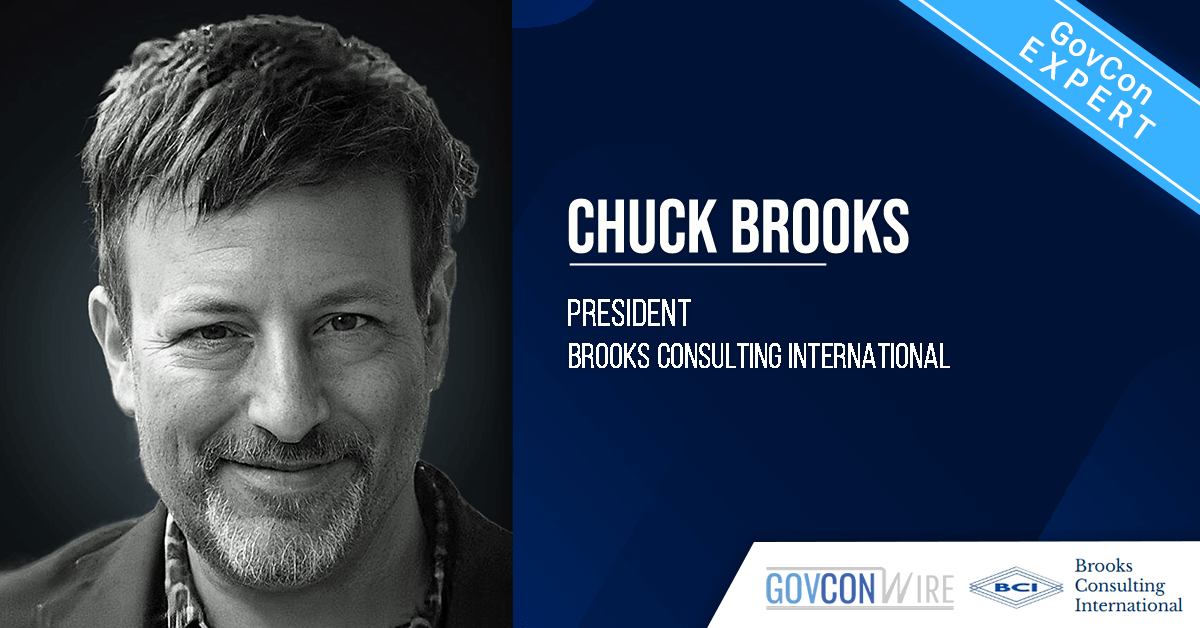

By Chuck Brooks, president of Brooks Consulting International and one of Executive Mosaic’s GovCon Experts
In Zero Trust cybersecurity protocols there is no implicit trust of identity or privilege – inside or outside the network perimeter, and every person, device, application and transaction must be continuously verified.
Zero Trust is a framework that is adaptive and it has to be in today’s digital ecosystem. Emerging technologies such as artificial intelligence and quantum computing are no longer merely enablers but core disruptors. They broaden attack surfaces, but also offer significant defenses, and call for a rethinking of Zero Trust systems.
Evolution of Zero Trust in a Converged Threat Landscape
Traditional perimeter-based security is no longer suitable in today’s hybrid, cloud-native and IoT-driven environments. Zero Trust principles give you a resilient foundation with “never trust, always verify,” least privilege access, micro-segmentation and constant monitoring. But the dual-use nature of AI and quantum technologies is speeding both threats and necessary adjustments.
AI is a force multiplier. On the defensive side, it provides real-time anomaly identification, predictive analytics, automated incident response and behavioral analysis that reduces alert fatigue. Generative and agentic AI may produce attacks, optimize security rules and enable explainable models for better governance.
But the potential for offense is just as great. AI-enabled tools empower polymorphic malware that mutates to avoid detection, hyper-personalized phishing using deepfakes (incidents are up substantially) and autonomous “agentic” attacks that string together exploits at machine speed.
The numbers make it clear that this is an urgent problem. AI cyberattacks are on the rise, with strong click-through rates on AI-generated phishing and the ability to crack passwords quickly.
Zero Trust needs to grow into an AI-powered, adaptive approach. This will involve the use of machine learning to provide dynamic risk scoring, where access decisions are made based on real-time context, user behavior and threat intelligence.
(Zero Trust, augmented with AI, can automate policy enforcement and micro-segmentation, resulting in self-healing networks.)
AI will be critical to ensuring trust and auditability and to avoid model poisoning or adversarial assaults on the security systems itself.
Quantum Computing – The Cryptographic Reckoning of Zero Trust
Quantum computing poses an existential threat to the current foundations of cryptography. Algorithms such as Shor’s can theoretically break RSA and ECC encryption orders of magnitude quicker than classical computers, allowing nation-state players to pursue “harvest now, decrypt later” techniques. This immediately undermines Zero Trust’s dependence on strong authentication, encryption in transit/rest and identity verification.
Q-Day – the point at which cryptographically important quantum computers are operational – may happen sooner than we think.
The implication for Zero Trust is crypto-agility, which is the ability of systems to swap cryptographic primitives without disturbing operations. Quantum Key Distribution, or QKD, offers the promise of more secure communications in high-stakes scenarios, but practical implementation obstacles remain.
Quantum sensing and optimization could also help with threat detection, but resilience is the key focus in the near term.
Recent developments reinforce this: Governments and industry are stepping up PQC migration, with calls for quantum-readiness in governance, supply chains and vital infrastructure. Theoretical quantum risks will become policy and financial priorities in 2026 and after.
Recommendations + Synergies: AI + Quantum + Zero Trust
The convergence offers chances for next-gen defenses:
• AI and Zero Trust Architectures: Leverage AI for continuous authentication, behavioral biometrics and predictive access controls. Use generative AI to simulate attacks in the quantum age and test resilience.
• Quantum-Resilient Frameworks: Embed PQC in Zero Trust’s identity and access management, or IAM, endpoint security and data protection layers.
• Governance and Human Oversight: As I have outlined in recent works, ethical AI governance, worker upskilling and public-private collaboration are key. Security by design incorporating Software Bills of Materials (SBOMs) and Cryptographic Bills of Materials need to become the norm.• Proactive Risk Management: Use NIST-inspired models, use threat intelligence feeds and prepare for larger attack surfaces from IoT, 5G/6G and edge computing – all enhanced by AI.
In practice, this re-calibration consists of:
1. Cataloging present cryptography and transitioning to PQC.
2. Real-time Zero Trust enforcement by AI/ML with human in the loop oversight
3. Investing in upskilling quantum-aware cybersecurity personnel.
4. Facilitating cross-sector intelligence sharing to fight AI-augmented threats.
Resilience in the Age of Acceleration Era
In our new era, technology is exceeding policy and readiness. AI and quantum are already changing the cybersecurity landscape – they expand capabilities for defenders and adversaries. Zero Trust is no longer a framework, but an intelligent, dynamic ecosystem for trust in an untrusted world, utilizing these technologies.
Proactive leadership, ethical governance and unceasing innovation in security procedures are the requirements for a more secure future.
Organizations that act today by rethinking strategies, adopting crypto-agility and harnessing AI ethically will determine success in the future.
Those who delay risk catastrophic exposure.