
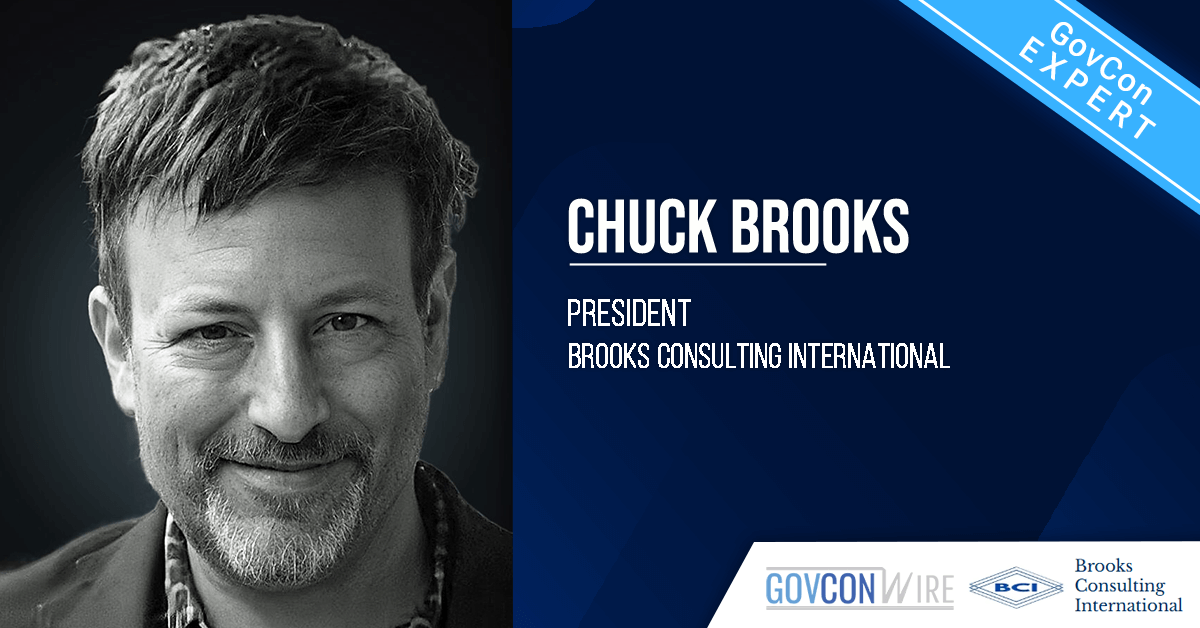

By Chuck Brooks, president of Brooks Consulting International and one of Executive Mosaic’s GovCon Experts
We are living in a new emerging tech era. Artificial intelligence, quantum computing, advanced materials, robotics, cutting-edge medical sciences, space-based innovations and new computer paradigms like neuromorphic and edge architectures are all driving the rapid advancement of the digital landscape. These technologies and applications are morphing together to change daily living, vital infrastructure, industries and national security.
This tech convergence creates amazing opportunities for real-time analytics, optimized supply chains and scientific discovery. However, it also poses serious cybersecurity risks, including increased attack surfaces, encryption vulnerabilities and digital threats enhanced by artificial intelligence.
It is strategically necessary to be prepared. Many organizations are unprepared for our digital era’s innovations, making critical infrastructures vulnerable throughout the swift digital change. Below are options to leverage emerging tech and mitigate risks for the rapidly changing tech ecosystem.
1. Recognize Systemic Risks & Understand Technological Convergence
Artificial intelligence as the cognitive framework, quantum computing for exponential processing, robotics and autonomous systems for physical tasks, materials science for enhanced components (accelerated through quantum simulations), space technologies for global connectivity and sensing, and cutting-edge computing paradigms like neuromorphic chips for energy-efficient AI are just a few examples of the technologies that will define the future.
According to Gartner, artificial intelligence is technology that mimics human abilities through learning, problem-solving and natural communication. It opens up new opportunities in big data, digital security and other fields by merging with robotics, genetic engineering, augmented reality and quantum computing. This includes neural nanorobotics and brain-computer interfaces using neuromorphic chips, which could “substantially enhance human intelligence and learning abilities,” as well as robotic process automation, or RPA, which improves customer service and frees people to perform complex tasks. By 2025, AI-driven knowledge work automation could provide $5 trillion to $7 trillion in economic benefits, according to McKinsey.
The risks to cybersecurity are increased by this confluence. Space assets are vulnerable to orbital hacking; robotics and the Internet of Things expand entry points; artificial intelligence enables polymorphic malware and deepfakes at machine speed; quantum computing threatens current encryption through techniques like Shor’s; and materials supply chains pose geopolitical risks.
How to Put It Into Practice:
*Conduct thorough technology audits throughout the organization to find interdependencies and weaknesses.
*Adopt a systems-thinking approach rather than discrete methods: The most effective leaders will understand how technologies interrelate, enhance and transform one another.
*Risk equations (threat × vulnerability × consequence) should be incorporated into strategy planning because advances in AI and quantum technology greatly multiply all three components.
2. Create Robust Ethical Standards & Governance Frameworks
The foundation for responsible execution is governance. Without it, AI is vulnerable to bias and manipulation, quantum technology has compliance issues, and convergence creates uncontrollable risks.
Principal Suggestions:
*Include post-quantum cryptography standards and NIST-aligned AI Risk Management Frameworks in board-level governance.
*Use Defense in Depth, Zero Trust architectures and Security by Design. Mandate Software Bills of Materials and Cryptological Bills of Materials for helping secure supply chains and integrate quantum risk into company governance.
*Create ethical frameworks for dual-use technology, making sure that AI complements human judgment rather than replaces it: Governance, strategy and human oversight will be the distinction between resilience and catastrophe.
*Federal and business leaders ought to support initiatives like the National Quantum Initiative. Since a strong risk management system is particularly crucial as technology advances, the C-suite is now responsible for cybersecurity.
*In my book Inside Cyber, I explain how these frameworks protect privacy in the context of AI, 5G, IoT and quantum convergence—an essential tool for building compliant, robust infrastructures.
3. Stress Post-Quantum Transition & Quantum Readiness
From theory to reality, quantum computing has the potential to boost artificial intelligence, make it easier to find new materials, improve logistics and develop space systems—all while undermining conventional encryption techniques. “Preparation is crucial and cannot be postponed.”
Framework of Operations:
Inventory and Migrate: Use NIST-approved methods (e.g., ML-KEM, ML-DSA) to catalog cryptographic assets and transition to hybrid post-quantum cryptography systems. Aim for completion well ahead of the 2030 timeframes set by the government.
*Apply Quantum for Defense: Use quantum sensing to identify anomalies in infrastructure, supply chains and space, and quantum key distribution for secure communications.
*Integrate with AI: Plan for quantum-AI synergies in modeling and optimization while making sure all AI investments are quantum-ready. Subatomic particles are used in quantum technology calculations that have the potential to amplify our intelligence a billion-fold, transforming artificial intelligence, data analytics and complex problem-solving.
*Assess and Model: Make use of testbeds from groups like the Chicago Quantum Exchange. First-mover advantages are obtained by early adopters, whereas laggards face digital disaster.
4. Form Public-Private Collaborations to Strengthen Ecosystems
No single entity can address these challenges on its own. To reduce risks, industries and the government must collaborate. A new global cooperation framework is urgently needed, one that emphasizes information sharing, collaborative research and the application of new technology to improve defense. Collaborative research and development are essential because artificial intelligence is a “double-edged sword,” and quantum technology offers both possibilities and risks. For the United States to lead, a comprehensive national strategy is necessary.
5. Set Aside Funds for Human-centered Security Measures & Workforce Development
Adopting technology successfully requires competent people. An interdisciplinary workforce including specialists in physics, engineering, artificial intelligence, cybersecurity and software is required for quantum advancement.
Actions:
*Create talent pipelines through industry-academia partnerships and ongoing training in quantum concepts, ethical governance and AI literacy. Early coding programs and national cyber education institutes are prime examples of how a “culture of security” can be developed from the ground up.
*Teach everyone how to spot deepfakes, phishing and behavioral defenses created by artificial intelligence: Human Factors: Training staff to recognize and dismiss artificial intelligence-generated phishing and deepfake tactics is essential.”
*Combine technical know-how with strategic communication to help executives translate complex technology into useful choices. RPA and AI enable people to work in more valuable roles, yet reskilling is still required.
6. Adopt Proactive Systemic Resilience & Cybersecurity
Reactive tactics are out of date. It is crucial to adopt a proactive, anticipatory and flexible security posture based on ongoing intelligence and systems resilience.
Essential Components:
*Use AI for predictive analytics, automatic incident management, real-time threat detection and unchangeable backups.
*Conduct regular stress testing, red-teaming for AI weaknesses and scenario planning for unanticipated circumstances.
* Use “secure by design” satellite architectures to protect space assets; include robotics to improve infrastructure safety; and strengthen material supply chains. With an expanding attack surface of estimated 30 billion IoT connections, dynamic security covering endpoints, networks, cloud, mobile, supply chains and data privacy is crucial.
*Upgrade CISO roles to strategic partners in the C-suite who are in charge of resilience and company value. Resilience turns weaknesses into assets: By emphasizing flexible, forward-thinking defenses against technological convergence threats, organizations and countries can thrive in the digital age.
Our world will be transformed by emerging technologies and their proper application is ensured by vigilant stewardship. The future will be shaped by those who make current investments in readiness, teamwork and human-centered innovation. Only those who act now will have access to an innovative and secure future.