

As cyber threats grow more sophisticated and federal policy shifts toward a more aggressive posture, government and industry leaders are increasingly moving from reactive defense to proactive, offense-oriented cybersecurity.
That evolution will take center stage at Potomac Officers Club’s 2026 Cyber Summit on May 21, where leaders, including Katherine Sutton, assistant secretary for cyber policy at the Department of War, will examine how policy and operations are converging around more proactive cyber strategies. Registration is now open; save your spot today.
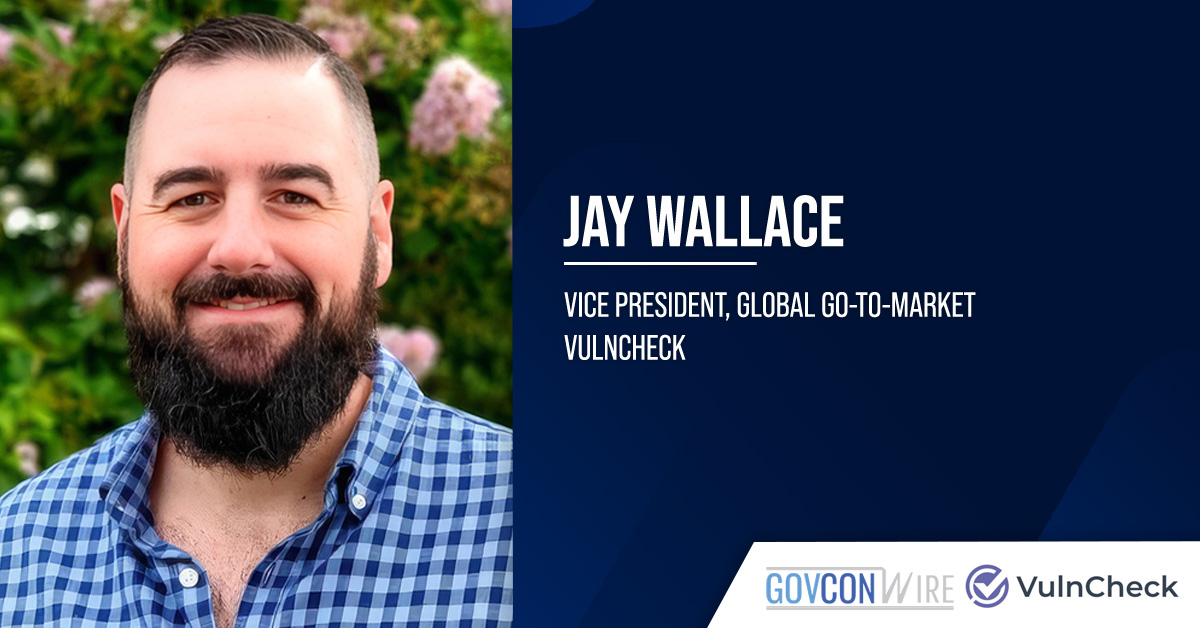
Jay Wallace, vice president of global go-to-market at VulnCheck, told GovCon Wire the shift has been building for years but is now becoming more visible across both government and enterprise environments.
“We are thinking more offensively than we ever have in the nation’s history,” Wallace said. “The idea is that the best defense is a good offense.”
What Is Driving the Shift From Reactive to Proactive Cyber Operations?
For much of the past decade, cybersecurity programs have been largely reactive, focused on patching vulnerabilities, responding to incidents and maintaining compliance.
That model is now being challenged.
“There comes a point where you get fed up with being reactive,” Wallace said. “The shift now is about thinking ahead, understanding threats before they show up and mitigating risk proactively.”
Instead of operating in silos, organizations are forming more integrated teams that bring together red teaming, penetration testing, vulnerability management and threat intelligence.
“We’re seeing what a lot of people call active cyber defense,” Wallace said. “It’s a collaborative approach where multiple disciplines are working together.”
How Is Federal Policy Accelerating the Shift to Offensive Cyber?

Recent federal policy signals are reinforcing this move toward a more proactive posture.
The Trump administration’s 2026 cyber strategy, issued in March, calls for deploying the “full suite” of U.S. cyber capabilities, including offensive operations, to detect and disrupt adversaries before they breach networks, according to the strategy document.
The strategy also emphasizes shaping adversary behavior and increasing the costs of cyber aggression, signaling a shift away from purely defensive measures.
At the same time, policymakers are looking to expand the role of the private sector. The strategy encourages industry to help “identify and disrupt adversary networks,” pointing to a future where companies play a more active role in cyber operations, according to a Lawfare analysis of the policy.
That shift, however, introduces new considerations.
Legal and compliance frameworks have not fully caught up with the concept of private-sector offensive cyber activity, and companies will need to carefully evaluate risk as policy evolves.
How Are Budget Priorities Changing in Cybersecurity?
The move toward a more proactive cyber posture is also influencing how organizations allocate resources.
Wallace said funding is no longer flowing as heavily into traditional vulnerability management tools, which many agencies and enterprises have already matured.
“What we’re seeing is less investment in basic asset visibility and more focus on advanced capabilities,” he commented.
Those capabilities include threat intelligence, attack surface management and adversary-focused analysis designed to anticipate and disrupt attacks before they occur.
Recent policy developments reinforce that trend, with increased emphasis on offensive cyber capabilities even as some defensive programs face tighter budgets, the Lawfare analysis noted.
Why Does Understanding the Adversary Matter More Now?
A key component of this shift is deeper insight into threat actors and their behavior.
Rather than simply tracking vulnerabilities, organizations are working to understand who is targeting them, how those actors operate and which attack paths they are most likely to exploit.
“There’s a lot of confusion in the market because the same threat actor can have multiple names depending on the source,” Wallace said. “Part of the job now is cutting through that and giving defenders a clear picture of what they’re dealing with.”
This type of intelligence enables more targeted and effective defense strategies, particularly in high-stakes environments like government and critical infrastructure.
Where Can GovCons Learn More About Government Cyber Priorities?
As cyber threats evolve and federal policy increasingly emphasizes proactive and offensive operations, the balance between defense and disruption is becoming a central issue for government and industry leaders.
The Potomac Officers Club’s 2026 Cyber Summit will bring together key decision-makers across the public and private sectors to explore this shift on May 21, featuring keynote speakers such as Robyn B. Celestino, general counsel at the White House’s Office of the National Cyber Director; Michael Duffy, acting federal chief information security officer at the Office of Management and Budget; and Katherine Sutton, assistant secretary for cyber policy at the Department of War.
Additional speakers from organizations including the Department of War, FBI, Air Force Research Laboratory and Deloitte will provide perspectives on how agencies and contractors can adapt to evolving cyber strategies.
Together, these discussions are expected to focus on how policy, operations and industry capabilities are converging to redefine cybersecurity in the years ahead. Don’t miss out—register now.