Author: Nichols Martin|| Date Published: June 14, 2021
Northrop Grumman (NYSE: NOC) helped the U.S. Space Force send a payload into orbit Sunday using an air-launched rocket to demonstrate a rapid response mission for emerging military requirements.
A Pegasus XL carried the Tactically Responsive Launch-2 mission to low Earth orbit as part of the branch’s technology demonstration satellite program to shorten the timeline for building and deploying space assets, Northrop said Sunday.
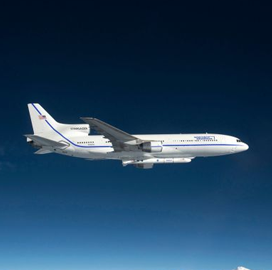
For this launch, the company’s Stargazer carrier aircraft took off from California’s Vandenberg Space Force Base and soared above the Pacific Ocean at an altitude of 40,000 feet to release the rocket along with the TRL-2 payload.
The Air Force Research Laboratory built the satellite in collaboration with Space Dynamics Laboratory.
Gen. John “Jay” Raymond, chief of space operations at USSF and 2021 Wash100 Award recipient, said the Space and Missile Systems Center completed a space domain awareness satellite within 11 months, an effort that normally would have taken between two and five years to finish.
“We executed a ‘21-day call-up’ to get a satellite on orbit – pulling the payload, mating it with the rocket and integrating the combined package onto the aircraft,” Raymond added.
USSF conducted the launch several weeks after a six-month standby period for the mission, which also marked a first for the branch’s Space Safari Program Office.




 For this launch, the company’s Stargazer carrier aircraft took off from California’s Vandenberg Space Force Base and soared above the Pacific Ocean at an altitude of 40,000 feet to release the rocket along with the TRL-2 payload.