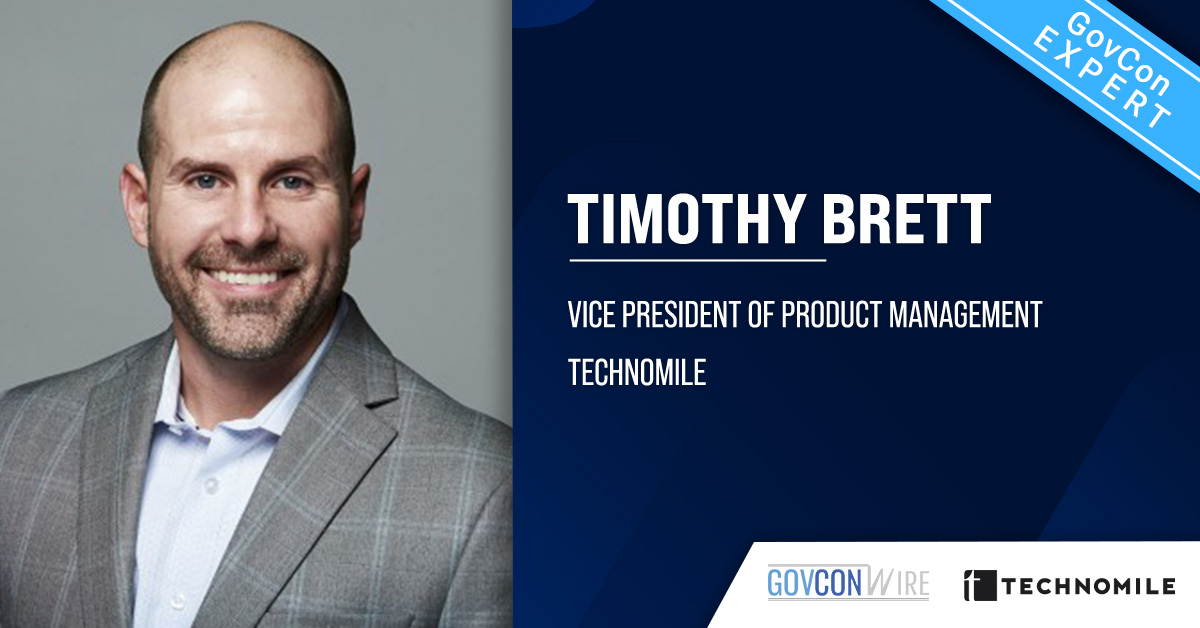

By Timothy Brett, VP of Product Management at TechnoMile and a GovCon Expert
I recently moderated an APMP webinar hosted by TechnoMile and pWin.ai, titled “The Handoff Problem: Why Capture Intel Dies Before It Reaches Your Proposal,” which drew more than 300 registrants, a signal of just how many federal contractors are wrestling with this issue. One theme surfaced repeatedly throughout the discussion: federal contractors invest months, and often years, gathering customer intelligence, refining win strategies and shaping opportunities, only to see critical insights disappear when the pursuit transitions from capture to proposal.
The problem is rarely a lack of information. Valuable context often becomes trapped in disconnected repositories and institutional knowledge that never makes it into the proposal process. By the time proposal development begins, teams are frequently reconstructing strategy instead of executing it. Customer priorities become disconnected from win themes, competitive insights remain buried in personal notes, and past performance examples never make it into the content plan. By the time proposal writers begin developing content, many of the insights that should differentiate the solution have been diluted, forgotten, or lost entirely, leaving a proposal that checks the requirements but fails to tell the story capture teams spent months uncovering.
The Most Valuable Information Often Lives in Someone’s Head
Every experienced capture manager knows the challenge. Through customer meetings, industry days, market research and ongoing engagement, capture teams accumulate a tremendous amount of knowledge about an opportunity: what motivates the customer, what risks concern them, where competitors are vulnerable and which strengths matter most. The trouble is that much of that knowledge never becomes institutional knowledge. The greatest risk isn’t that information is stored in the wrong system; it’s that the most important intelligence often exists only in the minds of a few key people on the team. When pursuits span months or years, personnel changes, competing priorities and organizational churn can cause that context to disappear, leaving a handoff process that relies more on memory and interpretation than on documented intelligence.
The Poll Results Tell the Story
With over 300 professionals in the room, the webinar audience highlighted just how widespread the problem has become. When asked where capture intelligence most often gets lost, participants identified verbal handoffs and institutional memory (63 percent), disconnected systems and repositories (35 percent), slide decks or files that are never revisited (35 percent), and personal notes and email (33 percent); respondents could select multiple answers, so totals exceed 100 percent. These results reveal a common pattern: companies are collecting information, but they aren’t consistently preserving the context behind it. Knowing what a customer said is useful; knowing why it matters is what wins proposals.
System of Record vs. System of Intelligence
Most contractors have a system of record: SharePoint sites, CRMs, file repositories, document libraries and opportunity records that provide a place to store information and supporting documents. What they often lack is a system of intelligence: something that explains what the customer prioritized, why that priority matters, how the contractor should respond, which win themes support the strategy, what past performance validates the claim and how the insight should appear in the proposal. That shift, from documenting information to capturing meaning, is where many teams struggle. This is precisely the gap TechnoMile and pWin.ai built our partnership to close: connecting the intelligence contractors already gather to the proposal strategy it’s meant to inform.
Why AI Cannot Solve a Broken Process
Many companies assume generative AI can close the capture-to-proposal gap, but the reality is more complicated. AI can summarize documents, organize information and identify patterns, and it can process large amounts of capture data faster than any human team, but it cannot create context that was never captured. If customer priorities, competitive insights and strategic rationale were never documented in a structured way, AI has no reliable foundation to build from: it can summarize thousands of pages of notes, but it can’t determine the strategic significance of a customer comment that was never recorded. Teams that expect AI to reconstruct years of pursuit knowledge from scattered documents often discover that the real problem isn’t the technology. It’s the quality and structure of the intelligence being handed to it.
The Organizations Getting It Right Do Something Different
A second webinar poll asked how attendees’ organizations currently manage the capture-to-proposal handoff. The responses were revealing: shared folders, spreadsheets, email and decks (37 percent); mostly verbal and dependent on individuals (31 percent); a CRM or capture management system (18 percent); a formal handoff meeting and standardized package (9 percent); and a connected workflow across capture and proposal (just 6 percent). Those top-performing firms aren’t necessarily collecting more information than everyone else. They’re doing a better job of maintaining continuity and capturing intelligence in one unified system, where customer insights flow directly into win themes, win themes connect to content plans and content plans drive proposal development. The thread remains intact from initial pursuit through proposal submission, and proposal teams understand not only what to write, but why it matters.
Empowering People Instead of Replacing Them
One of the most important lessons from the webinar was the evolving role of AI. The most successful teams aren’t using AI to replace their capture managers or proposal professionals. They’re using it to eliminate administrative work. AI is effective at gathering information, organizing research, synthesizing large volumes of content and helping teams identify patterns, which frees capture professionals to spend more time on strategy, customer understanding, positioning and competitive differentiation. Proposal teams, likewise, can use AI to accelerate reviews and summarize draft content. But strategic thinking remains human, and the firms that consistently win understand that technology should amplify expertise, not replace it.
The Future Belongs to Connected Workflows
The most valuable customer insight from a capture meeting is often a single sentence: a concern about transition risk, a desire for modernization, a frustration with the incumbent, a performance metric that matters. Winning teams ensure those insights survive the journey from capture to proposal. The challenge facing federal contractors today isn’t whether they can gather intelligence. Most teams already do that effectively. It’s building a repeatable process that preserves context, maintains strategic alignment and connects customer intelligence directly to proposal content.
For contractors, the takeaway is practical: if your capture-to-proposal handoff still runs on memory, personal notes, or a folder full of decks, you’re not just risking inefficiency. You’re risking the very insights that differentiate your proposal from a compliant, forgettable one. The organizations closing that 6 percent gap aren’t winning because they know more. They’re winning because what they know actually makes it to the page.