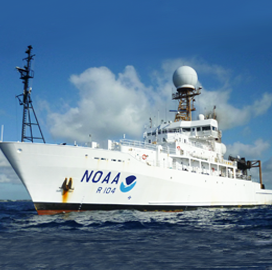
NOAA said Thursday it will use the future single-hull vessels to study marine life, ecosystems and climate through data collection across coastal areas, continental shelves and oceanic depth zones across the globe.
The agency intends to name the first ship “Oceanographer” and the second one “Discoverer.” Each vessel will be built with underwater research equipment, information technology and Environmental Protection Agency-compliant diesel engines.
Both ships are intended to accommodate up to 20 crew members and 28 scientists, deploy work boats, maintain buoys, survey the seafloor and gather scientific data on seawater characteristics.