

- The U.S. Space Force has awarded three other transaction authority agreements for its Space-Based Airborne Moving Target Indicator program
- The OTAs are worth $615 million combined and build on a previous task order awarded to SpaceX in June
- The OTA recipients are Rocket Lab, STR LLC and an undisclosed third company
The Space Force has issued a second task order under its Space-Based Sensing and Targeting portfolio, awarding three firm-fixed-price other transaction authority agreements worth a combined $615 million to advance Space-Based Airborne Moving Target Indicator capabilities, the Space Systems Command announced Tuesday.
The awards build on an earlier rapid-acquisition task order awarded in June to SpaceX, which is worth up to $4.16 billion.
What Are the Details of the SB-AMTI OTAs?
Rocket Lab and STR LLC were named as two of the three recipients. A third company was not disclosed due to operational security considerations. The OTAs are designed to widen the pool of commercial vendors while pushing forward the development of multiple sensing approaches for the SB-AMTI mission. The task order was competitively awarded from Space Systems Command’s existing indefinite delivery/indefinite quantity contracts for SB-AMTI.
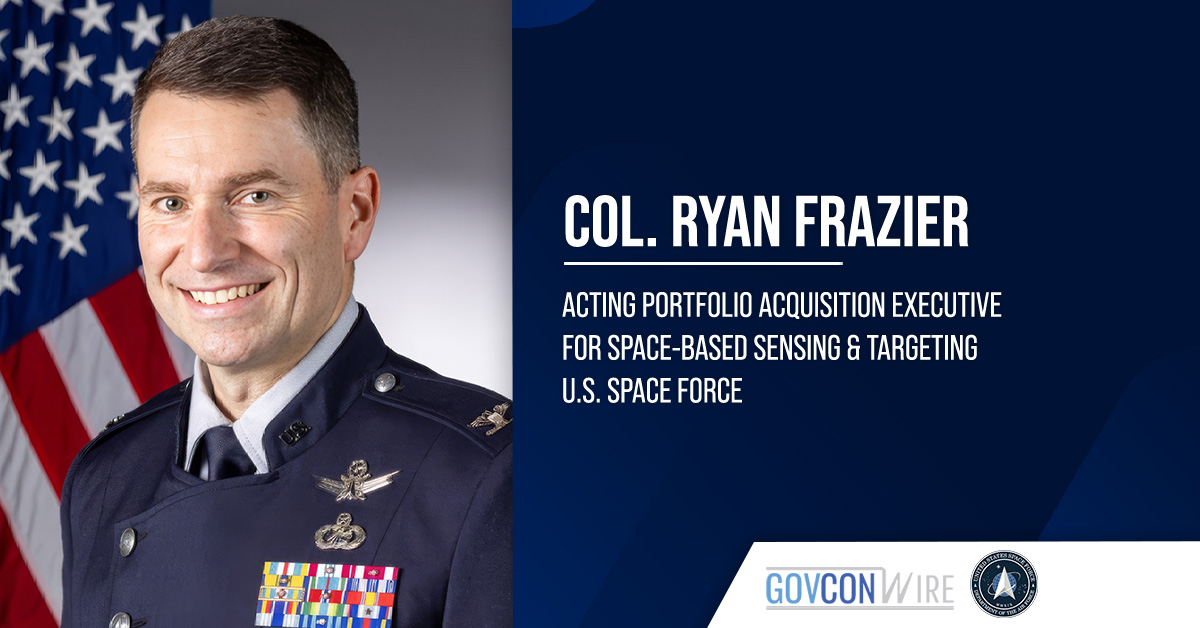
“The core focus of this second task order is diversifying our capabilities and ensuring we don’t rely on a single technical solution,” said Col. Ryan Frazier, acting Space Force portfolio acquisition executive for space-based sensing and targeting. “With these new partnerships, we are exploring unique innovations and technologies and fundamentally different ways to accomplish the airborne moving target indication mission. Maturing these varied technical solutions now gives us distinct performance advantages for the future and guarantees we are fielding the absolute best technology available,” Frazier explained.
Why Is the Space Force Diversifying Its Vendor Base?
According to Space Systems Command, broadening the commercial partner base lowers barriers to entry, deepens the vendor pool, and sustains long-term competition. The SSC said the approach is also meant to ease supply chain pressure and reduce industrial risk, while enabling faster technology iteration so the service can scale or replenish systems as requirements shift.
The command also pointed to the value of pursuing varied sensing disciplines and technical methods, saying the approach strengthens the survivability and adaptability of the broader space-based sensing architecture. Different sensing techniques can offer distinct advantages depending on environmental conditions, geography, and threat scenarios, and evaluating a range of commercial solutions could help complicate adversary planning while supporting persistent space domain awareness, the SSC said.