

- The Navy’s budget request for FY 2027 is up 23 percent from last year
- This includes big boosts for Conventional Prompt Strike and other RDT&E programs
- Get investment insights from Hung Cao, acting Navy secretary, and Vice Adm. Brad Skillman, service “CFO,” at the 2026 Navy Summit!
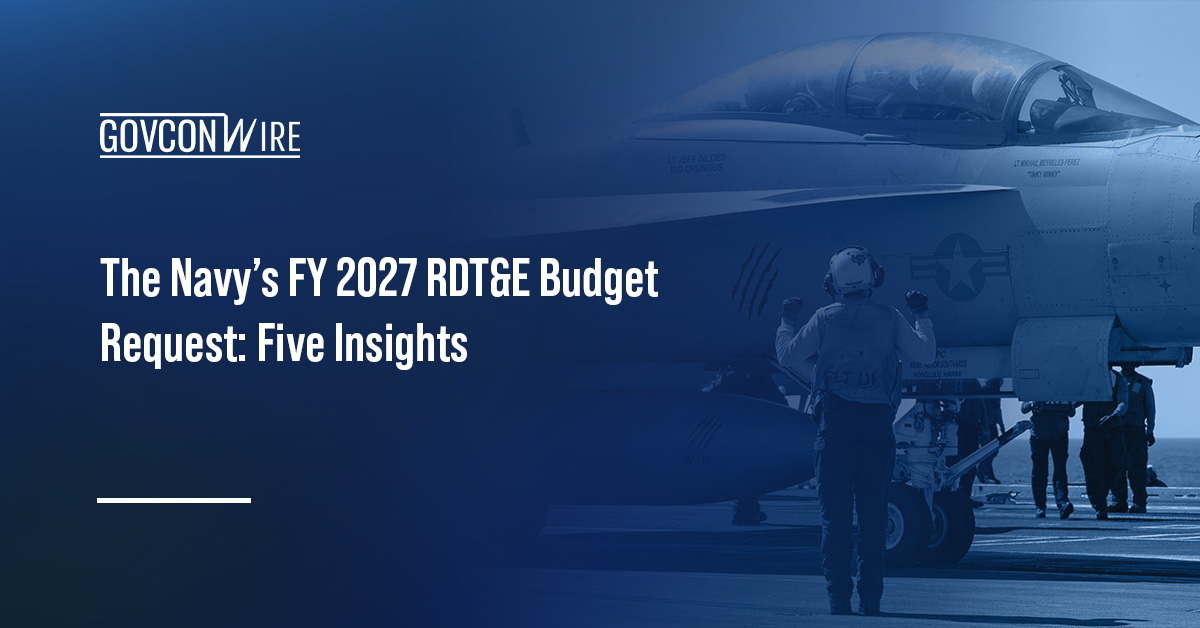
The Navy is making a major commitment to modernization and readiness in its fiscal year 2027 budget request. That’s why the service asked for $378 billion, 23 percent more than the $307 billion enacted in FY 2026.
This includes $36 billion in research, development, test and evaluation, or RDT&E, funds. If approved by Congress, this would represent a four-percent increase from FY 2026. It would be put toward major modernization efforts across the force, from strategic deterrence recapitalization to air and surface warfare.
Let’s dig into the biggest highlights from the Navy’s FY 2027 RDT&E budget request and learn what the service is planning for these essential programs.
Dive into Navy modernization partnership opportunities at the Potomac Officers Club’s 2026 Navy Summit on Aug. 27! Explore modernizing infrastructure for secure and resilient operations, and accelerating capability delivery through agile acquisition methods during our Modernizing the Navy’s Enterprise Networks for Information Warfare Readiness panel discussion. It features top service officials and industry experts, including:
- Rear Adm. Susan BryerJoyner, Navy director of information warfare, N99
- Jeffrey Hurley, Marine Corps acting director for information C4
- James Balocki, Marine Corps Installations Command executive director
- George Malkasian, AT&T Marine Corps strategy lead
- Andy Henson, Serco North America chief technological officer
- Richard Cunningham, Navy PEO Digital PMW 205 Naval Enterprise Networks director
What Are Key Technology Investments in the Navy’s FY 2027 Budget Request?
1. Big Increase for Conventional Prompt Strike
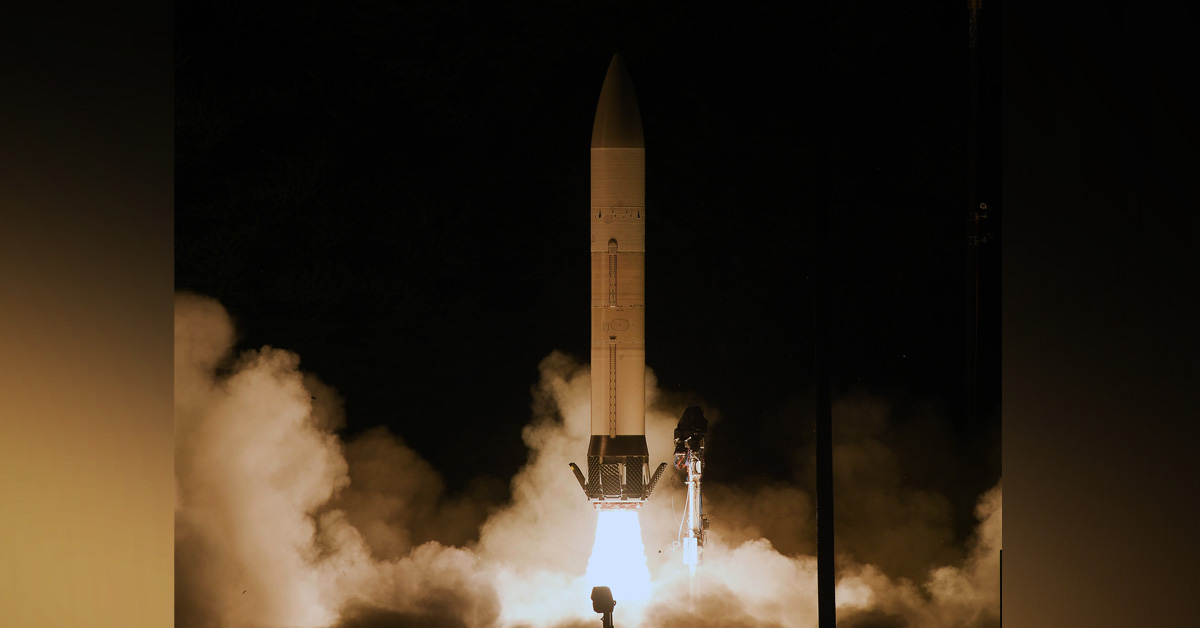
The Navy seeks an eye-popping $1.8 billion for Conventional Prompt Strike in FY 2027. This would be a 135-percent increase from the $763 million provided in FY 2026.
The CPS weapon system will deliver a hypersonic conventional offensive strike capability through a depressed boost-glide trajectory to attack deep-inland, time-critical, and soft- and medium-hardened targets in contested environments. The Navy, in coordination with the Army, is designing an all-up round consisting of a common hypersonic glide body and a 34.5-inch two-stage booster.
A significant portion of the CPS budget request is $866 million for all-up round and advanced payload module development. This would be a 75 percent increase from the $494 million enacted in FY 2026.
The Navy plans to spend this portion of the request, among other tasks, to continue systems engineering efforts for the assured performance, accuracy and integration of the CPS system by maintaining system-level requirements. It also wants to continue digital engineering-focused systems engineering processes such as concepts of operations development.
2. More Funds for Organic Precision Fires
The Organic Precision Fires program is in direct response to secretary of war and two-time Wash100 Award winner Pete Hegseth’s mandate for a more lethal and distributed joint force. That’s why the Marine Corps is requesting $69 million for OPF in FY 2027, a 305-percent increase from the $17 million provided in FY 2026.
The OPF program equips multiple levels of command within the Fleet Marine Force with an organic, loitering and precise over-the-horizon strike capability. This has a goal of fundamentally changing the tactical equation at all levels from the squad to the battalion.
The growth in funding for OPF in FY 2027 reflects continued capability enhancements for OPF-Light and the initiation of an OPF-Medium capability. OPF-Light procures an existing lightweight loitering munition system for use by dismounted elements. OPF-Medium will acquire an existing dismounted anti-armor and anti-personnel loitering munition system capable of being launched from the ground.
The OPF program is listed under the budget line USMC Ground Combat/Supporting Arms Systems-Engineering Development.
Hear first hand how Navy leaders are aligning mission needs with investment strategies at the Potomac Officers Club’s 2026 Navy Summit on Aug. 27! Hear directly from Hung Cao, acting Navy secretary and Wash100 Award popular vote winner, and Vice Adm. Brad Skillman, known as the service’s “chief financial officer.” Join the conversation on essential emerging technologies including digital modernization, autonomous systems, cyber resilience and avionics upgrades. Spark collaborations with other ambitious GovCon executives and score that big contract. Secure your seat today!
3. Substantial Investment in Next-Generation Jammer
Next-Generation Jammer is the advanced step in the evolution of airborne electronic attack. That is why the Navy is requesting $497 million for the effort in FY 2027, which would be a 131-percent increase from the $215 million provided in FY 2026.
NGJ is a critical capability to address current, emerging and evolving electronic warfare gaps. It should ensure complete kill chains against growing threat capabilities and capacity while keeping pace with enemy threat weapon system advancements.
NGJ will utilize enhanced techniques and tactics to potentially deliver significantly improved radar and communications jamming effectiveness in addition to classified capabilities. It will utilize an open system architecture that supports software and hardware updates to rapidly counter emerging and evolving threats.
This funding request will support what is now called AN/ALQ-266 Next-Generation Jammer Low Band, or NGJ-LB, formerly known as NGJ Increment II. NGJ-LB will operate against threats operating in the lower frequency bands of the electromagnetic spectrum, will be integrated on the EA-18G Growler and is a cooperative development, production and sustainment program with Australia.
4. Budget Growth for Air Combat Electronics
The Navy wants to develop standard air combat electronics not only for itself but to also potentially be used by other U.S. military services and foreign military sale customers. That’s why the Navy is requesting $134 million in FY 2027 for this effort, a sizable increase of 97 percent from the $68 million provided in FY 2026.
These common avionics include communications and airborne networking, navigation and sensors, flight avionics, safety systems and flight mission information systems for both future and existing aircraft. These efforts continue to maintain federated systems while encouraging transition of procurements to support a modular system for enhanced performance and affordability.
This budget line covers key avionics efforts like the Digital Interoperability/Marine Air Ground Task Force Agile Networking Gateway Link, or MANGL, and Naval Aviation Global Communication.
5. Modernization for Undergraduate Flight Training Systems
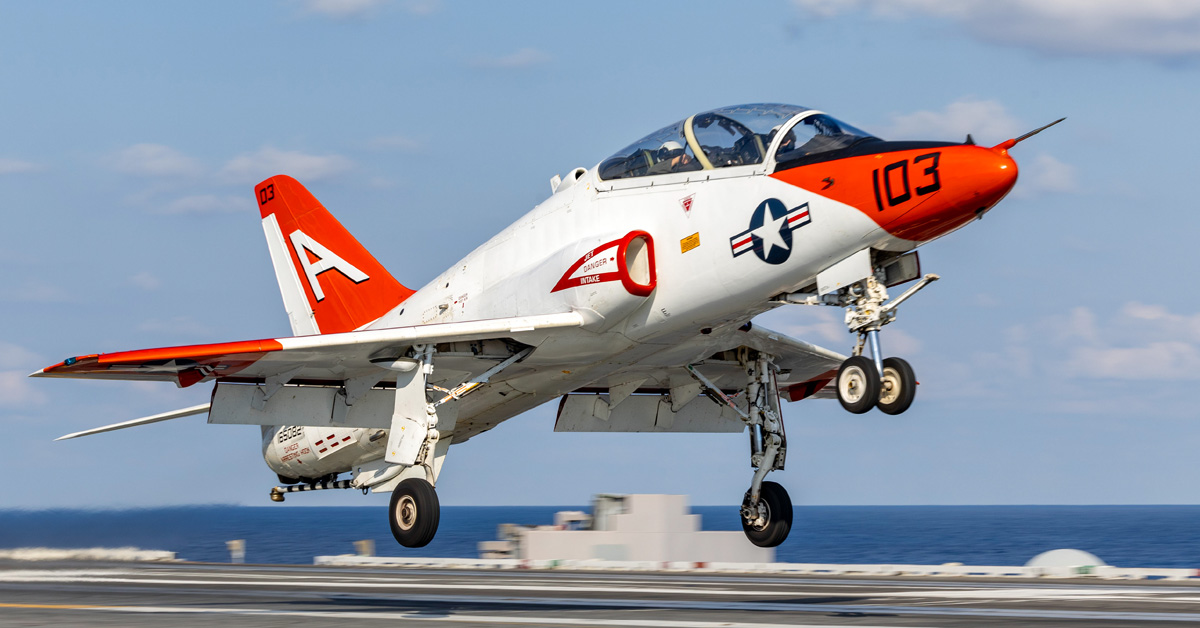
The Navy wants pre- and post-production platform improvements, like avionics modernization, for its Undergraduate Flight Training Systems, including the T-45, T-6 and T-44 aircraft platforms. That’s why the service is requesting $81 million in FY 2027, a boost of 440 percent from the $15 million enacted in FY 2026.
The Navy also wants to perform development and sustainment engineering change proposals, corrosion prevention, and T-45 and T-6 physiological episode mitigation analysis. As part of this funding request, the service plans to award an engineering and manufacturing development contract for the UFTS.